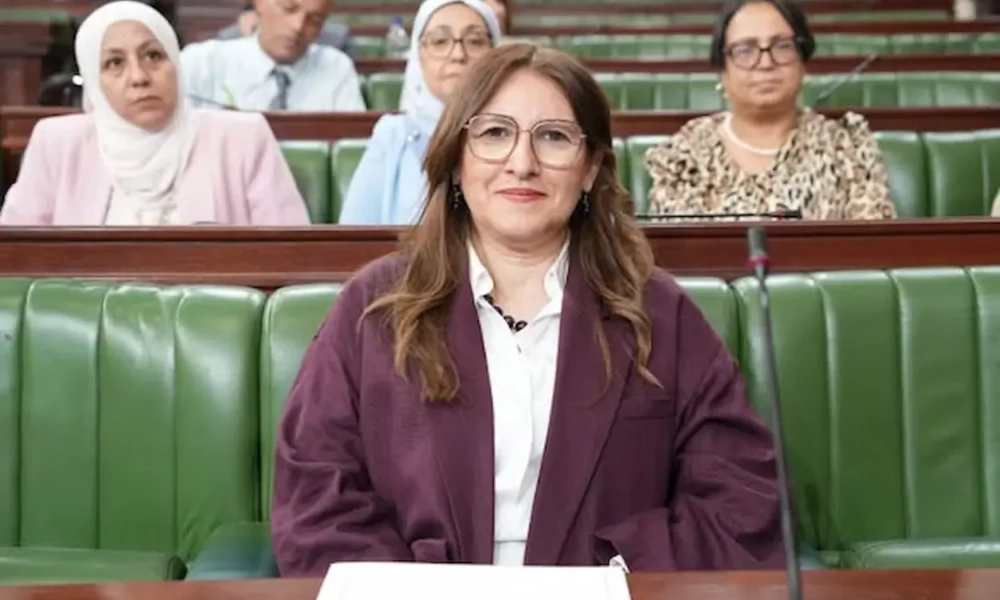
The Finance and Budget Committee of the National Council of Regions and Districts examined, on Thursday, October 29, 2026, the draft Finance Law for 2027 during a joint session with the Finance and Budget Committee of the Assembly of the Representatives of the People. The Minister of Finance, Michket Slama Khaldi, and her team participated in the meeting, presided over by Ali Hassoumi Biyouli.
Investment choices and borrowing criticised
At the opening of the session, Ali Hassoumi Biyouli praised the work of the Ministry of Finance, while noting that the 2027 draft Finance Law does not reflect a clear orientation in favor of investment and does not provide a national strategy to combat unemployment.
After the minister’s presentation of the main figures and indicators, deputies judged that the project would neither promote wealth creation nor equitable development. They reproached it for relying on increased borrowing and noted, according to the data presented during the meeting, that state expenditures would exceed its revenues: for 100 dinars collected, expenditures would reach 127 dinars.
The legislators also questioned funding sources for small farmers and investors, while the state itself requires financing. They called for an end to what they described as an “hemorrhage” of debt.
Public enterprises and social funds at the heart of the exchanges
Deputies questioned the profitability of public enterprises and criticized the delays in their reform, even as the State provides them with substantial funding. They called for more evaluations on their situation, the use of the funds allocated to them and the results of the expenditures undertaken.
They renewed their call to settle, by compensation, the debts of state structures toward the Tunisian Electricity and Gas Company (STEG). They also demanded urgent structural reforms for social funds and other bodies facing deficits, calling to end what they described as a “social rent”.
Tax pressure and the informal economy
The deputies criticized the prominence given to tax revenues in the draft law, stating that they would represent more than 91% of the state’s resources, while measures to support investment would remain limited. They argued that the effects of the “tax tightening” should be evaluated and stated that tax pressure in Tunisia would be the highest in Africa.
Some deputies also questioned the realism of certain indicators in the project. They recalled that provisions introduced in the 2026 Finance Law had not been implemented. One summarized the situation with this phrase: “We moved from the idea of a car for every family to a bottle of water for every household,” referencing the decline in purchasing power, in his view.
The representatives of the National Council of Regions and Districts also noted the absence of budgets for local, regional and district councils in the 2027 Finance Bill. They called for limiting the effects of tax pressure and the informal economy on citizens and small and medium-sized enterprises (SMEs). In the face of the extent of the informal economy, they urged moving from “tracking taxpayers in compliance to integrating fraudsters.”
Targeting aid and summer preparations
Interrogated by deputies about digitization and targeting of aid, the minister and her team were urged to specify the measures planned so that subsidies reach those entitled. Some lawmakers claimed that 67% of state aid would be granted to people who are not eligible.
The deputies also regretted the absence of tax incentives for investments in private electric generators and water reservoirs, after electricity and water shortages recorded during the summer. They called for strict measures against the use of drinking water for personal comfort, at the expense of collective needs.
Regarding the energy transition and tariff reductions, the deputies considered that the project did not include sufficient anticipatory measures to prevent potential shortages of water and electricity during the summer of 2027. They insisted on the need to prepare for new difficulties after the tensions and damage recorded this summer.
The deputies also called to quickly apply Law No. 18 of 2025, which provides exceptional provisions for recruitment in the public sector and civil service of higher-education graduates who have been unemployed for a long period. They highlighted the social and human dimension of this issue.
SMEs facing “financial tightening”
The lawmakers welcomed the work of public tax service officers and asked for details on their coordination with the Central Bank of Tunisia. They also mentioned the difficulties that the “financial tightening” would impose on SMEs, which they consider a pillar of the national economic fabric.
To address this, they called for more effective measures in favor of investment and an acceleration of digitization. On the informal economy, which they now consider better organized than the State, they proposed accelerating its integration through measures such as electronic payment.
The deputies finally asked the ministry to revise the preparation of the finance laws to make them more understandable for citizens. They deplored the lack of communication with representatives of the legislative power during the drafting, examination, and monitoring of its implementation. Some described the presented project as a “current management Finance Law”.
The minister announces a reform of taxation
In response to the interventions, Michket Slama Khaldi stated that her ministry was actively preparing the necessary measures in view of the challenges of next summer. She specified that electrical generators benefited from exemptions on customs duties and tax reductions. She also indicated that a comprehensive analysis of the tax system had been undertaken in view of its reform.
The minister acknowledged a misallocation of state agents, which she attributed in part to social circumstances, and stated that the ministry intended to restructure human resources.
Regarding regulatory texts and the non-application of certain provisions added to the 2026 Finance Law, she spoke of the novelty of the Constitution, the functioning of the bicameral parliamentary system and the institutional process. She also mentioned difficulties in applying certain provisions tied to their wording.
The minister added that a large portion of the state budget is devoted to vulnerable categories and that the state was willing to seek new sources of revenue.
Finally, she mentioned the possibility of studying exemptions granted by the Central Bank for the use of foreign currencies. However, she stated that the country’s monetary situation did not permit broader circulation and unrestricted use. She affirmed that the Central Bank would not authorize the use of the tourist allocation to finance the purchase of a “car for every family”.