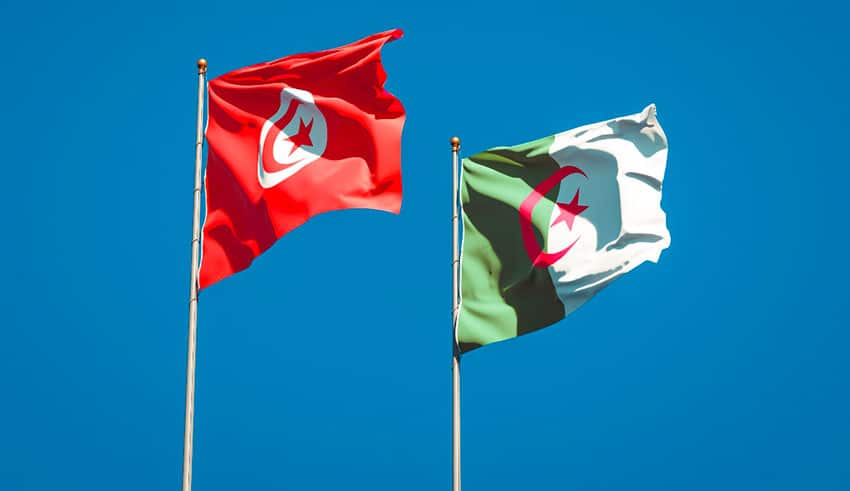
An utterly sterile, unworthy, and incomprehensible uproar has spread on social networks in connection with the energy dossier linking Tunisia and Algeria.
The nauseating character of the posts and comments that Tunisie Numérique could review does not resemble the values and simply the education of Tunisians and Algerians, which algorithms and actors with malicious aims are trying to pit against each other.
Some comments stand out.
Energy cooperation between the two countries is a matter for both governments. It is the most technical field of bilateral cooperation. Experts are needed to speak about it with knowledge. It is not enough to consult Wikipedia to pose as an expert. We have seen many on social networks discover a specialty and an expertise they do not possess.
If we refer to the facts and the statements of the Algerian and Tunisian government officials, old and more recent, but also to the more technical and thus less political statements from the managers of the companies on both sides (STEG on the Tunisian side, and Sonatrach and Sonelgaz on the Algerian side), we find only shared satisfaction. More recently still, just last week, the President of the National Council of Districts and Regions met in Algiers with the two Algerian ministers in charge of hydrocarbons and energy, and reviewed the prospects for developing what they described as historic relations and the progress of joint projects. So where does the problem come from then?
On this score, President Kais Saied has on numerous occasions described the relationship between the two countries as fraternal, and called for raising it to the level of a strategic partnership.
It is worth recalling, since we are talking about energy, that President Kais Saied was the guest of honor at the Summit of the Gas Exporting Countries Forum, held in Algiers in March 2024. In this vein as well, we should recall the numerous statements by Algerian President Abdelmadjid Tebboune, who has continually stressed that the relationship between the two countries is built on solidarity, and that Algeria supports Tunisia in all circumstances. Why and where does this controversy come from then?
Moreover, recall that in September 2024, the Algerian company Sonelgaz significantly contributed, taking risks on its own power grid, to revitalize the Tunisian electrical network that was in difficulty. A STEG press release had reported this at the time.
Why then this presumption of intent against our neighbors who had not breathed a word about it?
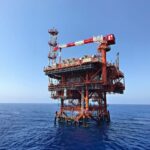
Energy cooperation between the two countries is not limited to cubic meters of gas and is not conducted “for a few more dollars,” as suggested by social networks and a few wannabe experts. It is part of a strategic dynamic that also includes green hydrogen, the electrical interconnection between the two countries on the one hand and with Libya on the other, renewable energies and smart mixes. Why reduce it to a petty grocer’s calculation?
The question of the durability of Transmed has, on its side, been raised with a great deal of bad faith. First recall that Transmed, which transports Algerian gas to Italy via Tunisia, began operation in 1983, the same year in which the treaty of fraternity and concord between the two countries was signed. The coincidence is not accidental. It reflects a deliberate and thoughtful economic choice in the spirit of fraternity. It should be noted that the gas pipeline GME, which connects Algeria to Spain via Morocco, continued to operate from 1996 to 2021, during a long period of cold and tensions between Algeria and Morocco, in tandem with the Medgaz pipeline directly linking Algeria to Spain. It was deactivated only when the relations between the two countries had been completely and fully broken, which is absolutely unthinkable with Tunisia. So why create this fear and this equally unhealthy possibility that is unthinkable?
The most painful aspect of this social media frenzy is the drift observed in the comments, the insults and invective. Tunisians and Algerians nevertheless owe each other respect and esteem, and even an unmatched closeness. The populations of the two countries watch, dumbfounded at these intolerable drifts. Why did this exchange on social networks derail? Who has an interest in sowing misunderstanding and discord between two brotherly peoples? Certainly, both peoples are aware of the stakes and the games and do not fall for it, with the exception of a few wandering souls, insignificant in light of the five million entries and exits of Tunisians and Algerians recorded in one year at the border posts of the two countries.
The two Heads of State, in turn, drew attention to the tendentious interpretations and manipulation.
The President Kais Saied had indicated this on December 18 last year, when receiving the Prime Minister, specifying that state affairs are not managed through social media posts or by resorting to fake documents.
The Algerian President Abdelmadjid Tebboune had likewise, in December last year, drawn attention to the attempts to sow division between the two countries and the two peoples. If he spoke about it so clearly, it is because he had reasons and elements that go beyond random posts on social networks.
Beyond the polemics on social networks, the facts speak for themselves: the cooperation between Algeria and Tunisia rests on decades of shared history, a clearly stated political will on both sides, and a real closeness between the two peoples.
These solid foundations constitute the best response to destabilization attempts, whatever their origin. The citizens of both countries, who maintain deep daily ties, are the first guarantors.
Tunisians and Algerians must be vigilant and avoid falling into the traps set by those who envy the privileged relationship between the two countries and by pawns of external agendas, but also the algorithms of social networks.
This orchestrated agitation raises legitimate questions about its origins and its objectives…