The war with Iran is no longer merely a distant geopolitical crisis for Americans. It has transformed into a daily cost borne by millions of consumers across fuel, food, transportation, and savings, in a context of accelerating inflation and rising energy prices since the conflict began, on February 28, according to a report published by the New York Times.
An analysis cited by the paper, conducted by researchers at Brown University, shows that the average American household has spent an additional $190.47 on gasoline since the start of the war. An amount that, for some families, equates to a monthly electricity bill or the cost of a week’s groceries for a couple.
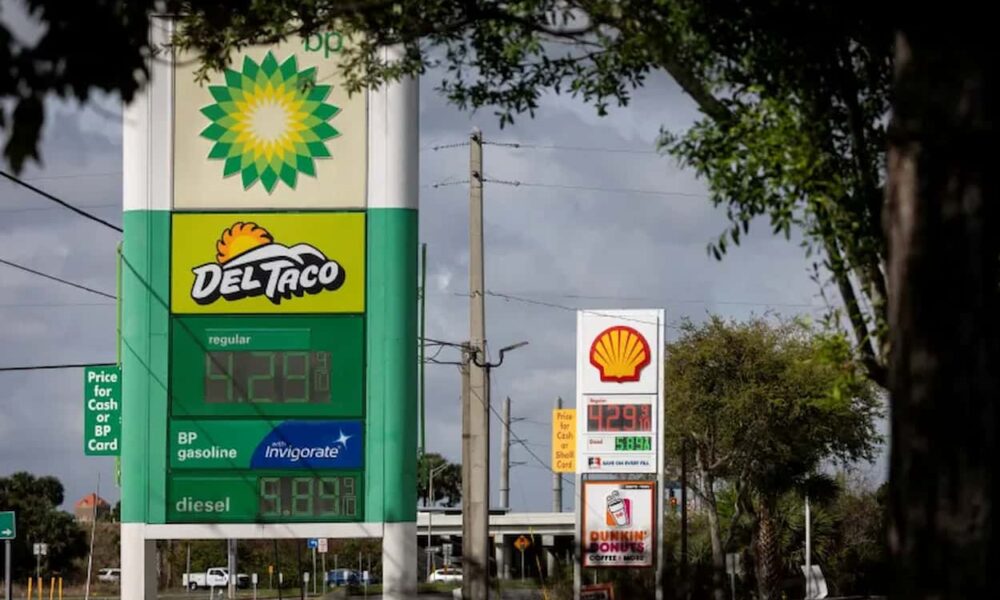
The average price of gasoline in the United States has risen to $4.55 per gallon, compared with $2.84 in January, before the war began. It reached $4.99 in Illinois and $6.13 in California, according to the New York Times.
Diesel prices, used to run factories and to move the majority of goods across the country, have also increased, intensifying pressure on transportation costs, supply chains, and consumer prices.
The paper notes that the total amount spent by Americans on gasoline and diesel since February 28 has reached “notable levels,” as households begin to adjust their consumption habits and daily behaviors to cope with rising costs.
Change in Consumer Behavior
The New York Times notes that Americans are turning more toward low-price stations, such as Costco and Sam’s Club. Visits by motorists to Sam’s Club stations have thus increased by 18% in the last week of April compared with the same period a year earlier.
Drivers have also begun buying smaller quantities of fuel at each gas pump visit, averaging one gallon less per fill.
In parallel, the use of public transportation and freely accessible bicycles has risen. Buses logged about 45 million additional trips in March compared with the period before the war.
The paper adds that more than 40% of Americans surveyed in a recent poll said they had cut back on spending on food and medical care. Savings rates have also declined in many households.
Greater Pressure on Low-Income Households
The New York Times explains that higher-income households devote only about 2.7% of their income to fuel, versus 4.2% for the more modest households, making the impact of higher energy costs heavier on disadvantaged categories.
The report draws a parallel between the current crisis and the energy shock that followed the Russo-Ukrainian War in 2022, when the average price of gasoline in the United States rose to $5.02 per gallon.
The paper notes, however, that the current crisis comes as markets are already under pressure from extreme climate events, tariffs, and rising transportation costs, thereby accelerating the transmission of inflation to the prices of food and everyday consumer goods.
Tomato prices rose last month by about 40% compared with the same period a year earlier, while American inflation posted its fastest pace of growth in nearly three years, with gasoline prices among the components that rose the most.