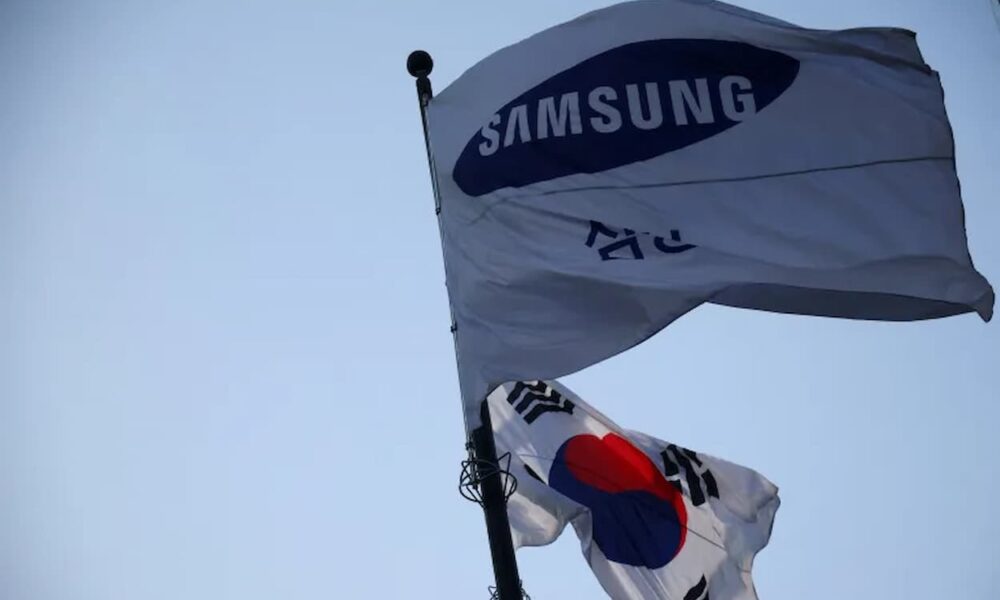
The Samsung Electronics workers’ union announced, in a statement published on Monday, that it would begin the strike as planned, even after a South Korean court partially granted the company’s request for an injunction obliging it to guarantee that any social movement does not disrupt production.
The union, however, said it would respect the court’s ruling.
The strike, which is set to last 18 days, is expected to start on May 21. About 50,000 employees are expected to take part.
According to Yonhap News Agency, the Suwon District Court on Monday partially approved Samsung Electronics’ request to obtain an injunction aimed at preventing the strike announced by its employees’ union.
The court held that the number of employees must be kept at normal levels to prevent potential damage to the company’s security facilities and products.
This decision bars the main union from taking control of Samsung’s facilities or preventing employees from accessing them. It is regarded as effectively accepting several of the company’s demands.
Samsung Electronics had filed a lawsuit on May 16 to prevent the union from striking, citing risks of damage and disruption to its operations.
This development comes as the company and the union resumed, on Monday, mediation talks led by the government on wages, in a final attempt to avoid a strike at the world’s largest memory chip maker.
Billions in Losses
This strike could affect the smartphone, personal computer, smart home appliance, artificial intelligence, and electric vehicle sectors, while pushing prices higher.
Samsung is South Korea’s largest company by number of employees, as well as the world’s leading memory chip manufacturer in terms of revenue.
Global markets are facing a severe shortage of memory chips, essential components for data centers dedicated to artificial intelligence, smartphones, and laptops, according to Reuters.
South Korea’s Prime Minister Kim Min-seok said on Sunday that Seoul would explore all options, including emergency arbitration, to prevent a strike by Samsung Electronics’ employees and to limit the damage if the move were to take place.
“A single day of stoppage at Samsung Electronics’ semiconductor plant could lead to direct losses of up to 1,000 billion won, or about 667.68 million dollars,” Kim said.
He added that “what is even more worrying is that a temporary halt of semiconductor production lines could lead to several months of activity disruption,” underscoring fears that losses could climb to 100,000 billion won, about 67 billion dollars, if materials had to be discarded due to the strike.
Samsung accounts for 22.8% of South Korea’s exports, 26% of the country’s stock market, employs more than 120,000 people, and works with 1,700 suppliers.
The Heart of the Dispute
The union and management remain deeply divided over performance bonuses tied to profits from the company’s semiconductor activities in the field of artificial intelligence.
The dispute stems from Samsung’s record profits in its semiconductor business driven by the rise of artificial intelligence.
The union is demanding fixed performance bonuses equal to 15% of the operating profit generated by the company’s semiconductor division, as well as scrapping the cap on payments. The management, for its part, says that removing the cap is unacceptable.
The value of the bonuses demanded could reach 45,000 billion won, or about 29.9 billion dollars per year. This amount is more than four times the sum the company paid last year in dividends to all shareholders, and far exceeds the dividends Samsung is expected to pay this year, according to Yonhap News Agency.
In April last year, Samsung had announced that its operating profit had multiplied eightfold in the first quarter of the current year, reaching an unprecedented level, driven by higher chip prices amid supply shortages linked to the AI boom.
Samsung posted an operating profit of 57,200 billion won, or 38.43 billion dollars, for the period from January to March. The company also expects further improvement in its results in the second quarter of the year.
The President Steps In
South Korean President Lee Jae-myung said on Monday that corporate governance rights must be respected just as workers’ rights are.
In a message posted on his official X account, Lee wrote: “In South Korea, which has embraced the fundamental principles of democracy and a free-market economy, workers’ rights must be respected as much as those of companies, just as corporate management rights must be respected as much as workers’ rights.”
He added that workers deserved fair pay for their labor, while shareholders were entitled to a share of the company’s profits in return for the risks and losses they assume.
The president also stressed that “although the Constitution guarantees the fundamental rights of all individuals, these may be restricted in the public interest, within limits that do not compromise their essence.”
He finally warned of the grave consequences that could result from an escalation in demands, calling for solidarity, a sense of responsibility, and action toward a common prosperity.