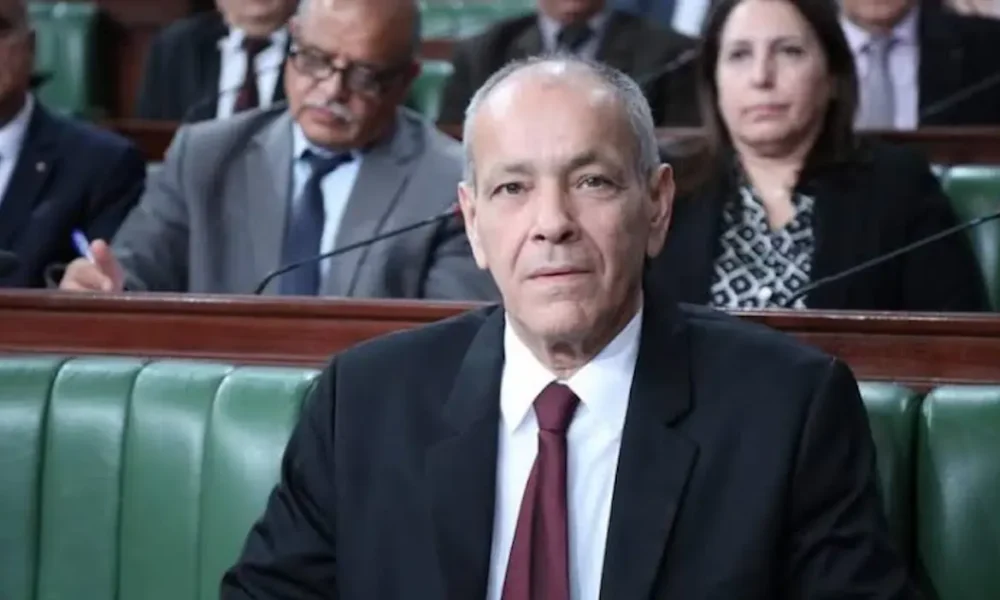
The Minister of Environment, Habib Abid, stated this Monday at the Bardo Palace that Tunisia’s annual production of margins is estimated at nearly 2 million cubic meters. About 920,000 m³ have been valorized over an area of approximately 17,050 hectares. He also specified that the control operations covered 92 margins discharge points and allowed the detection of 18 offenses, which were the subject of formal reports.
In response to interventions by deputies of the Assembly of the Representatives of the People (ARP) and members of the National Council for Regions and Districts, during the joint plenary session dedicated to examining his department’s budget for 2027, the minister stressed that margins constitute one of the main environmental challenges linked to olive oil production, due to the volumes generated each year by oil mills and their potential effects on the environment and water resources.
He added that his ministry is seeking solutions to valorize the remaining quantities of this by-product, estimating that private sector involvement could contribute to the development of their exploitation. The use of natural evaporation also constitutes a feasible option in sites meeting the required environmental conditions.
The minister further insisted on the need to consider the geological characteristics of the concerned zones before authorizing the creation of margins evaporation basins. He particularly emphasized the importance of clay layers able to prevent the infiltration of these substances into groundwater. In this regard, he stated that the ministry does not approve any project that does not guarantee the protection of water resources against pollution risks.
Plastic waste: a difficult application of the 2020 law
Regarding plastic waste, Habib Abid acknowledged the difficulties related to implementing the 2020 law prohibiting the use of certain plastic bags, as these continue to circulate on markets and remain widely used in commercial and consumer activities.
He explained that addressing this issue requires taking into account economic and social realities, as plastic bags are widely used in selling and purchasing operations. He therefore noted that a ban without providing suitable alternatives could risk imposing additional charges on consumers or disrupting market operations.
In this context, the minister presented the results of field monitoring of the plastic bottle collection, sorting and resale system. He indicated that prices vary across the different links of the chain, noting that the ministry is studying ways to regulate those involved in collecting plastic waste and to improve their working conditions, while taking into account their role in the valorization chain.
Household waste: up to 300 tonnes per day in Hammamet in summer
Moreover, the minister spoke of the increase in household waste during the tourist season, especially in the town of Hammamet. Daily volumes, which fluctuate between 40 and 50 tonnes off-season, can reach nearly 300 tonnes per day during summer.
He specified that the ministry, in coordination with the Ministry of the Interior, the governors and regional authorities, mobilizes the resources of the neighboring governorates of Nabeul to contribute to waste collection and transport to available landfills. This approach aims to ease pressure on the local system and ensure the city’s cleanliness during the tourist season.
Habib Abid also indicated that collection operations are carried out at night in order to avoid disrupting traffic and tourist activity. He finally stressed that the success of these interventions depends on facilitating the passage of trucks between the governorates and providing the logistical conditions necessary for their operation.