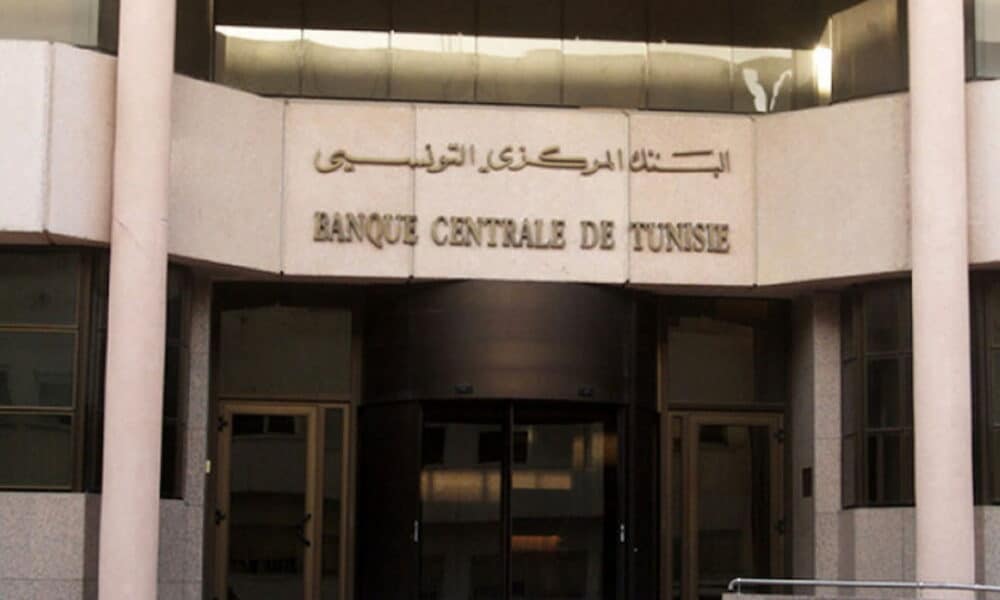
The Governor of the Central Bank of Tunisia, Fethi Zouhair Nouri, announced on Wednesday the creation of a working group under the aegis of the Banking and Financial Council, charged with proposing an operational roadmap within a period not exceeding one month.
According to a press release from the central bank, this document will define concrete commitments by the banking sector aimed at strengthening the funding of the economy, supporting small and medium-sized enterprises, and triggering a new phase of development of the sector.
The announcement of the creation of this working group came during a meeting of the top executives of banks, devoted to a discussion on the role of banks in financing the national economy and the prospects of the banking sector.
This meeting is part of the periodic meetings between the Central Bank and the banking sector, in accordance with the issuing institute’s missions to preserve financial stability, ensure the proper functioning of the banking system, and monitor the financing conditions of the economy.
On this occasion, the Governor of the Central Bank recalled the importance of the banks’ role in financing businesses, SMEs, productive investment, and sectors with high potential for development and job creation.
He stressed that the solidity of the banking sector and compliance with prudential balances must go hand in hand with rising mobilization in favor of the real economy, in compliance with good risk management rules.
In a context marked by the persistence of uncertainties, the Governor of the Central Bank called for a strategic repositioning of the banking sector, deeming that the current phase constitutes a decisive turning point.
“The Tunisian banking sector must move from prudence to commitment, and from resilience to growth,” he said.
He also stressed the need to strengthen confidence among banks, citizens, and businesses, through continuous improvement in service quality, greater transparency of pricing, simplification of procedures, and better support for clients, notably SMEs, with a greater orientation toward promising sectors.
Moreover, the Governor recalled that, while the fundamentals remain solid, the main challenge now lies in the ability to transform savings into productive investment for growth.
The head of the issuing institute affirmed that the performance of the banking sector cannot be dissociated from that of the real economy.
In this regard, he reaffirmed the need to strengthen commitment to productive investment.
The Central Bank of Tunisia, for its part, reiterated its readiness to accompany this dynamic and to support serious and structured initiatives by the banking sector aimed at improving access to financial services, developing digital payment methods, strengthening financial innovation, and ensuring a better transmission of monetary conditions to the real economy.
In conclusion, the Central Bank of Tunisia stated that it will, in coordination with the banks, monitor the main projects discussed during the meeting, in a spirit of consultation and shared responsibility, reiterating its commitment to a solid, modern, inclusive banking system fully oriented toward financial stability and economic development.