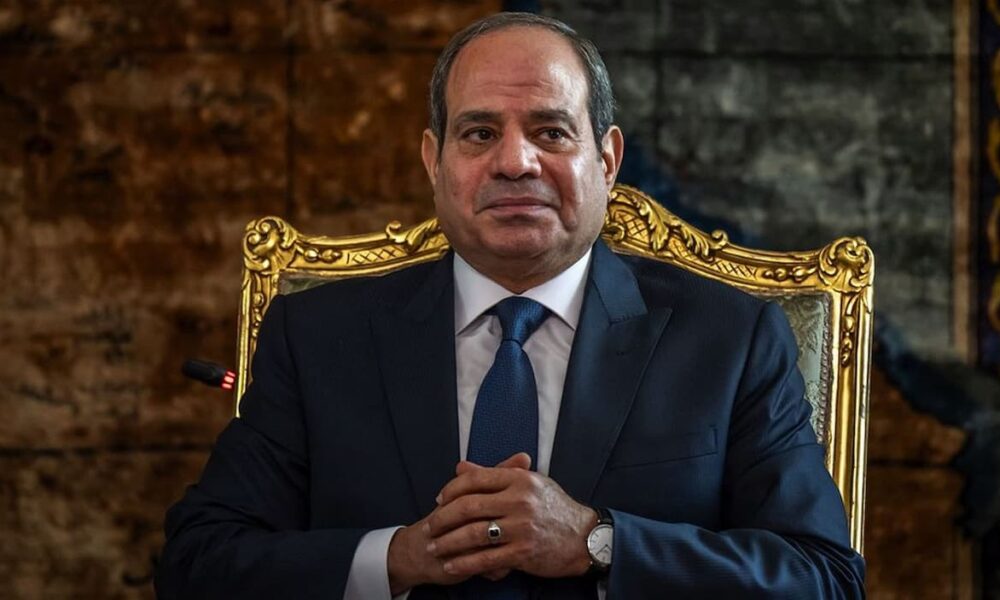
The president Abdel Fattah al-Sissi would he be succeeding in his enormous bet after 13 years in power? In any case the latest macroeconomic indicators say so, mainly the retreat of public debt. A few years ago when people spoke of the land of the pharaohs it was to point to the level of its liabilities, one of the highest on the continent. Not later than February 2026 the International Monetary Fund (IMF) warned about the growing weight of debt, which was approaching 100% of gross domestic product (GDP). The local landscape has changed, a spectacular change.
He is managing despite the national and global conjuncture
The overall picture of the conjuncture in the Middle East remains as worrying as ever and Cairo also bears the spillovers of the conflict, but it does better than defend itself, it undertakes, reforms, fights its flaws and builds the future. President al-Sissi has indicated that his path will end in 2030; at that date he will hand over to an elite he is currently forming. What country will he leave behind? A reinvigorated nation.
The Egyptian economy owes this good news to major reforms launched since the beginning of 2024. The shift did not come without pain, with a vigorous reduction of subsidies, a proactive privatization program of public enterprises and its share of social upheaval, a drastic reduction of public spending, etc. But at the end the country has made savings that have allowed it to rely less on debt and to better prepare for exogenous shocks.
Result: Moody’s, the credit rating agency, revised upward on 16 October 2026, Egypt’s long-term issuer rating in local currency and in foreign currencies; it moved from “Caa1” to “B3”, with a positive outlook. The agency explained this improvement in the sovereign risk profile by a strengthening budget and the spillovers of structural reforms undertaken in recent years.
“The upgrade to B3 is explained by the budgetary consolidation and the structural reforms carried out by Egypt, which have placed public debt and the burden of interest on a downward trajectory, even though levels remain high,” Moody’s argued, noting in the process that the flexible exchange rate and a tighter monetary policy have strengthened net foreign exchange reserves…
These rose to 57 billion dollars at the end of September last year, up from 52 billion dollars as of December 31, 2025.
Al-Sissi’s other major victories
Other good news: more efficient revenue collection combined with contained expenditures have allowed for the consolidation of public finances. Egypt’s primary budget surplus rose to 4.9% of GDP during the 2025/2026 fiscal year (July-June), up from 3.5% during the previous year. Tax revenues rose by nearly 1 percentage point to stand at 13% of GDP during the last year.
Two main elements add to this: stronger economic growth and the appreciation of the domestic currency, after the Central Bank carried out a devaluation against the U.S. dollar. All these factors contributed to a clear drop in public debt to 81.8% of GDP in June 2026, versus 95.2% in June 2023.
A few years ago when people talked about Egypt it was to highlight its cash-strapped coffers to the point of not being able to pay its food bills; things have changed. It is not easy to lift up the most populous Arab country and the third most populous in Africa (120 million inhabitants), but evidently President al-Sissi is getting there.
Moreover, the improvement in the business climate has boosted investment flows from Gulf countries, among others. One can also mention the record level of tourist receipts and the rise in remittances from expatriate workers.
The upgrade of Egypt’s rating by Moody’s follows in the wake of Fitch Ratings and S&P Global Ratings, which both kept the country’s rating at “B”. Moody’s is more enthusiastic with a positive outlook, while Fitch and S&P remain with a stable outlook. The agency bets on an Egypt that sustains its budgetary consolidation after the end, in December 2026, of the IMF financing program…
The objective is to further trim the debt-to-GDP ratio, below the 70% threshold of GDP by 2030, the date on which the head of state will bow out. If his promises are kept and if the results are up to par, no one will deny al-Sissi his status as savior of the country’s economy, after the missteps of those Egyptians whom the Egyptians had elected in revolutionary fervor, the Islamists.