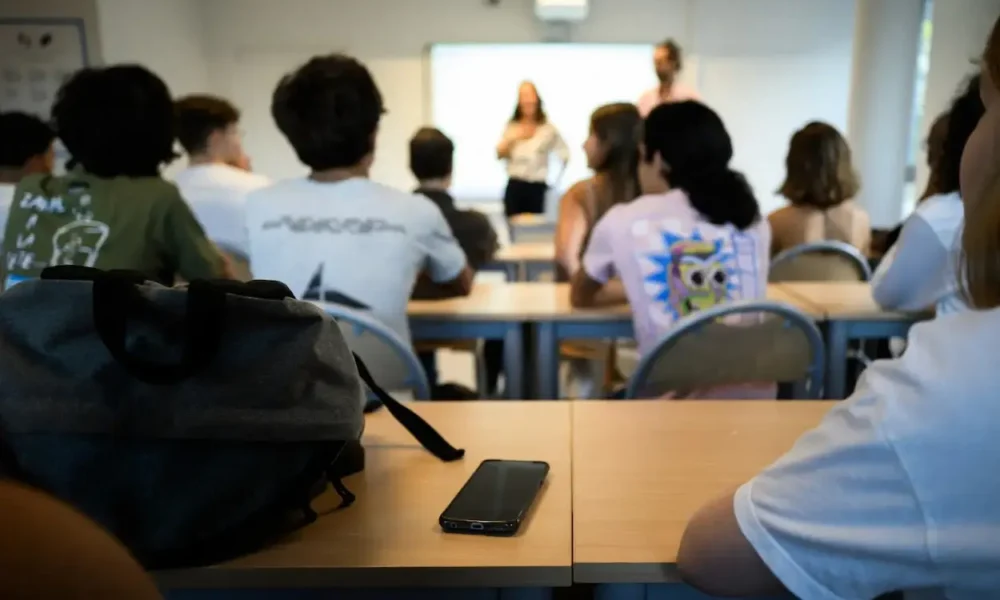
In a continental ranking, Tunisia occupies an enviable place. In a village classroom, it occupies almost none. This great gap sums up the situation of artificial intelligence in Tunisian education.
The country ranks second in Africa for AI talent preparation, behind South Africa, but it still lacks any national strategy to teach, use, or oversee it in schools.
This contradiction is not a fatality. It mainly indicates where the real challenge lies: not in producing engineers, already solid, but in the way an entire education system learns to use a technology that its students have adopted before it.
A Core Reflection from IACE
This is the finding presented by IACE’s strategic note, “For a Tunisian strategy for AI adoption in the education system,” on which this article draws. The document contrasts expected benefits, risks, foreign experiences and the reality on the Tunisian ground, before proposing a low-cost roadmap.
The students have already spoken
On the ground, the question of adoption has been settled for a long time. Worldwide, 86% of students under 12 used AI during the 2024-2025 school year, according to an American report cited by the note.
On the side of primary and secondary teachers, 85% did. Among students, the shift is spectacular: 92% use these tools, compared with 66% a year earlier. The market for educational AI, estimated at $2.5 billion in 2022, had reached $6 billion in 2025 and could surpass $88 billion by 2032.
In Tunisia, this shift occurred without a manual. During an assessment of baccalaureate aptitudes in 2024, one of them summarized the appeal of the tool in one sentence: “We can ask Chat GPT anything.” AI offers an immediate answer, with no risk of classmates ridiculing. Faced with this, part of the teaching body mainly worries about possible cheating, less often the personalized learning it enables.
What others have tried