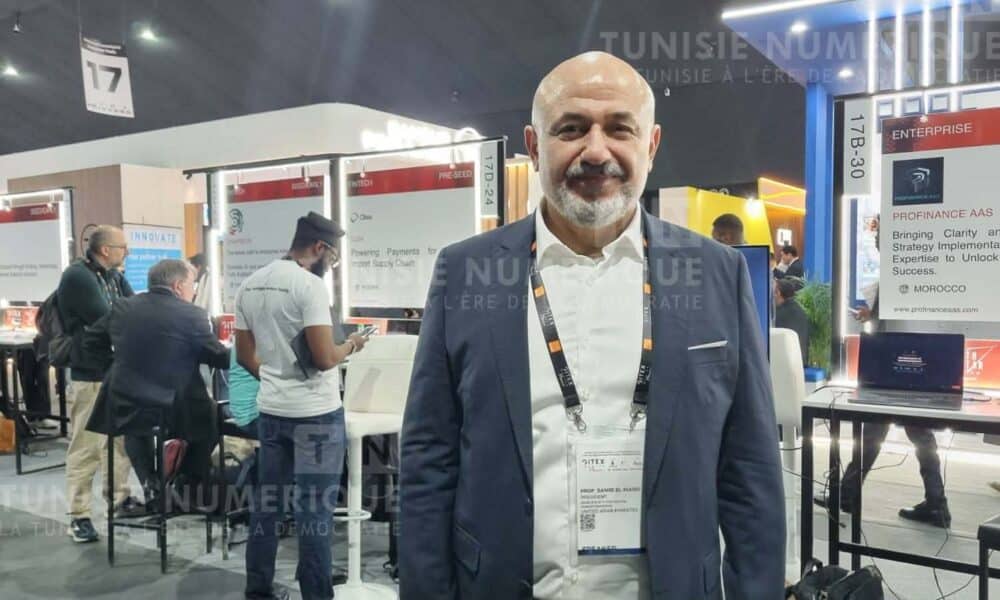
On the fringe of Africa’s largest high-tech and artificial intelligence event, GITEX Africa in Marrakech, Tunisie Numérique had the honour of interviewing Samir El Masri, professor of artificial intelligence and president of the Arab Organization for Digital Transformation.
With decades of experience in this field, a senior trainer, Prof. Samir El Masri has gained solid experience in guiding large companies, public and private sector entities as well as ministries in the Arab world and internationally on artificial intelligence and digital transformation projects. He is also a high-level trainer, capable of transmitting his expertise to leaders, technical teams and young talents to prepare them for the most advanced technologies.
Question: Professor El Masri, in your view, what are the main obstacles preventing Arab countries from fully harnessing the potential of AI, and what strategic actions should they undertake to catch up?
Training the youth and leveraging human capital
“Arab countries are rich in human capital. What we lack is to train these young people and emerging skills in new technologies and the latest advances in AI,” explains the professor. According to him, the potential exists, but it remains underutilized without an appropriate training strategy.
The professor also emphasizes the importance of changing the mindset to push young people and professionals to adopt a culture of lifelong learning, where each day brings new knowledge to acquire.
Investing in research and specialized laboratories
Another key point: investment in research and innovation. In several advanced countries, research and technology budgets reach nearly 6 % of GDP, while in the majority of Arab countries, they do not exceed 1 %.
For Prof. Samir El Masri, accelerating investments in laboratories and supporting specialized researchers is essential to avoid lagging behind in the field of artificial intelligence and high-tech.
Drawing inspiration from international and regional successes
He cites the Gulf countries as an example, which have achieved a remarkable transition from a petroleum-based economy to a technology-based economy, with very positive results in AI and high-tech.
“These countries show that will, combined with a strategic vision and substantial investments, can profoundly transform the economy and create a durable competitive advantage,” he asserts.
A clear message: act now
For the professor, Arab countries must act quickly on several fronts:
- Massively train the youth and emerging skills
- Change the culture and mindset for lifelong learning
- Invest in laboratories and support specialized researchers
- Draw inspiration from successful models to accelerate AI development
“The world is moving very fast. Countries that do not invest now risk remaining spectators of a revolution that will redefine the global economy,” concludes Prof. Samir El Masri.
The era of high-tech and artificial intelligence cannot wait. With his expertise and strategic vision, Professor Samir El Masri highlights the challenges and solutions for Arab countries to fully harness their human and technological potential, and to take their place in the global digital economy.