Alphabet, Google’s parent company, built a stake of about $548 million in Qualcomm in the third quarter. The move comes as the American semiconductor maker seeks to reduce its dependence on the smartphone market and to establish itself in chips for data centers and artificial intelligence.
Key takeaways
• Alphabet’s stake in Qualcomm: $548 million.
• Qualcomm’s objective: $15 billion in data center revenue in 2029.
• Amazon deal could reach up to $60 billion in purchases of chips and related products.
• Microsoft and Meta have also placed orders for Qualcomm processors for data centers.
Qualcomm wants to move beyond smartphones
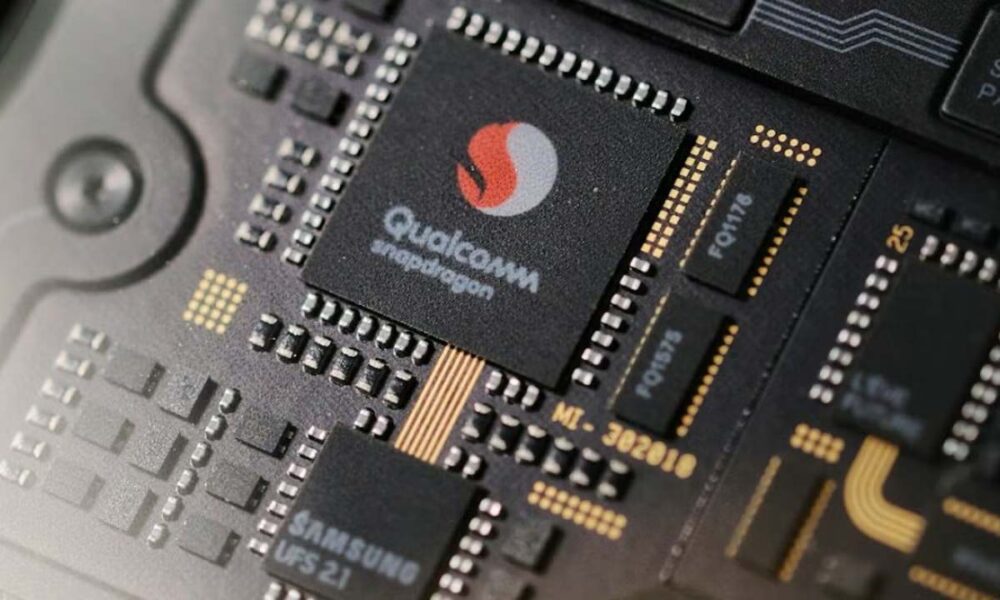
Qualcomm remains best known for its Snapdragon processors, used in many Android smartphones. But the slowdown in the mobile market is pushing the group to seek new growth drivers.
The data center market has become one of its priorities. Qualcomm is developing processors and AI accelerators for large cloud providers looking to diversify their supply.
A possible alternative to Nvidia
Nvidia still dominates AI accelerators by a wide margin. But their high cost and strong demand are pushing cloud operators to develop their own chips or seek alternative suppliers.
Qualcomm aims to profit from this shift. The group expects its revenue from data-center chips to reach $15 billion in 2029.
Amazon, Microsoft and Meta are already in the loop
In September, Qualcomm reached an agreement with Amazon that could allow the cloud giant to purchase up to $60 billion worth of AI chips and related products. The agreement also provides for warrants allowing Amazon to buy Qualcomm shares.
Microsoft and Meta have also supported Qualcomm’s push with orders for processors for their data centers.
Google and Qualcomm have a long-standing relationship
The two groups have collaborated for a long time on Android smartphones. More recently, they have worked together on Google’s premium laptops called the Googlebook as well as on technologies related to automotive artificial intelligence.
Alphabet’s stake does not guarantee additional future orders, but it strengthens the financial ties between the two groups at a moment when Qualcomm is seeking to reposition itself.
The AI battle moves across the entire value chain
The competition no longer focuses solely on AI models. It now encompasses chips, advanced packaging, memories, networks, energy, and data centers.
For large tech groups, having multiple suppliers reduces the risk of dependence on a single architecture and can also strengthen their bargaining power.