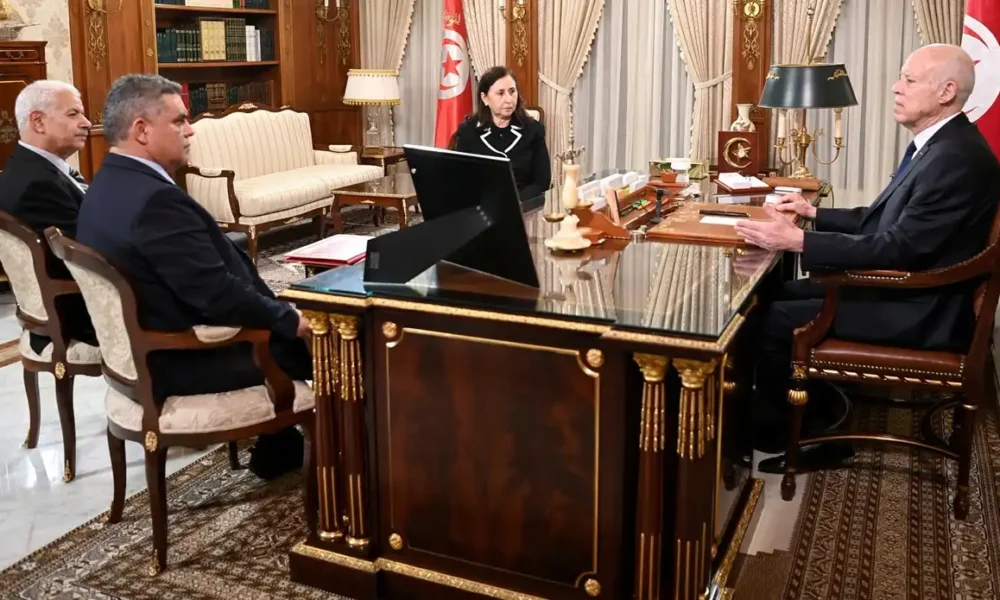
The President of the Republic, Kaïs Saïed, received on November 6 at the Carthage Palace the head of government, Sarra Zaafrani Zenzri, the Minister of Interior, Khaled Nouri, and the Minister of Trade and Export Development, Samir Abid.
According to the Presidency’s statement, the meeting mainly focused on rising prices, distribution channels, difficulties affecting certain agricultural products, waste collection, and the enforcement of the law.
The Essentials
• The head of state called for an end to what he terms the excessive rise in prices and for strengthening the fight against monopoly and speculation.
• The Presidency cites in particular dates, fertilizers and seeds, as well as price fluctuations concerning lobster, poultry, and bottled water.
• Kaïs Saïed also called for regular and continuous waste collection.
• In October 2026, overall inflation stood at 5.6%, while prices of food and beverages rose by 8.5% over the year, according to the INS (National Institute of Statistics).
• The allegations of deliberate practices of shortages, obstruction, or speculation cited in this file are those stated in the presidential communiqué.
Prices at the Center of the Carthage Meeting
The presidential communiqué places the issue of prices at the forefront. Kaïs Saïed called for an end to what he describes as the “crazy” rise in prices and for a crackdown on forms of monopoly that he says are sometimes hidden in certain distribution channels.
The Presidency cites the example of dates and notes that, in some cases, the price at the producer level would not exceed one dinar per kilogram. The communiqué emphasizes the difficult harvesting conditions, notably the work of female workers and farmers who spend long hours up high in the palm groves.
The head of state argued that the chain from production to distribution to sale must be examined so that, in his words, farmers do not bear the bulk of the burden while consumers face high prices.
Fertilizers and Seeds: The President Demands Accountability
The communiqué also discusses the distribution of fertilizers and seeds. Kaïs Saïed states that some actors would deliberately delay their distribution, worsening farmers’ difficulties and risking agricultural production.
He called for those responsible for such practices, as well as those who would support them, to be subjected to oversight procedures and, where appropriate, to justice.
Shrimp, Poultry, and Bottled Water Cited as Examples
Among the phenomena denounced, the Presidency cites abrupt price changes in certain products, as well as their appearance and disappearance on markets. The communiqué mentions, for example, shrimp, poultry, and bottled water.
The head of state believes that some of these variations stem from practices aimed at artificially creating scarcity and exerting pressure on prices.
Inflation: 5.6% in October, Food Prices Up 8.5%
The context of the meeting comes as the INS published October 2026 figures. Overall inflation remained at 5.6% year-on-year.
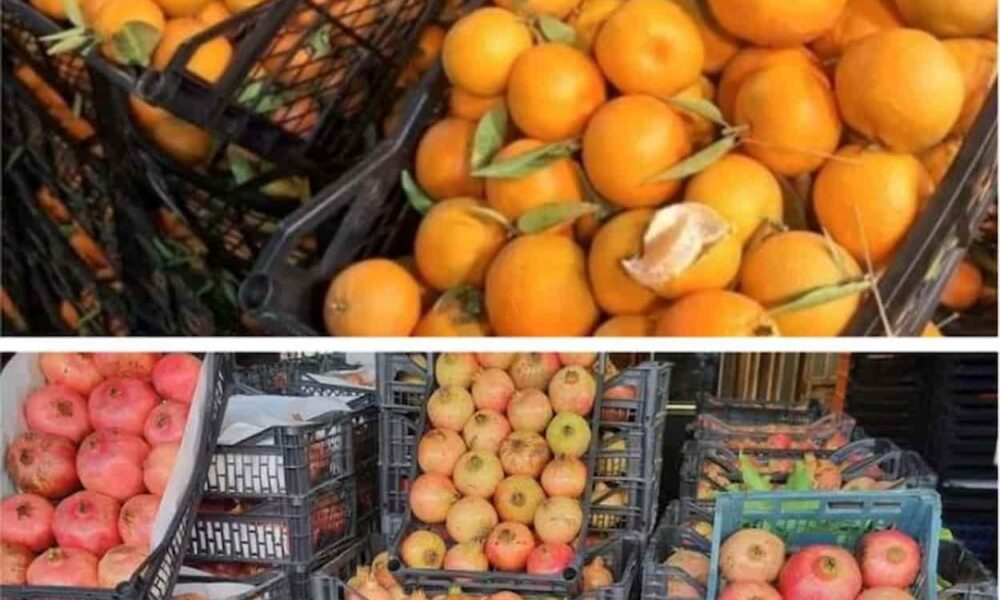
By contrast, prices in the “food and beverages” group rose by 8.5%, up from 8.4% in September. The INS notes notable increases of 20% for fresh fruit, 14.7% for lamb meat, 14.5% for poultry, 13% for beef, 12.9% for fresh vegetables, and 8.9% for fresh fish.
Free-priced food products rose by 9.6% year-on-year, compared with 0.3% for price-controlled food products.
The Ministry of Trade Continues Price Operations
In this context, the Ministry of Trade and Export Development announced a new series of exceptional reductions on several consumer products on November 7 and 8, 2026, in coordination with major retailers. The reductions announced can reach up to 20% depending on the products involved.
The ministry also continues its economic oversight missions, which focus in particular on market supply, the balance between supply and demand, price displays, and the fight against monopolistic and speculative practices.
Imports: Priority Given to Essential Needs
Kaïs Saïed also rejected the argument that the state’s lack of financial resources would prevent action on certain issues, noting that substantial amounts continue to be allocated to the importation of products deemed non-essential or luxury items.
The message to the government is therefore to prioritize, according to the Presidency, the needs directly related to citizens’ standard of living, market supply, and national production.
Waste: Kaïs Saïed Calls for Regular and Continuous Collection
The second major aspect of the meeting concerns urban cleanliness. The President called for intensified waste collection operations and for them to be carried out regularly, continuously, and without letting waste accumulate for several weeks or months.
He also stated that some actors would seek, in his view, to exploit such a situation to heighten social tensions. The communiqué does not name these actors.
Accountability and Legal Enforcement
The head of state repeatedly stressed the responsibility of public and private actors. He said that anyone involved in the denounced practices should be subject to prosecution and that the law must apply to all, regardless of level of responsibility or the position held.
In the final part of the communiqué, Kaïs Saïed also framed these dossiers within a broader political context, stating that those who, in his words, sought to divide the state, fragment society, or undermine freedom of thought have no place in Tunisia’s future.
The presidential communiqué thus sets out a clear political directive: strengthen market oversight, protect purchasing power and agricultural production, and improve the continuity of sanitation services.