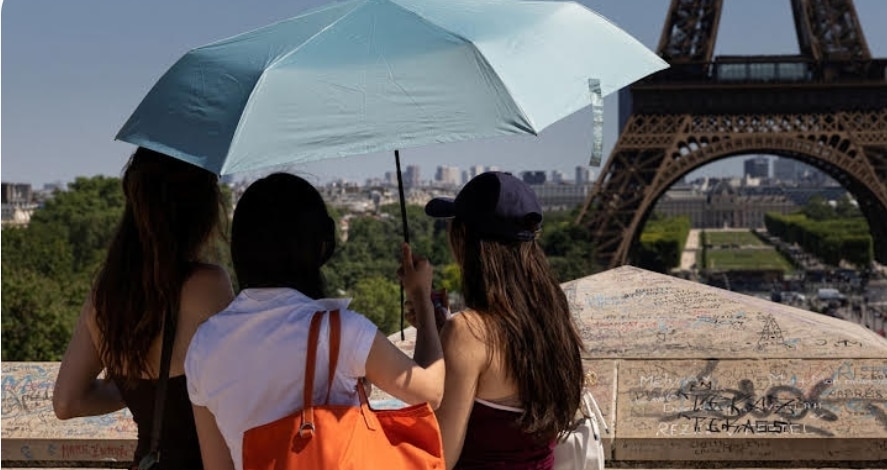
According to a study conducted by Allianz Trade, the recurring extreme heat waves expected in the coming years could cost the French economy up to €206 billion ($240 billion) between 2026 and 2030, placing the country among the most affected by rising temperatures, alongside Japan and Italy. This study relies on data relating to temperature and labor productivity across 35 countries over the past 30 years.
According to this study, France is considered one of the economies most sensitive to temperature variations. During heat waves, the hourly value of labor output in France can decline by €1.7 to €2.6 (roughly $2 to $3).
The study also indicates that, within a temperature range of 30 to 35 degrees Celsius, each additional degree Celsius results in an average about 3% drop in hourly labor productivity. Lack of sleep, fatigue, stress related to commuting in urban areas where heat is omnipresent, and the absence of air conditioning in workplaces significantly reduce work efficiency.
The sectors most directly affected are agriculture, construction, and tourism – industries that employ a large number of outdoor workers.
Experts recommend developing types of housing capable of maintaining cool temperatures without relying solely on air conditioning, and adjusting working hours during periods of high heat to protect workers’ health and minimize economic losses.
The most exposed countries must anticipate the financing needs of states and businesses to adapt. Public spending related to heat already represents 1.6% of GDP in France and up to 2.2% in Italy in 2026 according to Allianz Trade, widening deficits and reducing budgetary room for maneuver.
Such pressure is not without consequences: the French government struggles to implement a broad price shield in response to the surge in oil prices fueled by the Iranian conflict.
Without massive investments in the thermal insulation of buildings, infrastructure, and worker protection, the economic damages erode tax revenues, thereby limiting governments’ ability to invest to protect themselves. A vicious circle that is hard to break.