The Minister of Communications Technologies announced that the results of the recruitment competition for 290 agents for the National Post Office were ready and would be published soon, after verification of the candidate lists. New competitions must also be organized to recruit 400 additional agents.
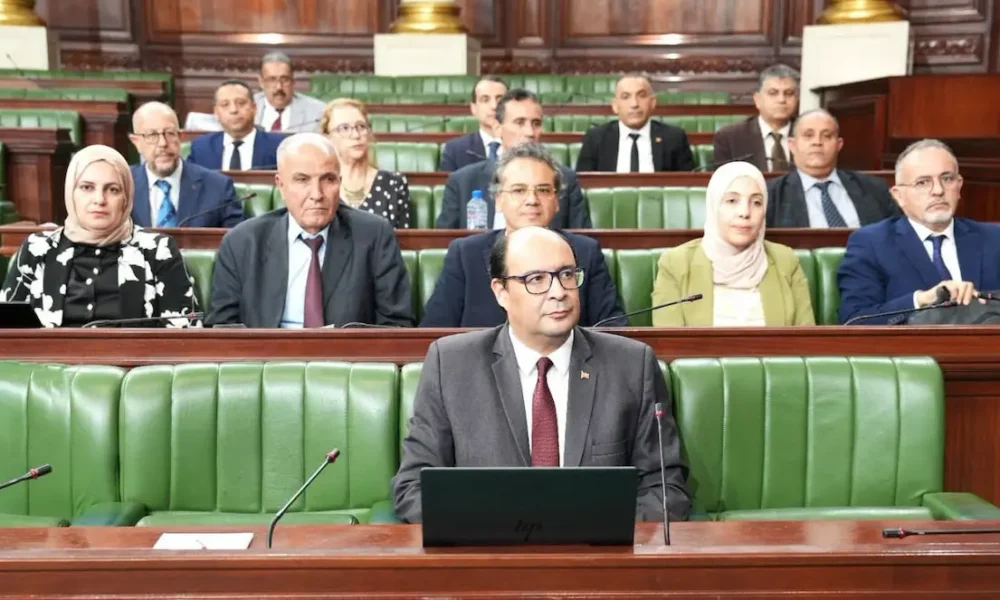
These announcements were made during a joint plenary session devoted to examining the budget for the Communications Technologies mission within the framework of the Finance Bill 2027.
The Post Office plans new recruitments
The minister explained that the lack of human resources at the National Post Office is explained by the freeze on recruitment in recent years. The competition for 290 positions has reached its final phase. Its results will be announced after verification of the candidates’ lists.
The ministry also plans to organize new competitions to recruit 400 agents and strengthen the institution’s workforce.
Referring to the crowding in post offices, especially in the regions, the minister said that the pressure can also be explained by the lack of service structures, such as banks. He presented the acceleration of the digital transformation of postal services as a way to reduce this pressure, improve efficiency and bring services closer to citizens.
The creation of new post offices will be based on projects included in the 2026-2030 development plan. These projects, drawn from local, regional and district councils, were approved by the Assembly of the People’s Representatives and the National Council of Regions and Districts. The minister said that this plan will serve as a reference to define future interventions, the projects appearing therein being a priority.
The postal bank project under study
Regarding the postal bank, the minister said that several scenarios were under study. The objective would be to offer banking services to the most disadvantaged categories in terms of economic inclusion.
The establishment of such a device would, however, require a new model of banking establishment, as well as the adoption of laws and procedures adapted to the management of this activity.
White zones remain to be covered
The minister described the rate of telecommunications coverage in Tunisia as “very satisfactory.” He noted, however, that some areas are not covered by the contractual obligations of the operators and are designated as “white zones.”
The ministry has allocated funds to intervene in these zones and integrate them into the sectors covered. The three telecom operators, however, face field difficulties, notably in obtaining municipal authorizations and installing antennas.
Digitization and artificial intelligence at the heart of priorities
The minister stressed that digital transformation is not limited to platforms and technological tools: it also requires an evolution of practices and mindsets. The development of interconnection between administrations has already begun to yield results in several ministries, notably those of Education, Higher Education and Scientific Research, Professional Training and Employment, and Social Affairs.
Data exchange between public structures must facilitate procedures, improve service efficiency, and strengthen the quality of services. The minister indicated that some projects had already been completed and that others were in preparation for next year.
He also warned about transformations linked to the rapid development of artificial intelligence. These could affect all sectors of the economy, jobs, and specialties, altering production and work methods, as well as the needs for skills.
To prepare for this, he underscored the need to adapt training, qualification and professional retraining systems, and to support businesses and administrations. According to him, this approach should allow harnessing the opportunities offered by artificial intelligence while limiting risks of job losses, professional exclusion and worsening social and economic inequalities.
Protection of children and awareness among parents
The protection of families and children against risks related to social networks is among the ministry’s priorities, the minister affirmed. Steps are underway in coordination with the Ministries of Women, Family and Education to implement the necessary protection mechanisms.
The minister also stressed that raising awareness among parents is a challenge. Information campaigns are in preparation.
Ways to facilitate startups’ access to public procurement
The minister identified limited access of startups to public procurement as one of the sector’s main difficulties. The current rules rely, in particular, on the prior definition of needs in specifications and on delivering the services before payment. These requirements do not always fit the specifics of innovative projects, which require more flexibility and the ability to adapt solutions during implementation.
To facilitate startups’ participation in public projects, the ministry proposes introducing a section dedicated to innovative public procurement in the new version of the Startup Act 2.0. It also plans to revise the decree governing public procurement to better reflect the nature of these companies’ activities.
Among other avenues mentioned are the possibility for startups to periodically resort to direct negotiation and the creation of a “spontaneous application” mechanism. This would allow entrepreneurs to directly present their solutions and innovative projects to the administrations, outside the standard public procurement procedures.