The Ministry of Finance has mobilized a fund of 76 million dinars, drawn from the Development Fund for the ICT sector, in order to extend the coverage of telecommunications networks to white zones that are not included in the contractual obligations of the three telecom operators.
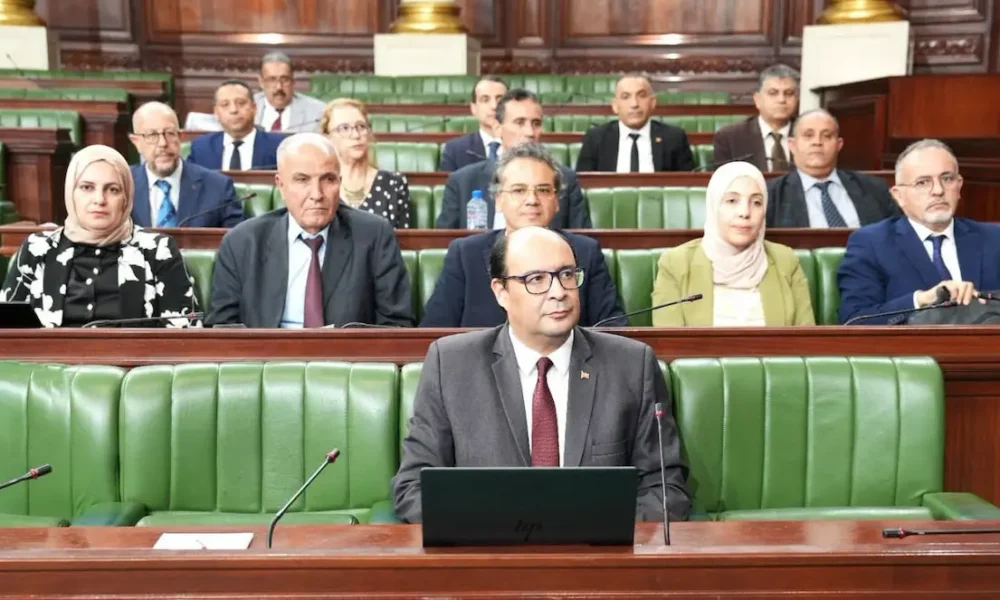
This was announced by Sofiane Hmissi, the Minister of Technologies of Communication, at the dawn of this Thursday, November 19, 2026, at the Bardo Palace, during the joint plenary session devoted to examining the budget of his ministry.
White zones: construction has begun
In response to interventions by deputies of the Assembly of the Representatives of the People and the National Council of Regions and Districts, Sofiane Hmissi indicated that the contract related to the project had been concluded with Tunisie Telecom.
The companies responsible for its realization have begun work in the zones concerned, after overcoming certain obstacles related to administrative authorizations and procurement procedures.
This project is part of efforts to reduce the digital divide between regions and to improve access to telecommunications and Internet services.
The minister, however, noted that, while the technologies available today allow coverage of medium and large urban areas, difficulties remain in sparsely populated, border, mountainous and desert areas.
In these territories, deploying fiber optic and installing relay antennas remain particularly complex.
Satellite Internet: customs exemptions considered
To address coverage difficulties in enclave and isolated regions, the Ministry of Technologies of Communication is working, in coordination with the relevant ministries, to introduce new technological solutions, notably Satellite Internet.
According to Sofiane Hmissi, this technology could help to improve connectivity in regions that are difficult to access with conventional infrastructures.
The minister also indicated that the 2027 Finance Bill includes provisions to exempt customs duties on certain equipment for satellite Internet connections, in order to facilitate the use of this technology and broaden its accessibility.
Tunisia plans to abandon the copper network before December 2027
Regarding the modernization of telecommunications infrastructure, Sofiane Hmissi announced that Tunisia intends to definitively abandon the copper network before December 2027, gradually replacing it with fiber optics.
This transition, however, requires substantial financial resources, as well as timelines to carry out the works in the various regions of the country.
The minister also indicated that the coverage rate of telecommunications networks now exceeds 90% of the Tunisian population.
He nonetheless acknowledged that the coverage of zones still lacking these services constitutes a major challenge.
Network quality: operators under supervision
Regarding the quality of telecommunications services, Sofiane Hmissi affirmed that his ministry and the National Telecommunications Authority (INT) monitor compliance with the contractual commitments of the three operators.
Periodic operations to measure the quality of networks are carried out, with the possibility of imposing financial sanctions when the observed quality levels fall below the thresholds set in the operating licenses.
Administrative and technical obstacles hinder deployment
The minister finally mentioned several difficulties hindering the realization of telecommunications network development projects.
Among the main obstacles are delays in obtaining municipal authorizations, difficulties related to digging works and the installation of relay antennas, as well as some oppositions that can sometimes lead to court decisions ordering the withdrawal of telecommunications equipment.
All these constraints that Tunisia must face to modernize its infrastructures, reduce territorial disparities and improve access to digital services.