France experienced on Saturday October 24, 2026 a new day of massive mobilizations, with 410,000 protesters according to the Ministry of the Interior and nearly 800,000 according to the CGT.
In Spain, thousands defended public pensions. Other rallies marked Italy, Belgium, Portugal and Albania. But why are these citizens protesting?
Behind images that are sometimes similar, the causes differ: schooling, purchasing power, housing, pensions, or political dissent.
The essential figures for October 24
France : 410,000 participants according to the Interior, nearly 800,000 according to the CGT; in Paris, 110,000 according to the prefecture, 250,000 according to the CGT.
Spain : 25,000 protesters in Madrid according to the government delegation, 50,000 according to the organizers.
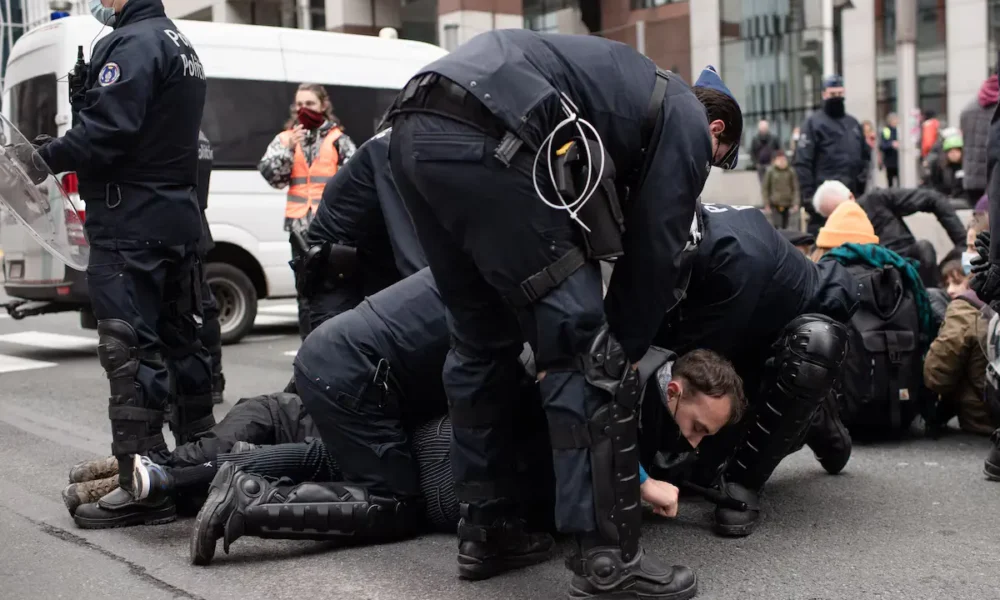
Belgium : several hundred participants in Brussels and nine people detained by police according to its tally.
France : from a high-school protest to a challenge to the cost of living
France is hosting the largest protests on this Saturday. The movement began with demands about teaching conditions, before expanding to wages, pensions, purchasing power, and the defense of public services. Students, pupils, workers and unions thus come together in the marches, not necessarily holding exactly the same demands.
A figure sums up the educational crisis being denounced: according to data cited by the Associated Press, 15.4 million hours of classes were not held in 2024-2025, notably due to a shortage of substitute teachers. The protesters are demanding more teachers and resources; among their demands is also the creation of 250,000 additional places in higher education.
In Paris, the prefecture counted 110,000 protesters, versus 250,000 announced by the CGT. Several marches were marked by clashes at the end of the route, notably in Paris, Nantes, Grenoble and Toulouse. The Ministry of the Interior had planned up to 70,000 police and gendarmes across the country, in the context of violence that occurred the previous weekend.
Spain : why pensions are at the heart of concerns
In Madrid, the mobilization organized by the Coordination nationale pour la défense du système public de pensions (COESPE) gathered 25,000 people according to authorities and 50,000 according to organizers. Its central objective is to preserve public pensions and their revaluation according to inflation.
Participants notably demand a minimum pension closer to the minimum wage, a reduction of pension gaps between women and men, and guarantees against partial privatization. The issue extends beyond current retirees: aging of the population, low birth rates and future financing of the system also worry workers.
The issue has entered the political debate ahead of the Spanish legislative elections on November 29, 2026. Parties disagree on ways to preserve pension levels and the sustainability of the system, without the protesters necessarily forming a homogeneous partisan bloc.
Understand: six countries, not a single demonstration
The parades do not stem from a single European call. In France, the demands mix schooling and the high cost of living; in Spain, pensions dominate; in Portugal, housing access is the main issue; Italy has several distinct movements and Albania a contestation of the government. It would be incorrect to aggregate the national tallies to describe a single organized movement.
Italy : prices, military spending and security at the center of tensions
In Italy, rallies were held or announced in several cities around the rise in the cost of living, low wages, housing, military spending, and certain government decisions. In Rome, a march notably defended the slogan “Keep Italy out of war.” In Turin and Bologna, tensions between some protesters and the police were reported.
Following the violence of the previous weekend in Milan, authorities tightened security, notably with 500 additional troops in the city. The ANSA agency reported more than 150 searches as part of investigations into earlier disturbances. This figure concerns police operations, not the number of people who demonstrated this Saturday.
No reliable national total of participants was available in the reports consulted. The figures announced before marches, notably forecasts of 10,000 participants for some rallies, should not be presented as observed attendance.
Belgium : education and the issue of police interventions
In Brussels, several hundred protesters, mainly youths, called for more resources for education and denounced police interventions they deem excessive during previous rallies.
According to Reuters, clashes occurred and police used tear gas and irritant aerosols. The Brussels police, however, said they observed no major incidents and reported nine people detained, including five for public-order disturbances and four for offenses including possession of prohibited weapons or incitement to violence. These incidents should be distinguished from the overall participants in the marches.
Portugal : why housing has become the symbol of the social crisis
In Lisbon, several hundred people took part Saturday in a march for access to affordable housing, from the Marquês de Pombal area toward Rossio Square. The movement “Acampada de Lisboa” is calling for more public housing and stronger protections for tenants against speculation.
The problem is long-running: according to Reuters, housing purchase prices have more than doubled since 2017 and rents for new leases have nearly doubled. Tourism, demand in major cities, and the shortage of available housing amplify tensions.
On October 20, police dismantled protest encampments in Lisbon and Porto, with 55 arrests. This tally concerns that earlier operation, not the October 24 march. The protesters challenge a government proposal relating to evictions and the rules capping new rents.
Albania : students challenge the government of Edi Rama
In Albania, the mobilization is more directly political. Students and other protesters protest against the cost of studies, lack of job prospects, and corruption they attribute to the power. Some protesters are calling for the departure of Prime Minister Edi Rama, in power since 2013 and reelected for a fourth term in 2025.
Saturday in Tirana, protesters threw stones at police and a fire was started at the entrance of the Ministry of Agriculture. Security forces used tear gas, water cannons and rubber projectiles. Authorities and protesters present opposite interpretations of the crisis. No reliable consolidated count of Saturday’s participation has been established in the sources consulted.
Why are these bursts of anger surfacing at the same time?
Purchasing power : households challenge constrained expenditures, notably energy and housing.
Public services : students, workers and retirees demand resources or guarantees for schools, health, and pensions.
Political trust : some movements challenge budgetary decisions or denounce practices attributed to governments. These common factors do not prove coordination between countries or a single cause.
What possible effects for Tunisia and its diaspora?
For Tunisians living in France and Italy, these mobilizations can have immediate effects on travel, especially when travel restrictions, transport disruptions, or preventive closures are announced. Travelers should consult information from operators and local authorities rather than assume all cities are affected in the same way.
The European Union is also a major commercial and economic partner of Tunisia. However, no verified data allows quantifying the impact of the October 24 protests on exports, tourism, or transfers of Tunisians residing abroad. The economic stakes would be greater if a lasting downturn in activity or prolonged disruptions to services were to be confirmed.
Beyond the incidents, this day illustrates distinct social difficulties faced by several European governments. The demands are not limited to a general anger: they concern concrete issues, from access to a well-equipped classroom to paying rent or preserving a pension.