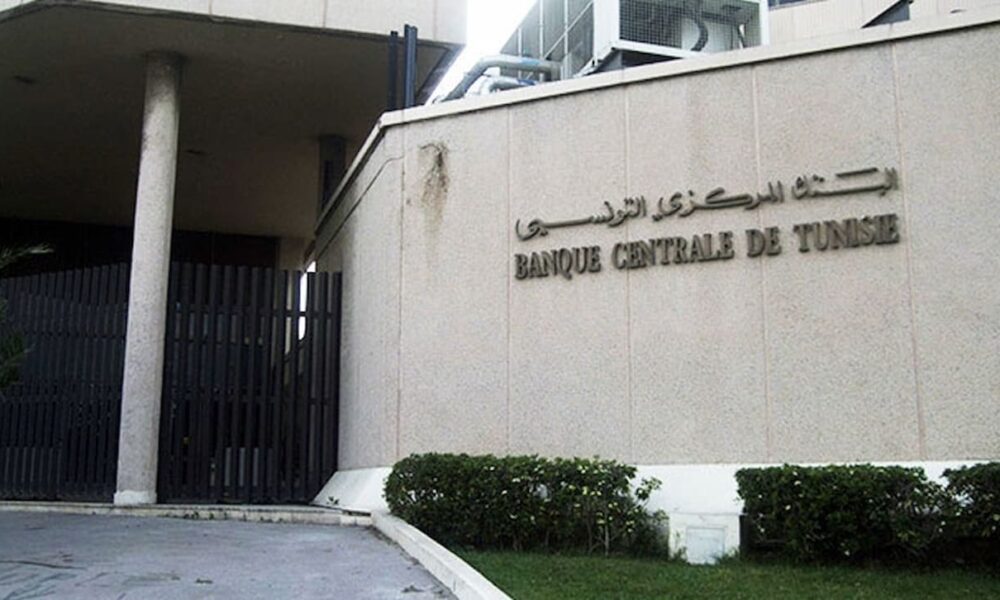
The economist and financial analyst Bassem Ennaifer indicated that the decision of the Central Bank of Tunisia (CBT) to raise the banks’ mandatory reserve rate from 1% to 3% aims primarily to regulate liquidity and to mitigate inflationary pressures, thereby contributing to price stability and strengthening the stability of the banking system.
In a statement to Tunis Afrique Presse (TAP), Bassem Ennaifer clarified that the CBT published, on October 9, 2026, a circular concerning the increase of the mandatory reserve rate applied to current accounts and to other sums owed to clients. This measure will take effect starting November 1, 2026.
He explained that mandatory reserves constitute one of the monetary policy instruments used by the Central Bank, alongside the policy rate, to manage the country’s financial situation. They correspond to a fraction of the deposits collected by commercial banks from their clients, which they are required to place in blocked accounts at the Central Bank, in return for limited remuneration.
The increase from 1% to 3% means that banks will now have to deposit 30 million dinars with the Central Bank for every 1 billion dinars of sight deposits, compared with 10 million dinars previously.
According to the analyst, this measure falls within the framework of liquidity regulation, particularly in a context marked by inflationary pressures and the rising volume of banknotes and coins in circulation, which reached about 29.3 billion dinars as of October 14, 2026.
Bassem Ennaifer stressed that locking up a larger share of banks’ funds should limit their capacity to grant new loans and, consequently, to create money through banking financing. This development would thus help contain inflationary pressures.
He also estimated that mandatory reserves constitute a precautionary mechanism offering a safety margin, guaranteeing the availability of a minimum level of liquidity at the Central Bank. These reserves can be mobilized to face potential liquidity tensions and contribute to strengthening financial stability.
Conversely, the analyst noted that this measure will have repercussions on the cost of banks’ resources, given that funds deposited with the Central Bank generate limited remuneration, which will entail additional charges for banking institutions.
He added that the tightening of liquidity conditions could also affect the ability of commercial banks to finance small and medium-sized enterprises (SMEs), as well as the overall economic fabric.
Finally, Bassem Ennaifer specified that the increase in the mandatory reserve rate does not apply to ordinary savings accounts and other savings accounts, nor to term deposits, Treasury bonds, and other financial products.