The Tunisian Company for Electricity and Gas (Steg) organized, under the supervision of the Ministry of Industry, Mines and Energy, this Tuesday morning, March 31, 2026 in Tunis, an information day dedicated to presenting the progress of the smart electricity and gas network project, “SMART GRID”.
The event took place in the presence of representatives of the project’s technical partners (SIA, efluid, Siemens, Sagemcom-Siame), the project monitoring team within Steg, and representatives from the media.
The proceedings of this information day were opened with a welcome address delivered by Fayçal Taifa, chief executive officer of STEG, followed by a speech from Christophe Cottet, director of the Tunisian office of the French Development Agency (AFD). The official kick-off of this meeting was then given by Wael Chouchane, State Secretary to the Minister of Industry, Mines and Energy, in charge of the energy transition.
This meeting also featured a comprehensive technical presentation, during which the speakers reviewed the different stages of project execution, highlighting the main results of the first phase, as well as the prospects and recommendations for the second phase.
The smart electricity and gas network project is among the national priority projects under government scrutiny, due to its strategic importance in the development and digitization of services provided to customers, support for the integration of renewable energies, improvement of governance and management of electricity and gas networks, as well as the modernization of customer relationship management systems.
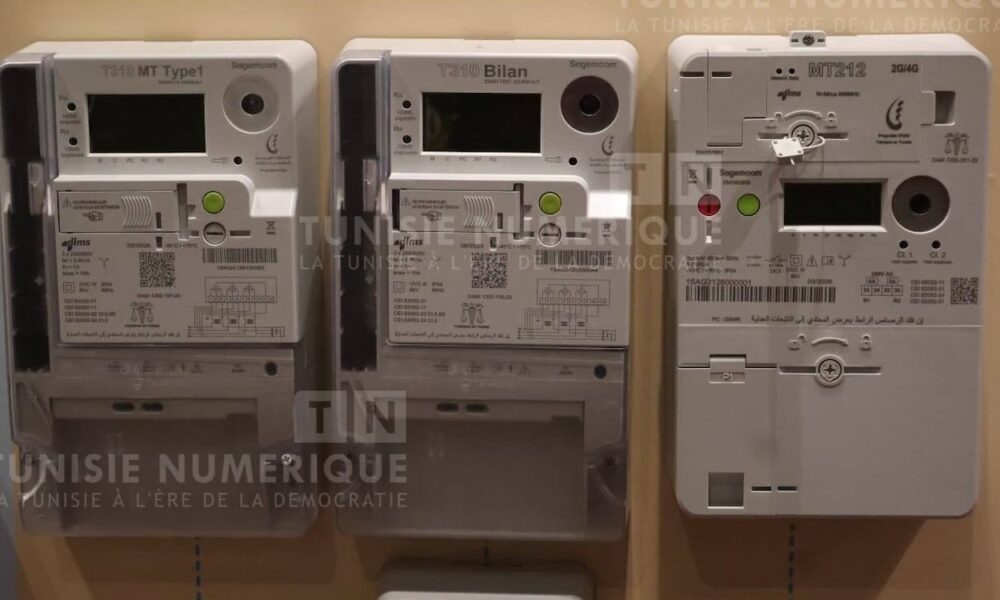
Thanks to the mobilization of all stakeholders, the project recorded notable progress during the years 2024 and 2025, after resolving numerous issues and overcoming several difficulties. Thus, by the end of March 2026, the company proceeded to install about 80 thousand low-voltage smart meters, distributed across the regions of Sfax, Gafsa, Sousse, Tunis-East, and Beja, in addition to 5 thousand medium-voltage smart meters deployed nationwide.
In preparation for the second phase, the installation of the smart meters planned under the first phase will continue until completion, with a total of 450 thousand electricity meters and 100 thousand gas meters, by the end of 2026.
Regarding future prospects, it is planned, for 2027-2030, to generalize the deployment of smart meters to more than 5 million units across the entire national territory. This step should pave the way for the establishment of an integrated smart energy network, capable of strengthening the company’s operational and commercial performance, while improving the quality of digital services offered to customers.
Financing-wise, it should be recalled that the first phase of the project was financed by a loan from the French Development Agency, amounting to 120 million euros, i.e., approximately 400 million dinars.