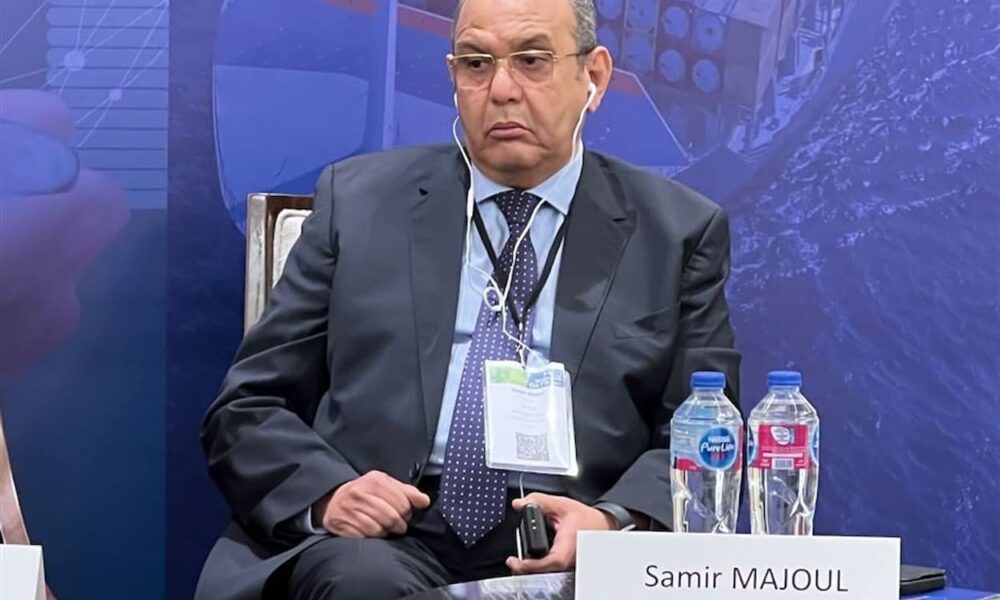
The president of the Union of Arab Chambers and the Tunisian Union of Industry, Trade and Handicrafts, Samir Majoul, called for strengthening Arab economic integration and accelerating the full implementation of the Greater Arab Free Trade Area.
Speaking on the sidelines of the 137th extraordinary session of the Council of the Union of Arab Chambers, Samir Majoul stressed the necessity of removing tariff and non-tariff barriers in order to boost the volume of trade among Arab countries.
Developing Common Arab Projects
The president of the Union of Arab Chambers also stressed the importance of launching joint projects in strategic sectors, notably sustainable agriculture and water technologies.
According to him, these areas are essential to address current global challenges and secure the region’s needs, in a context marked by geopolitical tensions, economic disruptions and pressures on natural resources.
Supporting Startups and Innovation
Samir Majoul also called on the Arab chambers to adopt strategies that foster startups and technological innovation, in order to strengthen the competitiveness of the Arab private sector on international markets.
He asserted that the private sector is the main engine of economic growth, advocating for its deeper involvement in the formulation of economic policies, laws and tax legislation.
Building Robust Arab Supply Chains
In the face of fluctuations in the global economy, Majoul called for uniting Arab efforts to build more flexible, solid and resilient supply chains able to withstand international shocks.
He stated that the Arab world possesses significant resources, notably in the energy sector, but that it must better capitalize on them through a common vision and coordinated investment projects.
For a Unified Arab Vision
Samir Majoul emphasized that the Arab region is going through a true crisis due to war and the deep changes that result from it. He nevertheless believed that Arab countries possess substantial potential, particularly thanks to their energy reserves.
According to him, what is missing today is the unification of visions, the sincerity of intentions and mutual trust among Arab countries.
He concluded by calling for efforts to build a common Arab future, grounded in economic integration, regional cooperation and the strengthening of the private sector’s role.