There are reforms that are announced with loud fanfare, and others that are imposed by the sheer force of numbers. The debate over prepaid electricity and gas payments belongs to the second category.
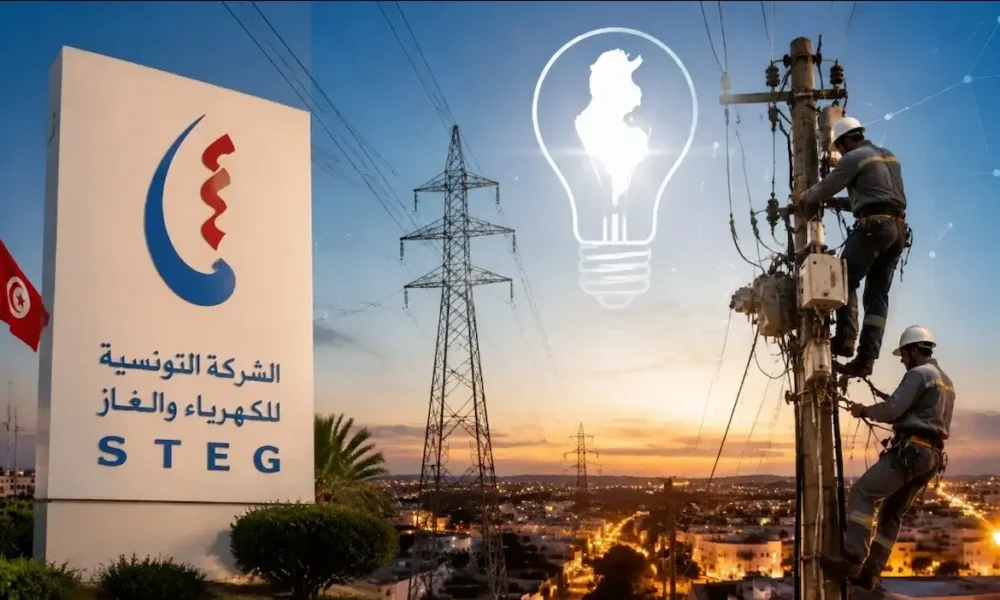
Aside from the technical question, that of the energy billing method, what is really at stake is a redesign of the relationship between the State, the public company and the citizen-consumer. The Tunisian Electricity and Gas Company (STEG) is no longer merely facing a cash-flow problem. It is the mirror of an energy model entire that has reached a turning point.
The data are unequivocal. According to the reports on the draft finance laws for the years 2022, 2023 and 2024, published by the Ministry of Finance, the public subsidy allocated to STEG rose from 1,626 million dinars in 2022 to 2,678 million in 2023, before reaching 4,019 million in 2024. This trajectory, far from being a simple conjunctural adjustment, draws a budgetary slope that calls into question the sustainability of the current pricing system itself.
A bill that no longer waits for the consumer
The principle of energy prepayment reverses a logic that has endured for several decades. Instead of consuming and then paying, the user recharges a credit before using electricity or gas, thanks to a connected smart meter.
This temporal inversion changes everything for STEG. The interval between consumption and cash collection, a structural source of nonpayment and debt-collection costs, simply disappears. The company secures its revenues before energy circulates in households.
This instrument, already proven in several Sub-Saharan African and Latin American countries, is therefore not a risky experiment. It is a financial-management tool whose effectiveness has been tested in economic contexts comparable to Tunisia’s, where the management of public receivables directly conditions the national budget balance.
A New Relationship with Energy