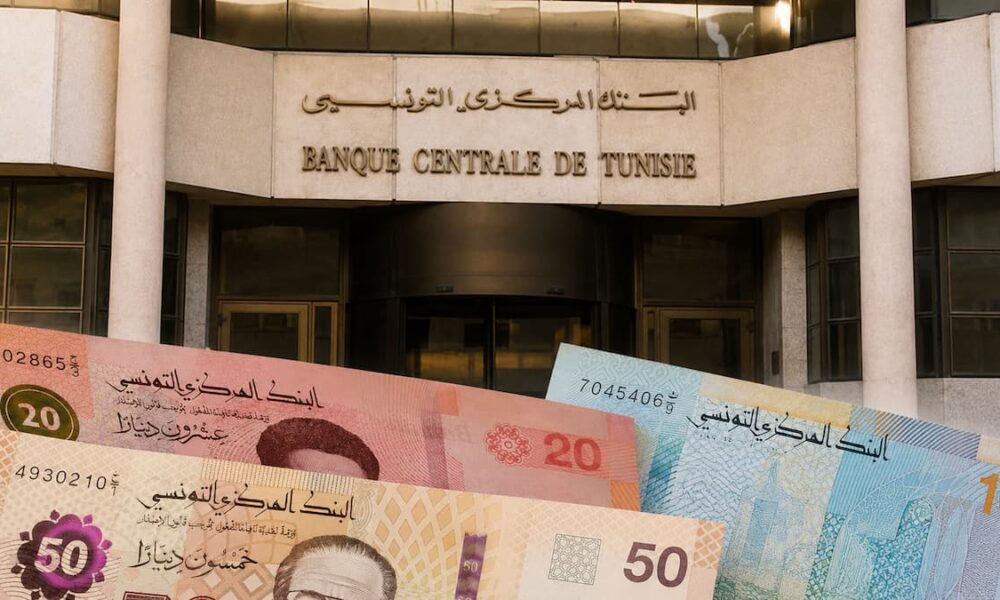
The Central Bank of Tunisia (BCT) announced that the Macro-prudential Surveillance and Financial Crisis Management Committee, created under Article 85 of Law No. 2016-35 establishing the BCT’s statute, held, under the presidency of the Governor of the BCT, on August 27, 2026, its 12th meeting.
During this meeting, the Committee reviewed the evolution of the economic and financial situation and examined the state of the banking sector as well as the activity of the financial market and the insurance and microfinance sectors.
In a context marked by rising uncertainties at the international level, the banking sector continued to strengthen its prudential indicators with an average solvency ratio of 15.2% and a Tier 1 ratio of 12.2% at end-March 2026, enabling a capital buffer of 5%. The sector also maintained a liquidity position at satisfactory levels during the first half of 2026.
However, credit activity continued to evolve at a moderate pace during the first six months of 2026 with a growth rate of 1.3%, reflecting the weakness of lending to the private sector and to individuals. Also, the share of non-performing assets in total commitments rose to 15.1% at end-June 2026 compared with 14.9% at end-2025.
Regarding the activity of the financial market, the BCT recalled that the TUNINDEX index had shown a performance of 49% from the beginning of the year to the end of July 2026. The volume of trading on the stock exchange also rose by 60.9% compared to the same period of the previous year.
The net assets of UCIs continued their upward trend with an increase of 35.1% since the start of the year to reach 11,479 MD by end-July 2026. For their part, primary market issuances declined by 5.8% in May 2026 compared with the same period of the previous year to stand at 5,329 MDT while remaining focused on Treasury issuances.
“Moreover, the normal resumption of negotiations since July 29, 2026 and, after the BVMT triggered the circuit-breaker mechanism during the trading sessions of July 28 and 29, 2026, confirms the strength of the market and the ability of regulators and all market participants to preserve stability and investors’ interests,” reads a BCT press release.
At the level of the insurance sector, the BCT indicated that activity indicators show a sustained rise in turnover reaching 4,243 MDT in 2025 and investments reaching 10,818 MDT by the end of 2025.
Moreover, the sector continued the consolidation process of its prudential ratios under the current framework with average coverage rates of the solvency margin and technical provisions at 302.9% and 106.2% respectively at end-2024.
For its part, the microfinance sector continued its contribution to the national effort to promote financial inclusion with a continuous rise in the number of microcredit beneficiaries and in the outstanding microfinancing amounts to 856 thousand beneficiaries and 3,010 MDT by the end of 2025.
Meanwhile, the sector continued to manage credit risk with a 30-day portfolio at risk rate of 2.6% at end-March 2026. Also, the consolidated solvency ratio of MFIs SA stood at 22% in 2025, well above the regulatory minimum of 15%.
According to the BCT, it was agreed at the end of this meeting to continue coordination regarding prudential surveillance in light of the persistent international uncertainties. Emphasis was placed on the need to maintain a cautious risk-hedging approach while highlighting the need to strengthen the contribution to financing and support for economic operators in order to further drive investment and growth.
On another note, the committee members reaffirmed their commitment to strengthening the coordination of initiatives in promoting sustainable finance, covering climate risks, and addressing environmental, social and governance (ESG) issues.