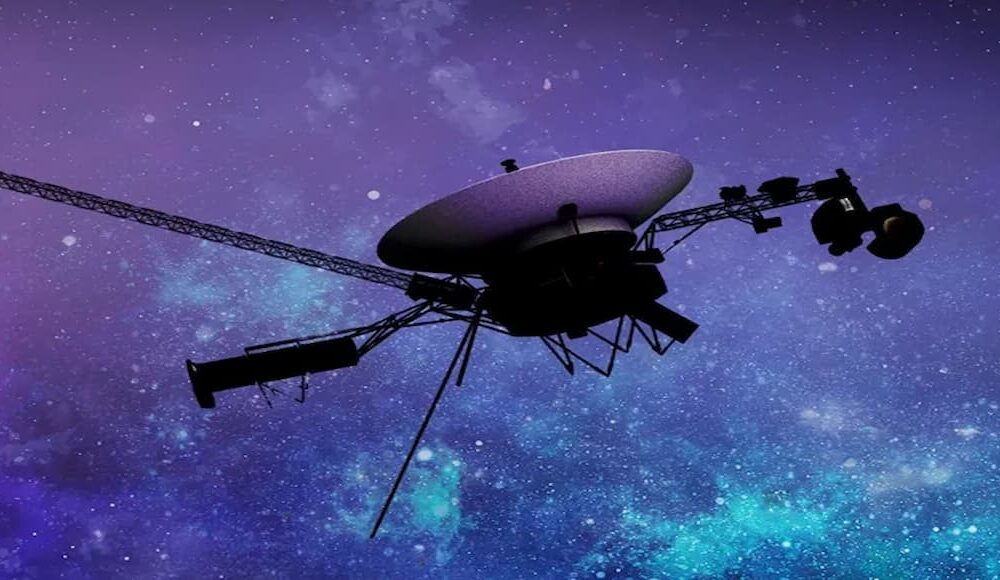
Tunisia is set to participate, on Tuesday, November 17, 2026, in a global initiative celebrating the historical journey of the American space probe Voyager 1, by sending it a symbolic light salute on the occasion of its arrival at a distance of one light-year from Earth, according to the Tunisian Association of Astronomy.
The association invites all citizens to take part in this initiative launched, according to its press release, by NASA, at 7:00 PM, Tunis time, across the entire national territory.
The Essentials
- Date : Tuesday, November 17, 2026.
- Time : 7:00 PM, Tunis time.
- Location : across Tunisia.
- Participation : transmit the letters VGR in Morse code using a flashlight or a mobile phone.
- Distance : one light-year represents about 25.9 billion kilometers.
How to participate in this initiative?
People wishing to participate in this event can point a flashlight or the light from their mobile phone toward the sky and transmit the three letters “VGR” in Morse code.
To perform this light salute, simply alternate short and long signals according to the following sequence:
| Letter | Morse Code | Light signals |
|---|---|---|
| V | • • • — | Short, short, short, long |
| G | — — • | Long, long, short |
| R | • — • | Short, long, short |
A dot corresponds to a short light signal and a dash to a signal three times as long.
This gesture carries symbolic and educational significance. It is not a real means of communication with the space probe.
What does a distance of one light-year represent?
One light-year corresponds to the distance light travels in 24 hours, about 25.9 billion kilometers.
25.9 billion
kilometers in one light-year
24 hours
to transmit a signal from Earth
48 hours
for a round-trip signal
At this distance, radio signals take about 24 hours to reach the probe from Earth, and as long for the return trip, i.e., nearly 48 hours for a round-trip communication, not including processing time.
A space adventure begun nearly half a century ago
Launched on September 5, 1977 as part of a scientific mission to explore the outer planets of the Solar System, Voyager 1 became, in 2012, the first spacecraft built by humans to enter interstellar space.
Nearly 49 years after its launch, the probe continues its journey carrying on board the famous Golden Record, which contains sound recordings, images, and greetings in several languages, constituting a message about Earth and human civilization addressed to the Universe.
A citizen mobilization in favor of science
By inviting Tunisians to participate in this international initiative, the Tunisian Association of Astronomy aims to celebrate space exploration and bring the public closer to the sciences of the Universe.
This event also provides an opportunity to promote scientific culture, raise awareness about astronomy, and encourage the new generations to engage in research and space exploration.