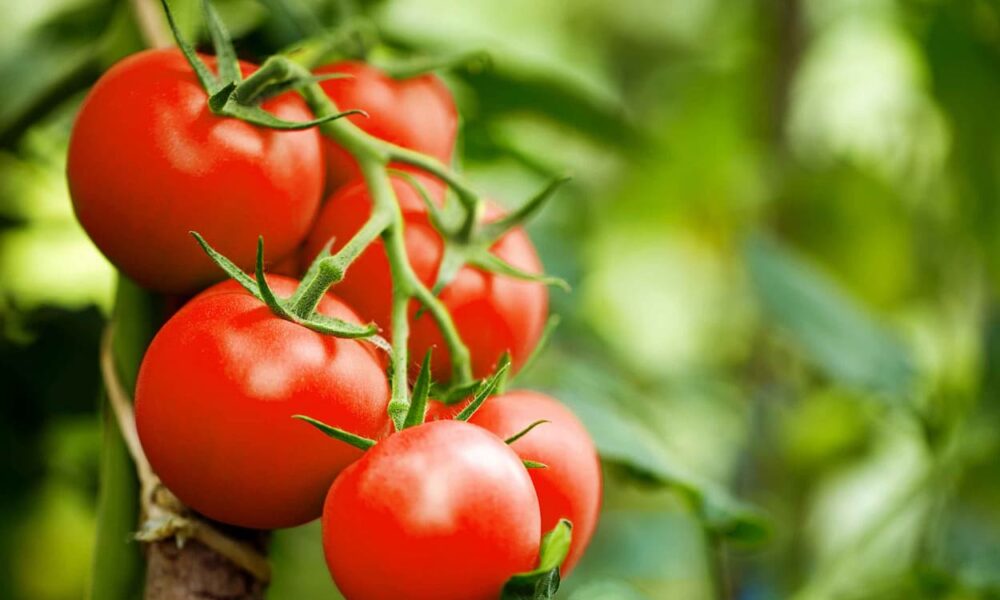
Fresh tomatoes are currently in shorter supply on Tunisian markets.
Behind this decrease in availability are two phenomena: damages caused by intense heat on late-season plantations and a transition period between two production cycles.
Professionals, at this stage, rule out the idea of a general shortage, but warn that pressure could continue to weigh on supply and prices until October, or even November.
The essentials
Tomatoes remain available in Tunisia, but in quantities below normal.
The plantations established from the end of June have suffered from heat waves, while the market is undergoing a transition between the end of certain greenhouse productions in the Sahel and the progressive arrival of seasonal crops from other regions.
According to professionals, the situation could remain tight until October or November.
The heat struck the plantations at a bad time
The main explanation advanced by the industry concerns the summer climate conditions.
Speaking Monday evening on the program “Fi 60 dakika” on Diwan FM, Adel Antit, head of the tomato sector, explained that part of the tomatoes intended to feed the market at this time had been planted starting from the end of June.
However, this particularly sensitive phase coincided with several episodes of high temperatures. According to him, part of the young plants was damaged or destroyed by the heat, reducing the areas that ultimately reached the production stage.
The effect is therefore not necessarily visible at the moment of the heatwave: the losses recorded during planting translate several weeks later into lower quantities harvested and placed on the market.
A transition period between two productions
Weather, however, does not explain everything. The market is also going through a delicate seasonal phase between two production cycles.
Speaking on Tuesday on Jawhara FM, Abdallah Sahraoui, president of the Sahel Olive Growers’ Union, explained that supply is currently in a transition phase between the end of some greenhouse crops in the Sahel and the gradual arrival of seasonal productions, notably from Sidi Bouzid and Kasserine.
He notes that Monastir governorate alone has around 10 500 greenhouses. The end of a production cycle in these operations can therefore have a visible effect on the volumes available when it does not perfectly coincide with the arrival of the next harvest.
To this transition were added, according to the same official, episodes of intense heat but also hail, which affected certain crops.
Why is the drop showing up now?
The tomatoes available today come from crops planted several weeks earlier.
When replacement plants destined to take over are damaged by heat or hail, the market feels the shortage at the moment when the preceding cycle itself begins to exhaust itself.
Several producing regions have been affected
Difficulties are not confined to a single production basin. Losses have notably been reported in areas of Bizerte, including Sejnane and Garaet, as well as in Kasserine and Gafsa.
This geographic dispersion matters a lot for national supply. When one basin experiences yield declines, other regions can sometimes compensate. When several zones are affected while the market shifts to a new production cycle, the decline becomes much more visible on the shelves.
In June, the situation was the exact opposite
The contrast with the start of summer shows how quickly the tomato market can evolve.
According to data from the Ministry of Trade and Export Development, tomato arrivals at the Bir El Kassaa wholesale market reached 3,834 tons in June, a rise of 78.3% compared with May.
This abundance led to a sharp drop in prices: the average wholesale price had fallen to only 902 millimes per kilogram, down 62.5% in one month.
Three months later, the configuration is different: it is the plantings intended to ensure continuity of supply in late summer and early autumn that have been weakened.
Will prices rise?
A tighter supply naturally puts upward pressure on prices, but professionals do not provide, at this stage, a precise national level to expect.
Adel Antit stated on Diwan FM that the current decline in available quantities should feed into prices, without proposing an average price or ceiling for the coming weeks.
The price paid by consumers can also vary according to region, distribution channels, quality and available volumes in each market.
Shortage or mere tension?
The available information does not allow speaking of a national shortage. Tomatoes remain available, but in quantities below those usually observed.
Adel Antit has also urged consumers to avoid hasty purchases that could artificially heighten market tension.
How long can the situation last?
This is the main question for consumers. According to Adel Antit, the current tension could persist until October and November.
Returning to a more normal situation will largely depend on the arrival of the next production cycles and their yields.
If the new crops reach maturity normally, available quantities should gradually increase. Conversely, new adverse weather episodes could delay this normalization.
The sector has already faced another shock this summer
The current difficulties regarding fresh tomatoes should not be confused with those encountered this summer by tomatoes destined for industrial processing.
In July and August, repeated power outages had raised fears of losing nearly 35% of the affected harvest. In Cap Bon, only 5 to 6 processing units out of 14 were operating normally or still active, while outages also disrupted irrigation on some farms.
This episode is therefore not the direct explanation for the current shortage of fresh tomatoes, but it illustrates the cumulative constraints the sector has faced this year: heat, irrigation, energy, and the succession of production cycles.
What to watch
The coming weeks will show whether productions from Sidi Bouzid, Kasserine and other basins set to take over will be enough to restore market balance.
Their arrival will determine both the availability of fresh tomatoes and the evolution of prices during October and November.