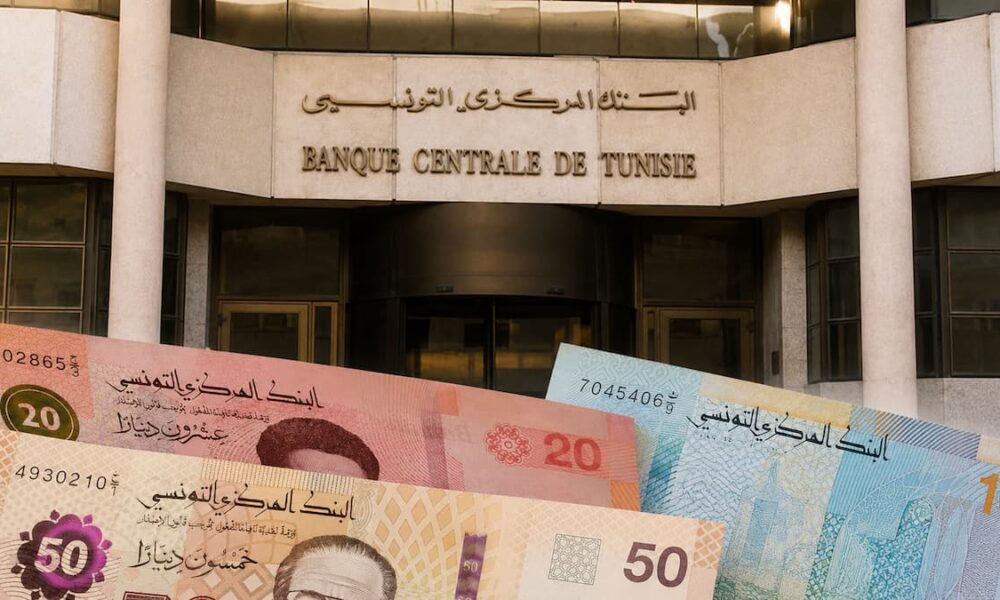
The Office of the Assembly of the People’s Representatives (ARP) will review, on Friday, October 16, 2026, the schedule of discussions relating to the State budget bill for the 2027 fiscal year, recently transmitted to Parliament by the Ministry of Finance.
According to the provisions of the draft, state revenues are estimated at 54.280 billion dinars, against projected expenditures of 68.895 billion dinars.
The Essentials
- Projected revenues : 54.280 billion dinars.
- Projected expenditures : 68.895 billion dinars.
- Tax revenues : 49.600 billion dinars.
- Non-tax revenues : 4.330 billion dinars.
- Grants : 350 million dinars.
Receipts largely based on taxation
The first article of the budget bill sets the revenue and expenditure projections for the year 2027.
Tax revenues, estimated at 49.600 billion dinars, constitute the main source of budget financing. They are complemented by non-tax revenues of 4.330 billion dinars and grants estimated at 350 million dinars.
The arithmetic gap between revenues and the projected expenditures thus reaches 14.615 billion dinars (TN calculation). However, this gap alone does not determine all of the state’s financing needs, which also depend on debt financing and repayment operations.
Investment and regional development at the heart of priorities
In its presentation of the 2027 finance bill, the Ministry of Finance states that the chosen orientations fit within the five-year development plan 2026-2030, which it notes was approved earlier this year.
The government intends to stimulate public and private investment, promote more balanced regional development, and continue strengthening the state’s social role.
In this perspective, the project includes measures to facilitate the creation and financing of projects, whether within the framework of collective or private initiatives, while seeking to ease tax burdens.
Social protection, health and food security
The Ministry of Finance also emphasizes its intention to strengthen the social role of the State through enhanced economic inclusion, social protection, and social security schemes.
Support for the health system, as well as access to healthcare, housing, education, and transportation, are among the announced priorities.
The project also places particular emphasis on food security, notably through financing agricultural production projects. Strengthening water and energy security is also a major axis of the presented orientations.
Public enterprises and integration of the informal sector
The budget project also plans to continue State support for public enterprises, with the objectives of reducing their debt and improving their performance.
At the same time, the Ministry of Finance emphasizes the gradual integration of the informal sector into the structured economy.
According to the ministry, these orientations aim to preserve the economic capacities of businesses and citizens, to encourage investment, and to limit the tax burden.
The examination of the parliamentary schedule, scheduled for Friday, October 16, will constitute a new step in the process of studying the State budget for 2027.