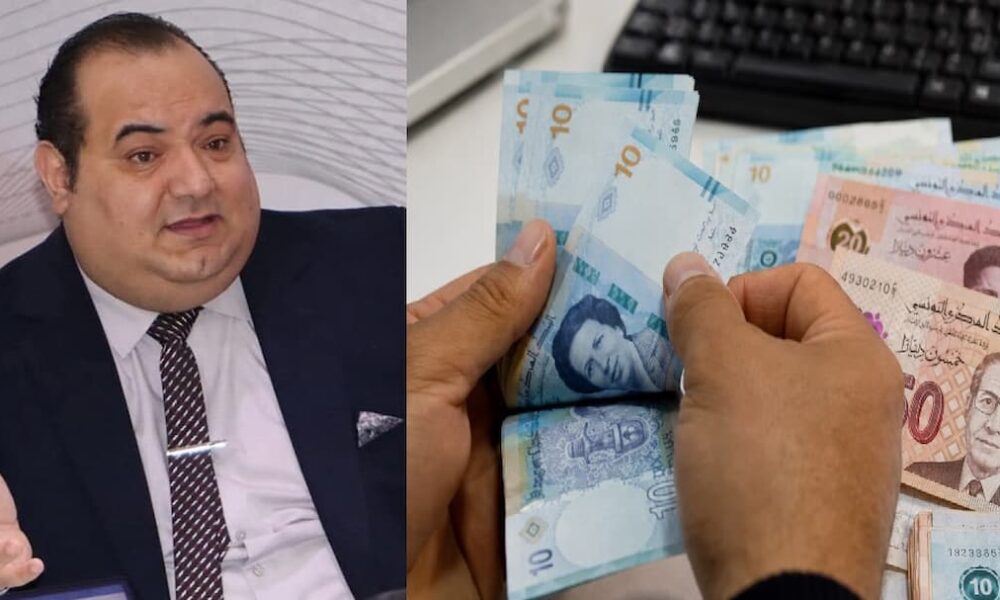
As mobile payments are anticipated to be the catalyst for Tunisia’s economic transformation, the Central Bank of Tunisia (BCT) has just taken a decisive step. With Note No. 2026-132 of May 5, 2026, the bank of banks imposes a single face on this revolution: the label “TUNPAY.”
But beyond aesthetics, this visual unification raises a fundamental question: is it a driver of trust for the citizen or a mechanism of control by the traditional actors?
Mobile payment in full swing
The latest figures from the Central Bank reveal a 31% growth in the value of mobile transactions in 2025. The number of mobile transactions also jumped by 81% in 2025, reaching 8.4 million operations for a value of 1.769 billion dinars (about 616 million USD). The Tunisian mobile payment market is buzzing with 16 payment service providers (PSPs) for a pool of 469,000 active wallets.
This surge indicates a maturation of usage: mobile is no longer limited to micro-payments but is establishing itself as a serious settlement tool.
However, mobile accounts for less than 6% of the total monetary volume. The room for growth is immense, and with it, the stake of the TUNPAY label
Standardization as a remedy to fragmentation
The current multiplicity of offers in the Tunisian ecosystem presents a major risk of losing the end user amid blur, overlap, and perplexity.
To effectively address this fragmentation, the BCT chose the path of standardization. The single national label, named “TUNPAY”, becomes the official visual identity of mobile payments in Tunisia.
The stated objective is clear: to create a trusted visual reference to facilitate the identification of acceptance points, whether they are local merchants, agencies or payment agents.
By establishing this standard, the BCT aims to transform mobile payments into a service as reliable and intuitive as cash withdrawal, thereby removing psychological barriers to mass adoption and boosting financial inclusion.
Traditional players vs Fintechs: A battle of influence under a single banner
The rollout of this label crystallizes a particular tension: the balance between reassuring regulation and disruptive innovation.
- The dominance of historic players: The BCT notes that “TUNPAY” was established in close consultation with the Tunisian Monetic Society (SMT), in its capacity as manager of the mobile payment system.
The SMT, the technical arm of the local banks, sits at the heart of the strategy, ensuring technical coherence with a strengthening of market centralization around established players.
The SMT, the national switch on which the interoperability of the entire ecosystem rests, sits at the center of the arrangement. The challenge of TUNPAY is precisely to confirm its role as an open gateway for all digital actors.
- The Fintech challenge: Between reliability assurance and identity erasure
For new payment institutions, the obligation to adopt this label across all their channels and digital touchpoints is a burdensome concession.
If this unified visual identity offers them immediate credibility with the general public, it carries major structural risks:
- Brand capital erosion: By blending into a single visual mold, Fintechs lose their main differentiating lever against the historic giants.
Under the “TUNPAY” uniform, an innovative interface and a traditional banking offer end up looking alike to the end user.
- A perpetual acquisition trap: Deprived of a strong identity capable of fostering loyalty through branding, Fintechs could be condemned to constantly market to attract new customers, without being able to capitalize on autonomous and durable brand recognition.
- Difficulty in differentiation: Agility, central to Fintechs’ DNA, is hampered by a “national visual identity” that smooths over edges and makes distinguishing from La Poste or traditional banks nearly impossible for the novice.
A trust lever serving an inclusive ecosystem
The Note No. 2026-132 presents “TUNPAY” as a symbol of innovation, security and accessibility, serving an ecosystem that is “modern, inclusive and sustainable”.
For the merchant, displaying the prototype “Wallet Acceptance Point” simplifies the transaction: here, your phone is your wallet.
This targeted communication, elevating the label as a reference point of “simplicity and reliability”, is presented as an essential lever to accelerate nationwide adoption.
However, the success of this unified identity will depend on its ability to remain an open technical platform rather than a straitjacket that stifles price or service competition.
A bet on user psychology
By imposing this label, the BCT bets that technological trust relies on image.
The transition to a single reference point is a maturity step necessary to dethrone cash.
Historically, markets that managed to massify mobile payments—India with UPI, Kenya with M-Pesa—have all crossed this symbolic unification step before mass adoption.
Nevertheless, the question remains: is “TUNPAY” the last lock to break for mass adoption, or a sign that traditional players are reclaiming control of the Fintech narrative?
By sacrificing the brand capital of new entrants on the altar of standardization, there is a risk of “normalizing” its financial innovation.
Visual standardization through the label is a necessary condition, but it will never be sufficient if it is not accompanied by true competition in services to include the millions of Tunisians still on the fringes of the financial system.
The label “TUNPAY” will it be followed by lower costs for the small merchant? That is often where the real rallying point to the ecosystem lies.
By Walid Kooli
University professor, expert advisor in e-commerce, strategies and digital transformation of companies.