The Tunisian Agency for Vocational Training announced a series of new measures on the occasion of the start of the 2026-2027 training year. These focus notably on strengthening infrastructures, upgrading the centers’ equipment, improving housing and dining conditions, and expanding the training offer with the introduction of new specialties.
According to data obtained by TAP, 25,837 training places have been scheduled for the September and November 2026 sessions, distributed across 259 active specialties, compared with 23,750 places during the September 2025 session, a rise of about 9%.
Four training sessions per year
As part of diversifying its offerings, the Tunisian Agency for Vocational Training will now adopt four training sessions per year instead of two.
They will be organized in September and November 2026, then in February and April 2027, in order to provide more enrollment opportunities for applicants.
Six new specialties introduced
The Agency also announced the creation of six new specialties, offered for the first time in the vocational training system.
They include notably the profession of life companion at the Professional Technician Certificate level, as well as the training of Senior Technicians in Telecommunications Techniques, Multimedia option, Senior Technician in Web Programming and Mobile Technologies, Senior Technician in Interior Decoration, and Senior Technician in Solar Systems Installation.
A new bakery and pastry agent training program also features among the introduced specialties.
More than 60 centers affected by the works
The modernization efforts of the infrastructure involved more than 60 vocational training centers.
More than 80 maintenance projects have been completed, while more than 30 educational spaces have been created or reconfigured.
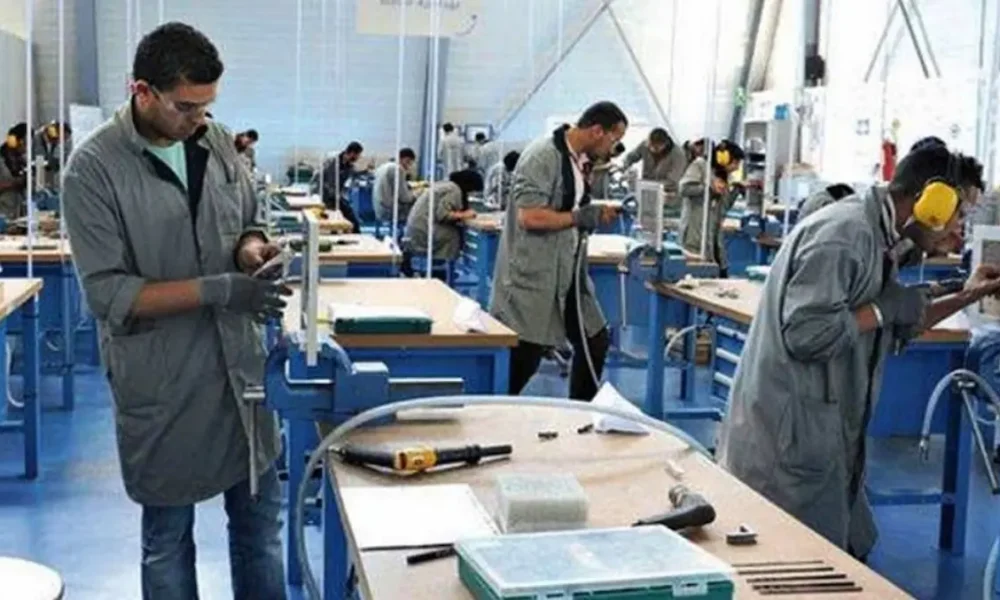
In parallel, more than 20 workshops have been equipped or modernized across several domains, notably mechanical and automotive electrical engineering, welding and metal construction, electronics and food industries, textiles and clothing, as well as refrigeration and air conditioning.
Pedagogical platforms and new spaces
The completed projects also include 17 training platforms under the IRADA program and 16 training bases under the program supporting training and professional integration.
In addition, more than 33 new or renovated spaces, including workshops, teaching kitchens and classrooms, have been added.
In total, more than 166 maintenance operations have been carried out across all governorates.
Strengthened digital and industrial equipment
The training centers have also been equipped with new digital, industrial, and didactic equipment.
These include laptops, specialized software, Internet networks, welding generators, woodworking machines, and equipment for the food industries.
Additional equipment has also been deployed in the fields of mechanics, solar energy, and electricity.
A housing capacity of 17,000 beds
Regarding housing and catering, preparations have focused on the development and operation of more than 10 dormitories, enabling the addition of around 1,720 beds, an estimated increase of nearly 10%.
More than 10 restaurants and dining spaces have also been equipped.
The total housing capacity now reaches 17,000 beds, distributed among 75 dormitories in operation, while the network also counts 80 restaurants in operation.
Digital transformation continues
Meanwhile, the Tunisian Agency for Vocational Training continues its digital transformation projects and service improvements.
Its official website has been redesigned and developed, while dedicated digital pages have been created for each training center to provide information on the establishments, training offers, services provided, and contact details.