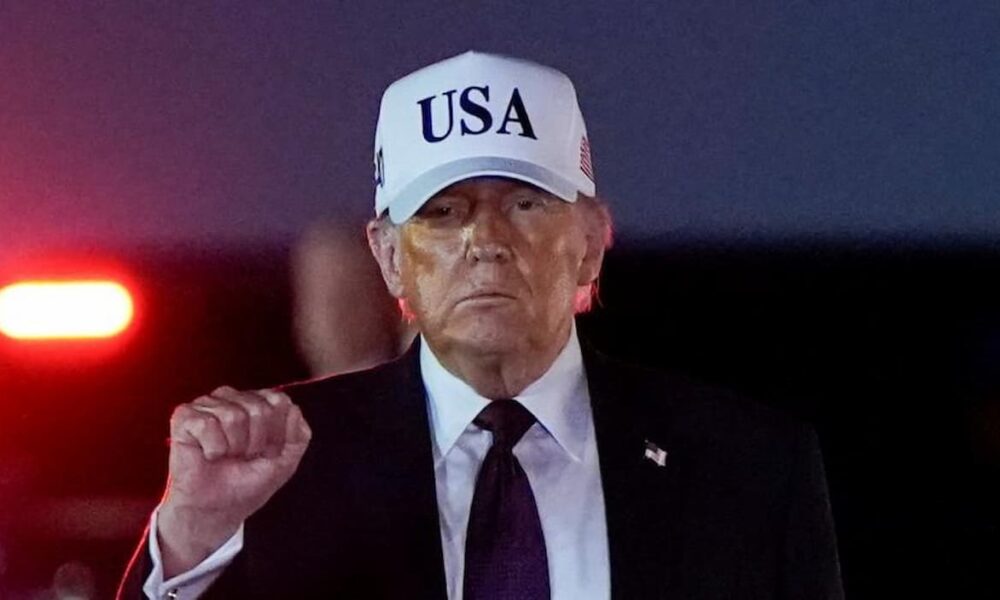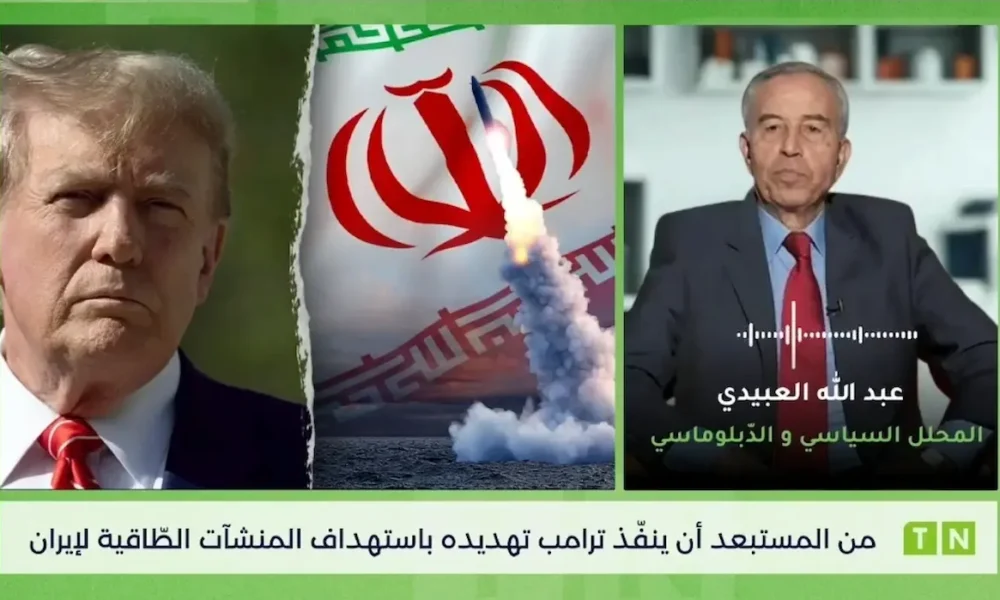
The diplomat and political analyst Abdallah Abidi estimated, this Monday, March 23, 2026, that it is “unlikely” that the American president Donald Trump will carry out his threats targeting Iran’s energy infrastructure, in a context of heightened tensions around the Strait of Hormuz.
In an interview given to Tunisie Numérique, Abidi considered that Donald Trump “means little more” now, stressing that his positions are increasingly causing doubts even on the domestic American scene.
A growing isolation of Trump on domestic and international fronts
According to Abidi, the American president faces internal opposition linked in particular to his lack of consultation with institutions. On the international front, he spoke of an unprecedented situation marked by debates about the very future of NATO.
He recalled that the Alliance’s functioning rests on coordination among its members and on Article 5, based on the principle of solidarity in the event of an aggression. Yet, in the present case, several allies believe that the United States acted unilaterally, without having been attacked, which weakens the cohesion of the Western bloc.
A global balance of power unfavourable to Washington
Abidi also stressed that Trump’s statements appear “out of touch with reality” to a portion of the American public, in a context where the United States is facing not only Iran, but a broader set of regional and international interests.
He notably cited China, heavily dependent on the Middle East’s energy resources, as well as Russia. He also emphasized the still-unclear position of Turkey, a NATO member, which he argued must clarify its stance in a geopolitically shifting landscape.
Moreover, he noted that certain statements within Trump’s circle, particularly from the Pentagon, portraying this conflict as a “war against Islam,” risk provoking strong reactions in Muslim countries and placing their governments in a delicate position vis-à-vis their public opinion.
Strait of Hormuz: Iranian threats to be put into perspective
Regarding Iran’s threats to completely close the Strait of Hormuz, Abidi recalled that Tehran had, from the outset of the conflict, indicated that non-involved countries could continue to transit through it.
He added that the reports mentioning the imposition of taxes on ships and tankers have, at this stage, not been confirmed by reliable data.
The analyst said that Iran is leveraging its geostrategic position, while stressing that controlling the Strait of Hormuz remains less costly than controlling other strategic chokepoints such as the Suez Canal or the Panama Canal. However, he considers these statements to be, for now, more about deterrence than a concrete action.
A military option deemed unrealistic
Abdallah Abidi also questioned the credibility of scenarios of American military intervention in Iran. He noted that the country covers a vast area—nearly three times the size of France—and has a population of about 93 million, making any invasion attempt particularly complex.
He judged the hypothesis of a ground operation involving only a few thousand soldiers as unrealistic, stating that such a scenario has been unanimously rejected by military experts. According to him, such an operation would be “suicidal” for the United States and already raises grave concerns, including within the American Congress.
A scenario of highly improbable energy-strike attacks
Regarding the possibility of American strikes against Iranian energy installations, Abidi said this scenario remains “very unlikely.”
He argued that Iran has prepared for a conflict of this nature for several decades, possessing substantial resources, notably in gas and oil, as well as advanced scientific capabilities, including in the nuclear domain.
According to him, Tehran has demonstrated notable military capabilities, particularly in air defense and electronic warfare, which would substantially limit the effectiveness of potential American strikes.
A conflict with wider political implications
Finally, Abidi described as “terrorist acts” the assassinations aimed at political and military leaders, arguing that they aim to inflame public opinion against the Iranian regime.
He also touched on internal political considerations in the United States, suggesting that certain developments, notably related to scandals, could influence American involvement in the conflict.
In conclusion, the analyst stated that this war is primarily part of a confrontation between Israel and Iran, in which Tel Aviv would have sought external support. According to him, the outcome of the conflict could redefine regional balances and have major political repercussions for several leaders involved.