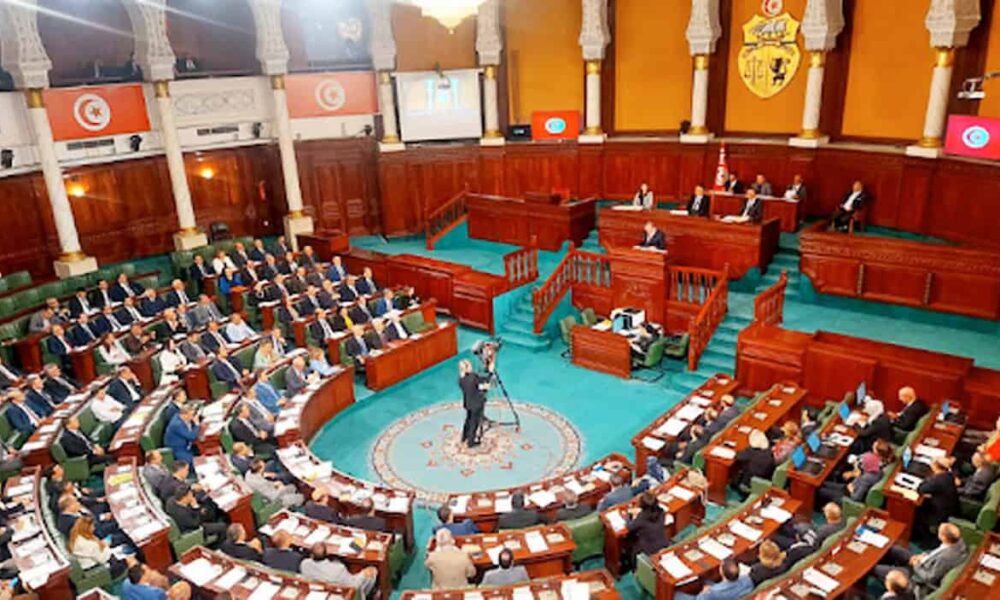
The office of the Assembly of the Representatives of the People, convened yesterday, Thursday, transmitted to the Commission on Rights and Liberties a proposed law concerning the modification and supplementation of certain provisions of the Tunisian Nationality Code.
Presented by 36 deputies, this proposed law comprises two articles. The first provides for the repeal of Articles 8, 9, 10 and 20 of the Tunisian Nationality Code and their replacement with new provisions. Among the main measures proposed is the granting of Tunisian nationality to any person born in Tunisia to stateless parents who have resided in the country for at least ten years. A child born in Tunisia to unknown parents will also be considered Tunisian, unless their parentage is established subsequently.
The first article also stipulates that any newborn found in Tunisia shall be presumed to have been born there until proven otherwise. It further specifies that a foreigner will only be able to obtain Tunisian nationality if it is established that they entered Tunisia legally and regularly for seven consecutive years prior to the filing of their application, subject to the exceptions provided by Article 21 of the Tunisian Nationality Code.
The second article of the draft law concerns the addition of a new paragraph 4 to Article 21 as well as a new Article 38 bis to the Code.
Article 21, in its new paragraph 4, provides for the naturalization of any foreigner whose acquisition of nationality would present exceptional interest and who possesses remarkable skills in the scientific, technological, artistic, cultural, sporting or economic fields. It also targets professionals the country needs, rare specialties, as well as people contributing to the international standing of Tunisia, to growth or to employment, in accordance with criteria to be fixed by decree.
As for the proposed Article 38 bis, it concerns, notably, the loss of acquired Tunisian nationality, in cases where the person’s parentage would be established later, or if it is proven that their parents, or one of them, entered Tunisia via illegal and irregular channels.
In the explanatory document accompanying the legislative initiative, as published on the Parliament’s official website, the authors of the text emphasize the necessity of legislative evolution in naturalization in order to attract exceptional skills and talents, but also to enshrine economic naturalization and other forms of granting nationality to individuals distinguished in several sought-after fields.
They also insist that Tunisia cannot live apart from its regional and international environment, in a context marked by the emergence of many new phenomena. They believe that in the future it cannot bear potential negative consequences linked to regular situations that continue to worsen, recalling that the State is the only legal entity empowered to grant nationality, in the exercise of its sovereignty over its territory.