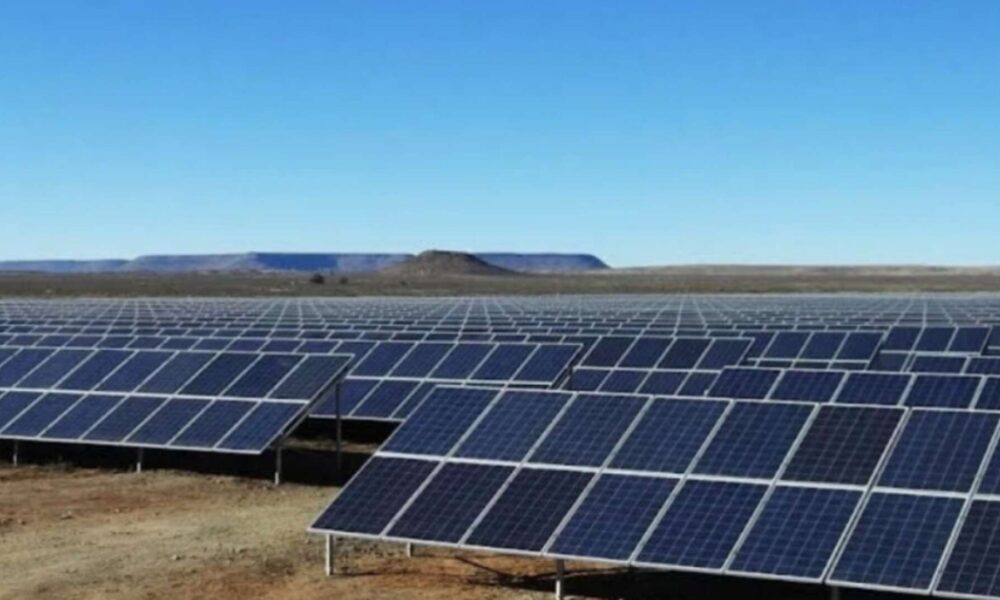
The Tunisian Parliament adopted, on Tuesday evening in a plenary session, five bills relating to concession agreements for the production of electricity from photovoltaic solar energy in several regions of the country.
This decision is part of the national strategy aimed at accelerating the energy transition and reducing dependence on imported fossil fuels.
Close votes but validated
Lawmakers approved the various projects with varying majorities. The project for the Khebna photovoltaic plant (Sidi Bouzid) was adopted with 73 votes in favor, 9 abstentions and 33 against. The Mazzouna project (Sidi Bouzid) secured 75 favorable votes, 9 abstentions and 33 opposition.
In Gafsa, the El Ksour plant project was validated by 72 votes for, 8 abstentions and 32 against, while the Sagdoud project obtained 70 votes for, 8 abstentions and 30 against. Finally, the Menzel Habib plant (Gabès) was approved with 72 votes for, 10 abstentions and 32 against.
Five plants for nearly 600 MW
The projects involve five plants spread across the governorates of Sidi Bouzid, Gafsa and Gabès, for a total capacity of about 598 megawatts. The overall investment is estimated at 1.64 billion dinars.
In detail :
- Khebna (Sidi Bouzid) : 198 MW, for a cost of 500 million dinars
- Mazzouna (Sidi Bouzid) : 100 MW, for 270 million dinars
- El Ksour (Gafsa) : 100 MW, for 260 million dinars
- Sagdoud (Gafsa) : 100 MW, for 305 million dinars
- Menzel Habib (Gabès) : 100 MW, for a similar cost
Production costs cheaper than gas
Authorities are counting on these projects to reduce the cost of electricity production. The selling tariffs for solar energy produced by these plants should be between 98.8 and 124.4 millimes per kilowatt-hour, i.e., about one third of the production cost based on imported natural gas, estimated at nearly 300 millimes/kWh.
The electricity produced will be sold exclusively to the Tunisian Electricity and Gas Company (STEG), under concession contracts.
An impact expected on energy imports
These projects should allow for foreign currency savings estimated at 246 million dinars, while reducing natural gas imports by about 13.3% compared with 2024 levels.
Some plants also show specific performances. The El Ksour project, for example, is expected to produce 260 GWh per year, generating an annual saving of about 52 million dinars in foreign currency. The Sagdoud and Menzel Habib projects could each reach an annual production of around 280 GWh, with an estimated reduction of 56,000 tonnes of oil equivalent per year.
Long-term contractual frameworks
The agreements provide for a concession period of 25 years, non-renewable for the majority of the projects. The Sagdoud plant is an exception, with an initial duration of 20 years, potentially extended by 10 additional years.
At the end of the contracts, the installations will be transferred to STEG for a symbolic dinar, or dismantled at the investors’ expense with site restoration.
Tax advantages and legal guarantees
Investors will benefit from a five-year corporate tax exemption, extended to ten years for the Sagdoud project.
The contracts are governed by Tunisian law, with dispute resolution mechanisms that can include international arbitration in Geneva, before potential recourse to Tunisian courts after the financing is repaid.
A political debate around sovereignty and costs
During the discussions, lawmakers’ positions diverged. Proponents of the projects emphasized their strategic role in strengthening energy security, reducing production costs, and fostering regional development.
Conversely, opponents raised questions about tariff transparency, their alignment with the global decrease in solar costs, as well as certain clauses related to international arbitration, deemed sensitive in terms of sovereignty. Concerns were also expressed regarding the use of agricultural land.