For 15 years, restrictions on the export of critical raw materials have been multiplying, weakening global supply chains. This finding comes from the Organisation for Economic Co-operation and Development (OECD).
In a press release published on its official site, this international organization, which now brings together around forty countries (primarily from Europe, North America and the Asia-Pacific region), makes an alarming assessment: never have these measures been so numerous, despite a slight slowdown in their progression (from +3.4% in 2023 to +0.6% in 2024).
Even more worrying, their adoption is now spreading to a wider range of countries, notably in Africa and Asia, putting strategic minerals under pressure.
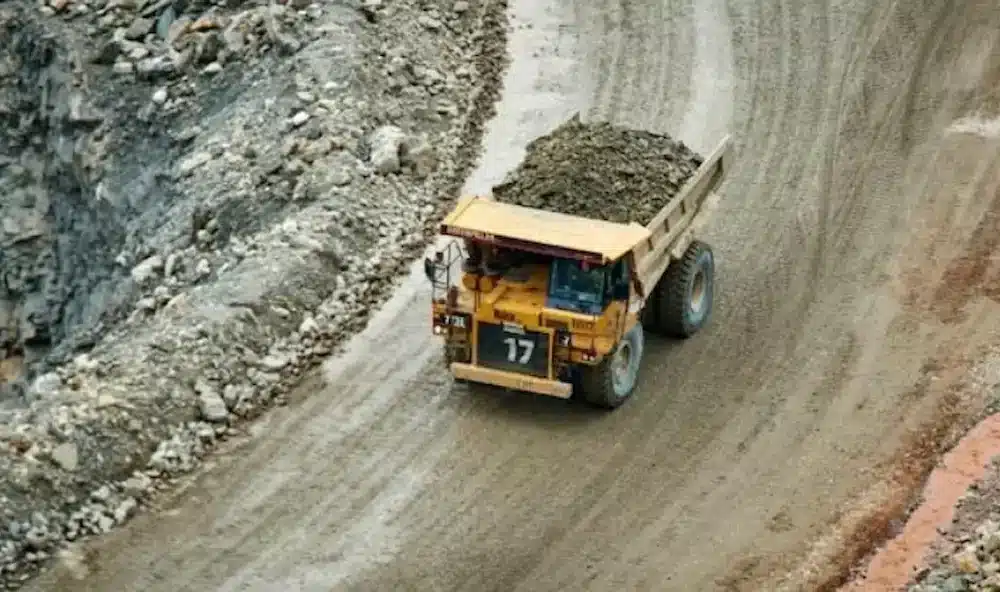
The press release notes that resources essential to digital technologies and renewable energies are particularly targeted, highlighting that minerals such as cobalt, manganese, graphite and rare earths bear the brunt of these restrictions. It further notes that between 2022 and 2024, nearly 70% of global exports of cobalt and manganese were affected, while 16% of the OECD-tracked critical raw material exchanges experienced at least one restrictive measure.
Moreover, and while highlighting the vulnerability of supply chains in the face of rising restrictions, the OECD Secretary-General Mathias Cormann reminds that “countries around the world rely on reliable access to critical raw materials for economic growth, innovation and energy security,” while noting that these restrictions “exacerbate the vulnerabilities of supply chains that are already heavily concentrated, by reducing export volumes and pushing prices upward.”
Transparency and diversification of markets appear as essential conditions to attract investments and build sustainable partnerships with producing countries, notes the press release.
Furthermore, the same source estimates that dependence is even stronger as global production remains concentrated: the three main producing countries supply more than two-thirds of cobalt, lithium and nickel, and nearly 90% of rare earths. As for the restrictions, they are also concentrated: India (19%), China (17%), Argentina (6%), Vietnam (5%), and Burundi (4%) together account for more than half of the measures adopted between 2009 and 2024.