This Sunday, July 19, 2026, on the 142nd day of the war triggered on February 28 and a little over a month after the signing of the memorandum of understanding between Washington and Tehran, the escalation has crossed a new threshold.
Two American service members were killed in Jordan during an Iranian attack carried out with ballistic missiles and drones. A third service member is missing, while four others, evacuated to Jordanian hospitals, have since been allowed to leave.
These are the first American service members killed by direct Iranian fire since the early days of the war, and the first American fatalities since the fighting resumed after the truce collapsed.
The Weekend Turning Point
Two American service members have been killed, a third is missing and four more have been hospitalized. Washington responded with an eighth night of strikes against Iran.
Two American service members killed at a base in Jordan
According to the U.S. Central Command (CENTCOM), the two service members were killed on Friday, July 17, as American forces and their partners were trying to repel an Iranian attack using ballistic missiles and drones.
Their identities were not immediately released, pending notification of their families and the continuation of the military investigation.
According to Axios, at least two Iranian ballistic missiles struck Muwaffaq Salti Air Base, located in eastern Jordan. The facility hosts American troops as well as U.S. combat aircraft.
U.S. officials cited by Axios said that several Iranian attacks had struck American positions in Jordan over the past week. Dozens of servicemembers were said to have been wounded, and several helicopters damaged or destroyed.
This succession of strikes now raises questions about Iran’s ability to detect and exploit certain vulnerabilities in the defensive systems deployed around American bases in the kingdom.
Washington launches its eighth night of strikes
A few hours after the announcement of American casualties, CENTCOM launched on Saturday evening a new wave of strikes against Iran, on orders from President Donald Trump.
According to the American command, these operations were aimed at swiftly punishing the Revolutionary Guard forces deemed responsible for the attack in Jordan and further reducing Iran’s ability to threaten commercial navigation in the Strait of Hormuz.
CENTCOM said it targeted coastal surveillance installations, air defense systems, maritime capabilities, as well as sites storing missiles and drones.
Strikes were reportedly carried out near Sirik, Hajiabad, Bandar Abbas and on Qeshm Island, in southern Iran and near the Strait of Hormuz.
Images broadcast by the U.S. military show attacks carried out by fighter aircraft and Tomahawk cruise missiles fired from the sea.
U.S. Defense Secretary Pete Hegseth said that the sacrifice of the fallen service members only solidified Washington’s resolve.
The American toll since February 28
16 American service members killed
More than 430 wounded, according to a tally by the Associated Press. These losses occurred in various circumstances, notably during strikes, accidents and other incidents related to military operations.
Tehran calls Trump’s signature “valueless”
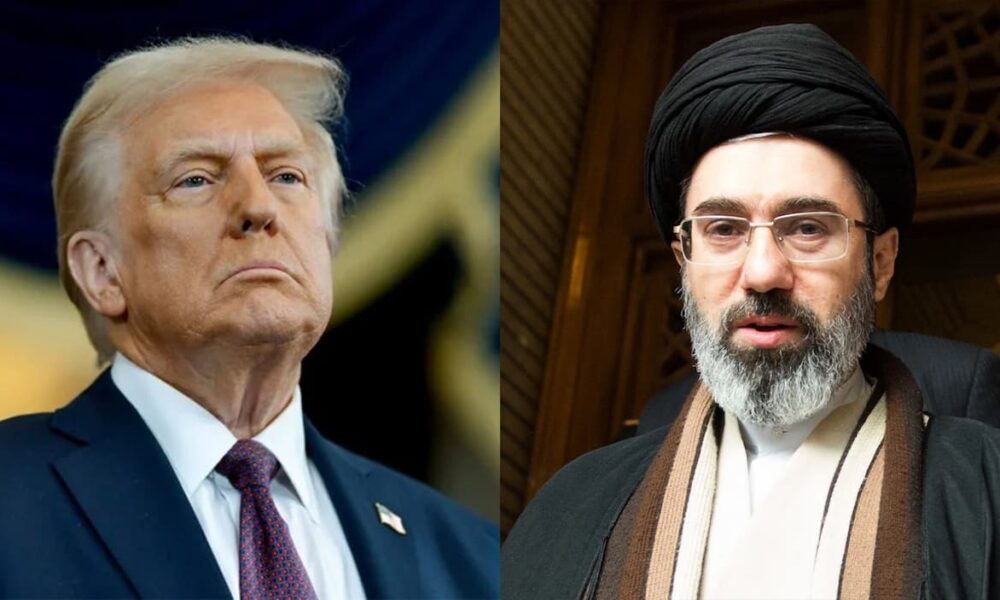
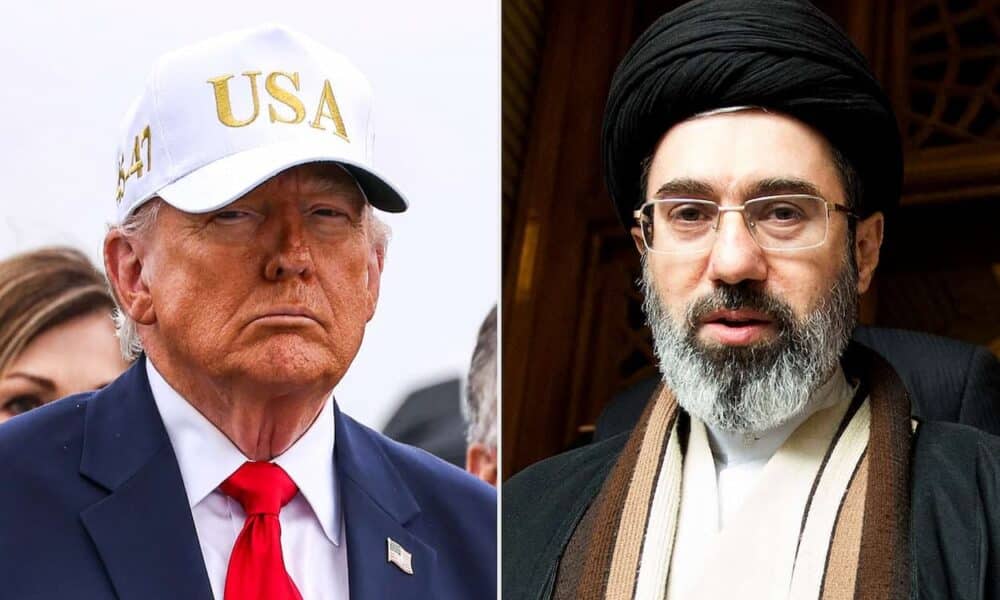
On the Iranian side, the tone has stiffened further. In a written message circulated through his official accounts and state media, Supreme Leader Mojtaba Khamenei accused the United States of repeatedly violating its commitments under the memorandum of understanding.
According to him, these violations would have shown that Donald Trump’s signature was “valueless” and devoid of any credibility.
Mojtaba Khamenei called on Iranians to preserve their unity, to avoid divisions, and not to let political differences weaken the country. He also promised the United States “unforgettable lessons” if the strikes continued.
President Massoud Pezeshkian likewise stressed domestic unity, presenting it as an essential condition for Iran’s resistance in what he called a decisively historic moment.
Militarily, several senior officials warned that Iran could widen its retaliation. General Mohsen Rezaei, the Supreme Leader’s military adviser, notably spoke of the possibility of large-scale offensive operations if American strikes continued.
An Iranian negotiator also announced that Tehran was suspending its commitments under the memorandum signed about a month earlier, marking a fresh collapse of the diplomatic process.
At least 50 dead reported in Iran
The human toll of the American strikes continues to mount in Iran.
Hossein Kermanpour, head of communications for Iran’s Health Ministry, announced that at least 50 people had been killed and more than 500 injured since the resumption of American strikes.
According to this official tally, which cannot be independently verified under the current conditions, five women as well as two children or adolescents are among the dead. The ministry also reports dozens of women and minors among the injured.
Eight people were reportedly killed Friday in strikes on a bridge in the south of the country.
The tally released by Tehran
At least 50 dead and more than 500 wounded since the resumption of the American strikes.
These figures come from Iranian authorities and cannot be independently verified under the current conditions.
Desalination plant destroyed, 10,000 people deprived of water
The strikes no longer target only military facilities. Bridges, tunnels, electrical equipment and water-supply infrastructure have also been hit.
According to the official Iranian news agency IRNA, the Bonji desalination plant in Hormozgan province in the south has been destroyed, interrupting the water supply for about 10,000 residents across around twenty villages.
Another desalination facility located on the strategic island of Qeshm is also said to have been damaged.
The multiplication of attacks against water and electricity infrastructure directly heightens the humanitarian risk, particularly in regions facing extreme temperatures and heavily dependent on desalination.
Kuwait struck again
The war is also spilling over to the Gulf monarchies hosting American forces.
In Kuwait, Kuwait Petroleum Corporation announced that a vital site in the oil sector had suffered repeated Iranian attacks, causing substantial material damage and several injuries.
The injured were given medical treatment and the site was evacuated, while Kuwaiti authorities coordinated with various state institutions.
Kuwaiti fire services said several firefighters and a petroleum sector employee were injured while responding to two fires triggered by Iranian strikes. One of the sites is said to have been targeted again during rescue operations.
A desalination plant was also hit. The fire from the strike led to the shutdown of several electricity production units. It was the second attack on a Kuwaiti desalination facility in two days.
The Kuwaiti military also announced it had activated its air defenses in response to new Iranian missiles and drones. The country temporarily closed its airspace and several flights were rebooked.
Why Kuwait is particularly vulnerable
The country relies on desalination for most of its potable water. Any sustained attack on its electrical or hydraulic facilities directly threatens the population’s supply.
Jordan, Bahrain and the UAE on alert
Jordan says it has intercepted several Iranian missiles, while alert sirens have sounded repeatedly in Bahrain, home to the U.S. Fifth Fleet.
Bahraini authorities have urged residents to seek protection in the nearest shelters in light of the new air threats.
The United Arab Emirates, which had not yet been directly struck in this new sequence, also called for restraint after threats relayed by the Iranian Fars agency against Dubai and Abu Dhabi airports as well as the ports of Fujairah and Jebel Ali.
Abu Dhabi condemned any attack on civilian infrastructure and facilities, saying such targeting would constitute a grave violation of international law.
A war now fully regional
The death of the two American service members in Jordan marks a new political and military turning point. It increases pressure on Donald Trump to respond more forcefully, risking a further expansion of the strikes.
The conflict is no longer limited to a duel between Washington and Tehran over the Strait of Hormuz. It directly affects American bases, oil installations, electrical networks, desalination plants, and transport routes across several countries.
The multiplication of attacks against Jordan and Gulf states is gradually turning the war into an open regional confrontation, in which civilian populations are increasingly exposed to the consequences of strikes against essential infrastructure.
At this stage, no new diplomatic mechanism seems able to replace the now-suspended memorandum of understanding. Each new strike thus increases the risk of a chain of reprisal that is hard to contain.
What to remember
The first American fatalities since the resumption of hostilities triggered a new retaliation against Iran, while the war spread to vital infrastructure and neighboring countries. The risk is no longer merely an escalation between Washington and Tehran, but a potential sustained conflagration across the entire Gulf.