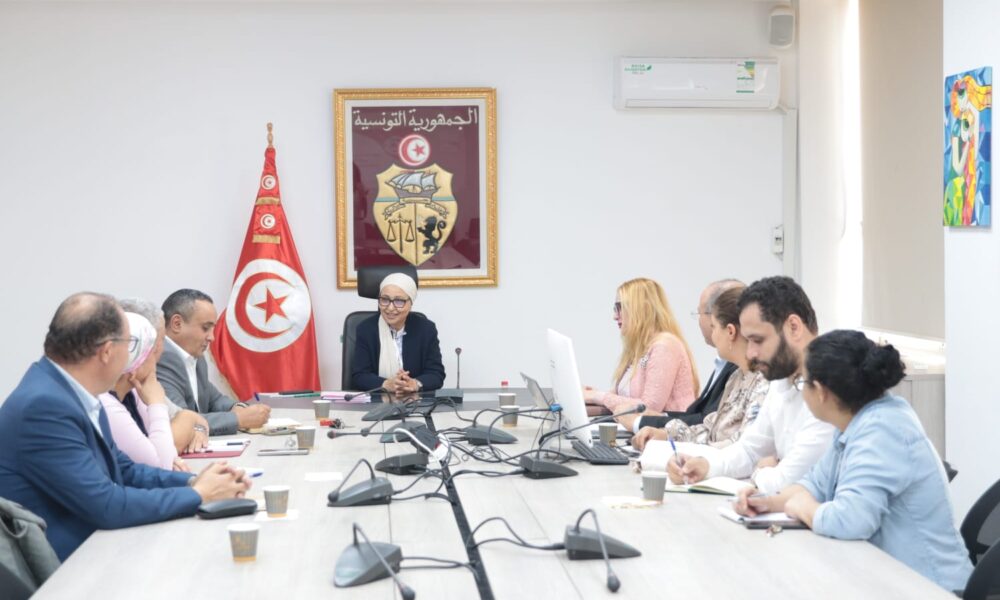
The Minister of Family, Women, Childhood and the Elderly, Asma Jebri, chaired, on Tuesday, September 15, 2026, at the ministry’s headquarters, a working session devoted to examining the annual report on the activity of delegates for child protection and the psychologists attached to the regional offices for the year 2025.
Efforts Praised in the Care of Children
On this occasion, Asma Jebri praised the efforts made by the delegates for child protection and the psychologists, at central and regional levels, notably to ensure immediate care for threatened children.
She also highlighted their intervention through the mediation mechanism in favor of children in conflict with the law, as well as the importance of networking and coordination among the different concerned structures.
The minister highlighted the commitment of these actors to the best interests of the child, in accordance with the guarantees provided by the Tunisian Constitution and legislation.
A Global Approach to Strengthening Protection
Asma Jebri called for continued efforts to improve the support and monitoring mechanisms, through a holistic approach that takes into account the essential role of the family and the different levels of intervention required to protect threatened children.
She stressed the need to ensure continuous support, from the initial care of the child to the disappearance of the danger.
The Importance of Reporting and Prevention
The minister also noted the progress in raising society’s awareness of the importance of reporting various forms of threats that could affect the child’s best interests.
She called for intensifying prevention efforts in regard to phenomena and risky behaviours to which children may be exposed in public, family, and digital spaces.
The Role of Psychologists Highlighted
For the first time, the annual report presents data on the activity of psychologists practicing in the regional offices of child protection delegates.
These data highlight their role in the rapid assessment of the severity of danger, the improvement of the various intervention steps, and the determination of psychological care pathways.
Their intervention also supports the work of the various partner structures, notably the judicial authorities and security teams.