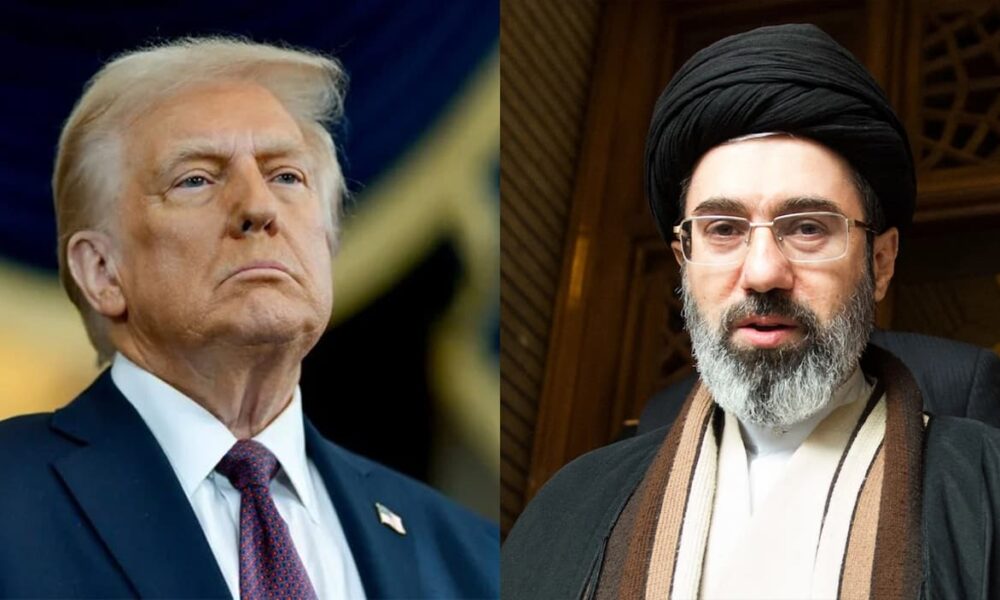
As Donald Trump discusses new strikes against Iranian nuclear facilities, Tehran says it has developed with Qatari mediators a mechanism to reopen the Strait of Hormuz in two days, provided Washington first meets its demands.
Positions remain far apart, military preparations continue, and energy markets as well as fertilizer markets remain exposed to a new escalation.
This Sunday, November 1, 2026, 246 days after the outbreak of the war in late February and 137 days after the memorandum of June 17, the crisis between the United States and Iran is evolving simultaneously on diplomatic, military, and economic fronts. Indirect discussions continue through the mediation of Qatar, as the U.S. midterm elections scheduled for November 3 approach. No new American offensive or definitive agreement on the Strait has been announced at this stage.
Key figures to remember
48 hours : execution window envisaged by the Iranian foreign minister for a conditional plan to reopen the Strait of Hormuz.
117.64 dollars : last closing price of the December Brent contract, Friday October 30, before expiration.
144 merchant ships : number of vessels diverted since the resumption of the American naval blockade, according to CENTCOM as of October 31.
47.1 billion dollars : American military cost estimate as of October 16, excluding base damages assessed separately.
Qatar pushes a two-day plan to reopen the Strait of Hormuz
In an interview with Al Jazeera, Iran’s foreign ministry chief Abbas Araghchi explained that an initial proposal planned for seven days had been shortened after discussions with Qatari mediators. Doha had first mentioned a period of five days or less; consultations subsequently led to a two-day execution schema.
According to the scenario outlined by Araghchi, the United States should apply, on the first day, the measures demanded by Iran. On the second day, the Strait of Hormuz would be reopened and navigation would resume. Iran’s demands notably include the lifting of the maritime blockade, access to frozen assets, and an end to hostilities, before resuming substantive talks on the nuclear issue. This is a conditional proposal presented by Tehran, not an agreement accepted by Washington.
Iranian and Qatari envoys met in Doha on Saturday, October 31, after more than twelve hours of consultations in Tehran on Friday, according to Reuters. The secretary of Iran’s Supreme National Security Council, Mohsen Rezaei, said he had read a letter from the American vice president JD Vance. He called Washington’s tone change a positive sign, while noting that Iran had not yet responded and would not open Hormuz until its conditions were met.
What remains to be obtained for a deal
Washington : guarantees deemed sufficient on the absence of an Iranian nuclear weapon.
Tehran : concrete American gestures on the blockade, frozen funds, and cessation of attacks.
The mediators : an execution order of commitments accepted by both sides, with verification mechanisms. The two-day timeline does not, by itself, guarantee the success of the discussions.
Trump mentions two nuclear sites, without announcing a military decision
Asked Saturday in Florida about a possible resumption of bombings as early as next week, Donald Trump refused to publicly discuss a military timetable. He argued that the Iranian armed forces had suffered heavy damage and that Washington could still strike “one or two sites” in a matter of minutes. The American president notably cited Pickaxe Mountain, or “Pickaxe Mountain,” an underground site suspected by Western services of housing nuclear-related activities. Iranian authorities contest this interpretation.
Trump also asserted that talks with Tehran were progressing, while judging Iranian interlocutors as unreliable. His Secretary of State, Marco Rubio, said the president had not made a decision on a new military operation and would favor a diplomatic solution, even if strike options remained prepared.
According to the Wall Street Journal, Trump spoke by phone on Saturday with Israeli Prime Minister Benjamin Netanyahu, a few days after discussions with senior American military officials. Israeli media, including Channel 12 and Yedioth Ahronoth, describe close coordination between the two militaries and offensive and defensive preparations by Israel. The reports document preparations and discussions, but do not prove that an attack order has been given. Israeli daily Maariv reports that Israeli officials also consider the risk that a new offensive could provoke a multi-front response, including Houthi attacks against Saudi or Israeli targets. This is a security assessment reported by the newspaper, not confirmation of an attack plan already decided.
The Financial Times reports, based on analyses by former American officials and defense experts, that possible scenarios range from limited naval operations against coastal targets to broader strikes on nuclear facilities, military commands, and infrastructure. Some scenarios also envisage a campaign aimed at weakening the Iranian regime. These are options described by the newspaper’s sources, not an officially approved plan. They would carry risks of retaliation against Gulf countries, maritime traffic, and energy facilities.
In Tehran, rhetoric hardens on nuclear issues and retaliation
Ali Nikzad, the first vice president of the Iranian Parliament, said that his country does not intend to negotiate its nuclear program under pressure or threat, arguing that accepting Tehran’s conditions was the only path to end the war. The head of the Parliament’s National Security and Foreign Policy Committee, Ebrahim Azizi, warned that a new attack would receive an immediate, stronger response, with no geographic limitation or predetermined restrictions on targets.
These statements coexist with the conditional openness outlined by Araghchi. They show that Iranian officials do not articulate their positions in the same way: some reject any negotiation under the current circumstances, while diplomacy hints at a possible discussion after prerequisites are met.
Cleric Mohsen Araki, a member of the Assembly of Experts, has also urged, according to Iranian television, a reconsideration of Iran’s stay in the Treaty on the Non-Proliferation of Nuclear Weapons (NPT). However, Mohsen Rezaei clarified that no official decision to change nuclear doctrine had been adopted by authorities. An individual or parliamentary position should not be presented as an effective exit from the NPT.
On another front, Iran’s Foreign Ministry announced Sunday it was classifying the Royal Navy and the Royal Air Force of Britain as terrorist organizations and considering the MI6 intelligence service as an hostile entity under its national law. Tehran says it is acting in retaliation for Britain’s designation of the Islamic Revolutionary Guard Corps (IRGC) among security threats. This Iranian designation does not constitute an internationally recognized classification.
American bases: heavy damage and a rising military bill
An Associated Press investigation, based in part on satellite imagery and regional testimonies, documented up to August more than 115 drone or missile attacks claimed by Iran or groups allied with it and damaging facilities at 26 bases or military sites hosting American assets. The inquiry describes strikes first targeting advanced warning radars and air defenses, then aircraft, hangars, warehouses, and buildings.
According to Pentagon estimates cited by the Wall Street Journal, damages to bases would amount to at least $5 billion and could ultimately reach $15 billion. The U.S. military spending related to the war, calculated separately as of October 16, stood at $47.1 billion, including about $29 billion for munitions, $11.9 billion for operations, and a little over $6 billion for lost equipment. The figures are rounded and base repairs are not included in this total.
The Financial Times also notes tensions in U.S. stocks of certain interceptor missiles and precision weapons, the replacement of which could take several years. This complicates planning for a potential new military campaign, without allowing to infer its duration or outcome.
Hormuz: 144 ships diverted, oil traffic still fragile
CENTCOM (U.S. Central Command) says it has diverted 144 merchant ships as of October 31, since the resumption of the naval blockade against Iranian ports on July 14. This is the cumulative number of vessels forced to alter their route under the blockade, not the number of tankers blocked in the Strait or a measure of all crossings. This statistic comes from the U.S. military.
The International Energy Agency (IEA) estimated oil flows through Hormuz at 10.9 million barrels per day in September, up by 3.7 million bpd from August. Gulf producers’ crude exports reached 13.9 million bpd, more than 75% of their pre-war level. But deliveries of refined products and liquefied petroleum gas (LPG) remained at less than half of pre-conflict levels.
These figures describe September’s situation. They do not directly measure the effects of the new attacks on ships reported in late October. A durable revival of passage requires not only a political agreement, but also maritime security deemed adequate by shipowners and insurers.
Oil: persistent pressure despite partial recovery in flows
117.64 $/barrel : December Brent close on Friday, October 30, up 2.4% on the session, according to Reuters.
113.43 $/barrel : January Brent close, more actively traded at that time.
104.12 $/barrel : U.S. WTI close on Friday.
+13.6% : October rise in Brent. These contract prices are not the same as an annual oil average.
Fertilizers, gas and food: another global bill
The Hormuz crisis also affects nitrogen and phosphate fertilizers. The Gulf plays an important role in urea exports and in supplying natural gas, ammonia, and sulfur, raw materials used in various fertilizer chains. Disruptions to plants, transport, and inputs can push agricultural costs well beyond the Middle East countries.
The World Trade Organization (WTO) noted a spike in urea prices in spring 2026, above $850 per ton in April, before retreating to around $453 in June. It would therefore be inaccurate to present the April peak as its current price. The World Bank, in its October updated forecast, now projects an average 14% increase in fertilizer prices in 2026, followed by a easing in 2027, subject to no new major escalation.
The World Bank also projects an average 32% higher energy prices in 2026, and a 10% rise in global food prices this year, followed by a further 7% increase in 2027. These figures are global projections, not Tunisia’s inflation forecasts. The conjunction of fuel costs, maritime transport, gas, and fertilizers can weigh on farmers’ margins and the price of foods if disruptions endure.
World Bank economic scenarios, October 2026
Average Brent in 2026 : $91 per barrel in the central scenario.
Average Brent in 2027 : $79 in the central scenario.
Adverse scenario in 2027 : Brent could average up to $105 if several risks, notably geopolitical and energy risks, materialize simultaneously.
These averages and scenarios are not spot prices and do not constitute a certain forecast of a renewed hostilities.
Tunisia: a heavy energy bill already, budget assumptions laid bare
Tunisia is directly affected by international energy prices and indirectly by transport costs and agricultural inputs. According to the National Institute of Statistics (INS), the energy trade deficit stood at €10.480 billion dinars in the first nine months of 2026, versus €8.1064 billion dinars in the same period of 2025, an increase of about 29.3% (TN calculation). It accounts for nearly 49.9% of the total trade deficit of €20.997 billion dinars. Energy imports by value rose by 32% year on year.
In the 2027 budget proposal, the government uses an assumption of an average Brent price of $80 per barrel, versus a one-off closing price of $117.64 on Friday for the December 2026 expiry. The gap is notable, but it would be misleading to directly infer an annual budgetary bill from the difference between a market session and an assumption for the entire next year.
The budget project allocates about 7.090 billion dinars of electricity and fuel subsidies in 2027, including 3.676 billion for STEG and 3.414 billion for STIR. These amounts are budgetary projections, not actual expenditures. If energy prices stay above the assumed levels, financial needs could rise, depending on import volumes, the exchange rate, and pricing policy.
For Tunisia’s phosphate and derivative sector, the availability and price of sulfur, ammonia, and energy are factors to monitor. The INS already reports a 16.5% drop in exports of the mines, phosphates and derivatives sector for January-September 2026. However, these aggregated statistics do not allow attributing this decline solely to the Hormuz crisis. Likewise, a future rise in fertilizer costs cannot be quantified for Tunisian farmers without national data on purchase prices and availability.
What Tunisia must monitor
Energy : actual average import prices paid, gas supply, and movement of the dinar.
Phosphates and fertilizers : price of sulfur and ammonia, transport, input availability, and processing costs.
Food and inflation : costs of agricultural production, prices of imported goods, and impact of maritime freight, without presuming a preexisting measured effect on Tunisian prices.
Diplomacy or a new escalation: next steps
The crisis is marked by a persistent contradiction: mediators seek quick reciprocal commitments, but Washington and Tehran still do not agree on the order of concessions. The American and Israeli military preparations, Iranian warnings, and the threat of extending attacks to other countries increase the potential cost of a diplomatic failure.
For the global economy, decisive signals will be the reality of the reopening of Hormuz, the security of tanker routes, the resumption of exports of refined products, gas, and fertilizers, as well as the stabilization of insurance and freight. For Tunisia, the stakes are to contain exposure to a renewed, lasting surge in energy bills and production costs.
At this stage, the 48-hour plan remains a negotiation track, not the announced end of the war.