Marginal in volume, decisive in value, shock-resistant, air freight is the link Tunisian exporters still underestimate.
For decades, Tunisian aviation has been designed for a single cargo: the tourist. Terminals, procedures, and business models were built around the passenger, and freight remained a supplementary activity, without a dedicated strategy. Result: under the seats, a logistical capacity that the economy has never really learned to value.
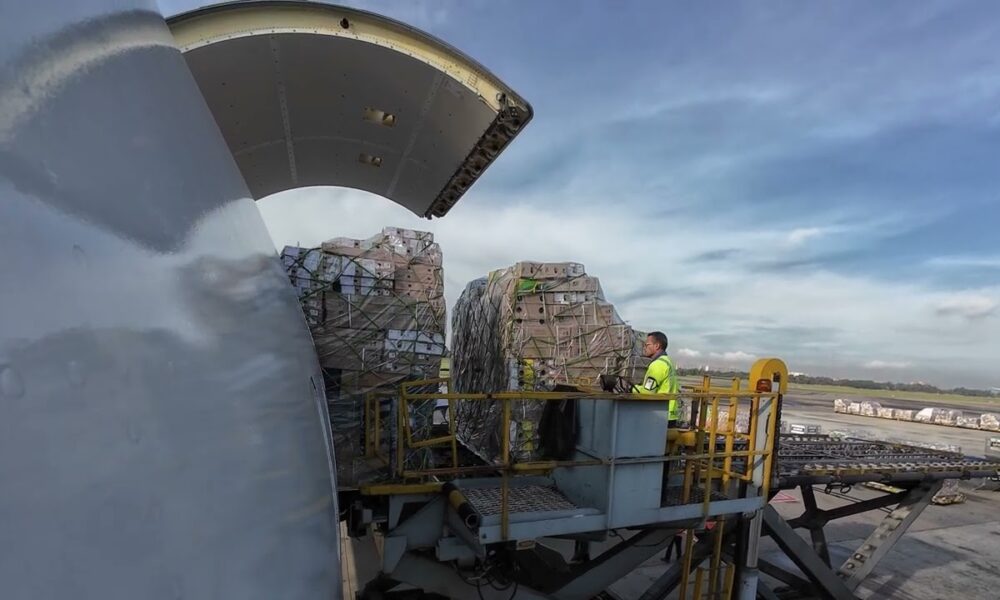
This paradox costs companies. Air freight accounts for only a marginal share of traded volumes, but it carries a substantial portion of the value of trade flows: pharmaceutical products, electronic components, spare parts, intermediate goods without which a factory would halt, high-value perishables. In other words, what business leaders cannot afford to have delivered late.
This analysis is based on the Policy Brief “Revealing the Power of Air Freight: A Strategic Lever for Resilience, Competitiveness and African Integration” and which was published recently by ASECTU, the Association of Tunisian Economists, with the support of the Savoirs éco project funded by the European Union and implemented by Expertise France, it specifies that its options stem from academic analysis rather than official prescriptions.
A V-shaped Curve Against Three Crises
The brief studied series from 1990 to 2021, a period that encompasses the Gulf War, the subprime crisis, and the COVID-19 pandemic. It cross-referenced freight volume, measured in paid tonne-kilometers, with real GDP and the unemployment rate.
The verdict is clear. After each shock, freight undergoes a contraction, but it remains temporary. The impulse response functions trace a V-shaped trajectory, with a rapid return to the long-term trend. Simulations after the pandemic project even a 9% short-term growth. Passenger transport, by contrast, rebounds more slowly, dependent on household confidence, health restrictions and the tourism outlook.
Why the Hold Holds Up
The explanation is economic, not mysterious. Air freight carries goods with low price elasticity and high criticality. In times of crisis, companies do not haggle over the price of a missing component: they secure their supply chains. Demand for these products remains stable, sometimes even countercyclical.
The study highlights a two-way relationship. More freight supports medium-term GDP growth, via high-value exports, lower logistics transaction costs and the reliability of just-in-time. In return, economic expansion stimulates imports of capital goods and components, hence more freight. Added to this is employment: advanced logistics, specialized handling, maintenance, digitalization, skilled and non-offshorable positions.
The price of delay