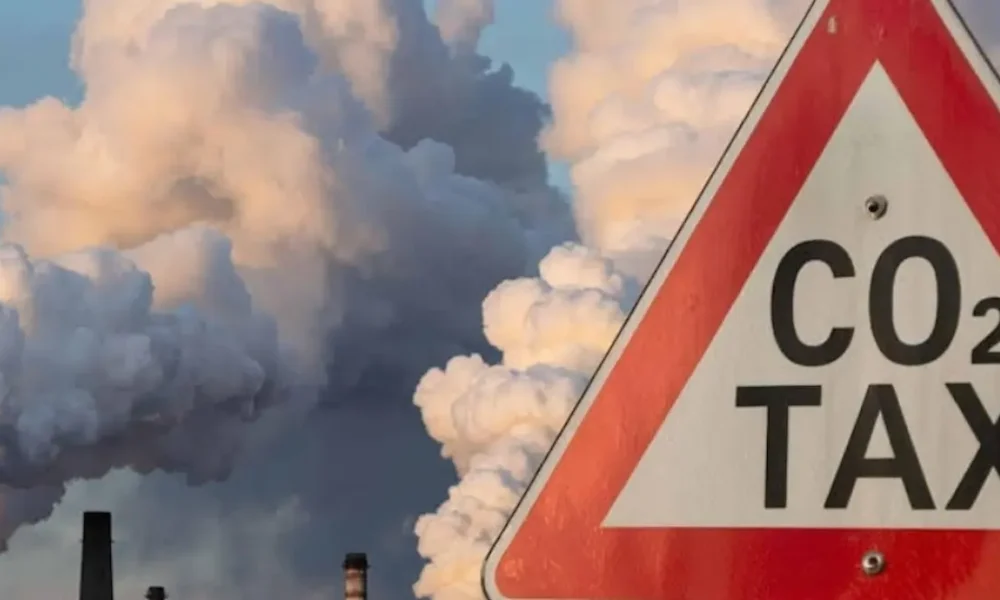
Carbon has gradually become an economic data point, on par with energy, raw materials, or financing costs.
For companies that emit substantial greenhouse gases, each ton of CO₂ can now have a financial value. CO₂ quotas constitute one of the main mechanisms used to put a price on emissions and to encourage companies to reduce their carbon footprint.
Giving an economic value to emissions
A CO₂ quota corresponds to an authorization to emit a determined amount of greenhouse gases, generally expressed as one ton of CO₂ equivalent. In cap-and-trade systems, a public authority sets a global emissions cap and then makes a limited number of quotas available.
Companies concerned must surrender a number of quotas corresponding to their emissions. When they reduce their emissions and have surplus quotas, they can, according to the rules of the applicable system, sell them. However, a company whose emissions exceed its allocations must acquire additional quotas.
Turning carbon into a cost
This mechanism introduces a market logic into climate policy. The price of the quota thus becomes an economic signal: the more expensive it is to emit, the more financially attractive investments aimed at reducing emissions can become.
A company can then arbitrate among several solutions: buy additional quotas, improve energy efficiency, modify its industrial process, use less carbon-intensive energy, or invest in emission-reducing technologies. The price of carbon gradually enters investment decisions and profitability calculations.
Issue for exporting companies
CO₂ quotas now go beyond the environmental question alone. They can affect the international competitiveness of businesses when their competitors are subject to different rules or when border carbon adjustment mechanisms are applied to imports.
For an exporting company, the carbon footprint of a product can thus become an element of its competitiveness, alongside price, quality, and delivery times. The measurement and traceability of emissions thus become increasingly important functions of industrial and financial management.
A market undergoing rapid changes
However, the quota system has its limits. A carbon price that is too low can reduce the incentive to invest in decarbonization, while a very high price can rapidly raise production costs for certain sectors. The volatility of the carbon market therefore represents a risk to be integrated into the strategy of the concerned companies.
CO₂ quotas thus mark the shift from a logic where emissions were mainly regarded as an environmental externality to a logic where they gradually become an economic variable. For businesses, decarbonization is no longer only a matter of environmental compliance: it can now directly influence costs, investments, competitiveness, and, in the long run, the economic value of activities.