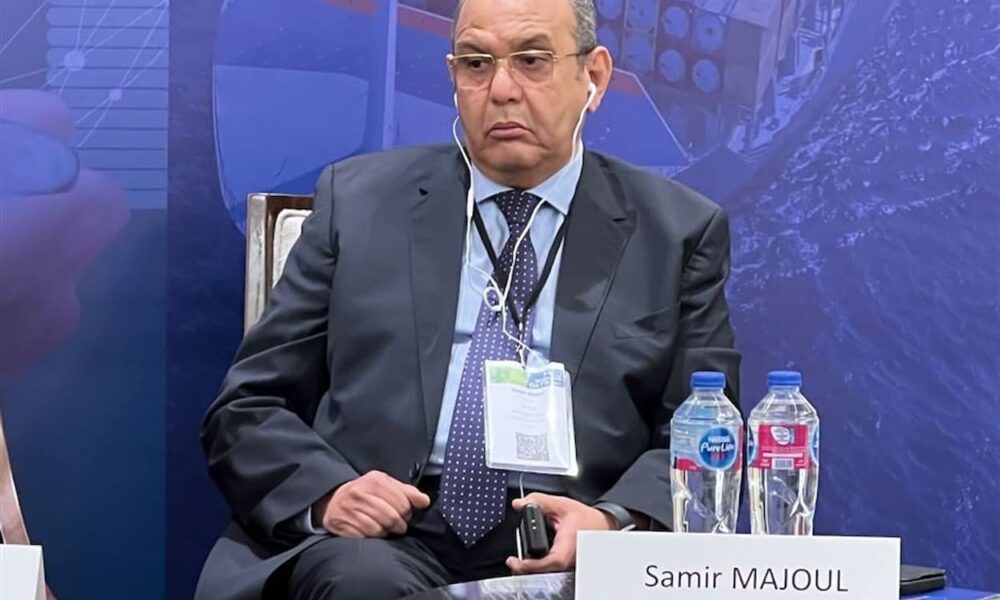
The president of the Tunisian Union of Industry, Trade and Handicrafts (UTICA), Samir Majoul, stressed the need to mobilize the shared strengths of Tunisia and Italy in order to face the current economic and geopolitical challenges, to bolster growth, and to improve competitiveness. He called for elevating the existing partnership between the two countries toward broader economic and investment cooperation in strategic sectors.
This statement came during the opening of the Tunisian-Italian Forum for Economy and Business, held this Wednesday at UTICA’s headquarters, in the presence of the Prime Minister, Sarra Zaafrani Zenzri, the Vice-President of the Council of Ministers and Italian Minister of Foreign Affairs and International Cooperation, Antonio Tajani, as well as the Minister of Foreign Affairs, Migration and Tunisians Abroad, Mohamed Ali Nafti. Several officials, diplomats, representatives of employers’ organizations and economic actors from both countries also took part in the event.
Samir Majoul explained that this forum illustrates a working approach based on coordination among the various actors in Tunisia and Italy, notably the governments, institutions, professional organizations, and the private sector, with the aim of supporting bilateral cooperation and facing rapid international changes. He recalled, on this occasion, the strength of the historic ties between the Tunisian Union of Industry, Trade and Handicrafts and its Italian counterpart “Confindustria,” which go back to 1959.
He indicated that Tunisia continues to consolidate its economic position despite global challenges, relying on the strength of its real economy, the solidity of its industrial sector, and the capacity of its companies to invest, innovate, create jobs, and develop in foreign markets. He estimated that exports from the manufacturing industries constitute an essential pillar of the national economy.
In this context, Majoul underscored that Tunisia ranks first in Africa and 47th worldwide in the Economic Complexity Index, or economic diversification index, according to data from Harvard University’s Growth Lab. This index measures the degree of diversity and complexity of the products exported by countries, as well as their productive and technological capacities. He added that this ranking reflects the depth of Tunisian industrial know-how, the diversity of its productive base, and the growth prospects available to the country.
He also noted that Italy ranks 18th globally in the same index and is the second industrial power in Europe, as well as the leading industrial power in Southern Europe and in the Mediterranean region. According to him, the complementarity of the industrial capacities between the two countries offers significant opportunities to develop the economic partnership.
The UTICA president called for investing in human capital, particularly among the youth, through training and economic incentives that could enable young people to contribute to building their country’s future and to limit the brain drain.
Regarding the priority sectors, Majoul stressed the importance of agriculture and the agri-food industries, which he described as pillars of food security and national sovereignty, in a context marked by geopolitical tensions and challenges related to global supply chains. He stated, in this regard, that Tunisia holds substantial phosphate geological reserves, estimated at about 2.5 billion tonnes, placing it among the world’s major holders of these resources. He also indicated that the market for phosphatic fertilizers is expected to exceed $130 billion by 2035. He believed that a Tunisian-Italian partnership in this strategic sector constitutes a common priority, given the importance of fertilizers in guaranteeing global food security.
He also highlighted the importance of the blue economy as a vital sector of the economic fabric, stating that the geographical position of Tunisia and Italy qualifies them to play a central role in linking Europe, Africa, and the Middle East. He specified that cooperation in maritime domains can encompass tourism, port services, environmental protection, renewable energy, maritime logistics, and high-value maritime industries.
Samir Majoul renewed his call to businesspeople and investors to seize the opportunities and potential available in Tunisia and Italy, reaffirming UTICA’s commitment to continuing its efforts to strengthen economic cooperation between the two countries and to building a stronger and more sustainable economy.
Approximately 164 Italian representatives from 111 companies and economic organizations are participating in the Tunisian-Italian Economic Forum, alongside 443 Tunisian companies, as well as several officials, diplomats, representatives of employers’ organizations and economic institutions from the two countries.
This forum aims to explore new opportunities for trade and investment, as well as to strengthen financial support mechanisms for the bilateral economic partnership, through a plenary session and several sectoral workshops dedicated notably to the energy and digital transition, innovation, sustainability, transport, and logistics.
The second day of the forum is expected to feature 395 bilateral business meetings between Tunisian and Italian companies, with the aim of developing commercial and industrial partnerships and exploring new opportunities for investment and joint cooperation.
Italy is Tunisia’s second trading partner, both as a supplier, with a share of 16.8%, and as a client, with a share of 17.4%. The stock of Italian direct investments in Tunisia reached about 1.884 billion euros in 2024, while 1,072 Italian companies operate in the country, generating more than 85,000 jobs.
This forum falls within the framework of efforts to further strengthen the economic partnership between the southern and northern shores of the Mediterranean, particularly in the sectors of industry, renewable energy, technology, the green economy, and infrastructure.