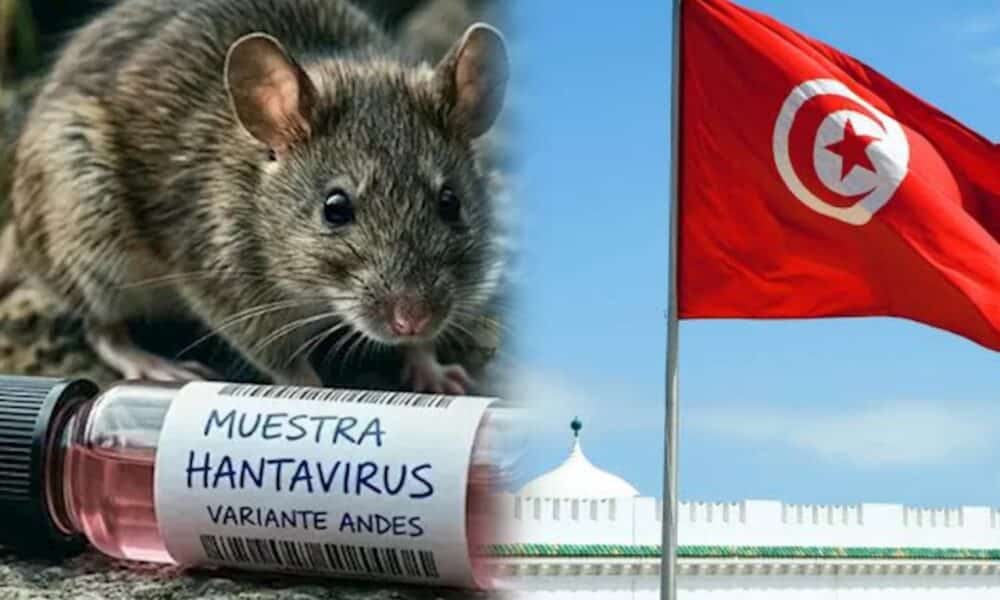
Tunisia has begun strengthening health surveillance at airports, ports and land border crossings, in order to guard against the Hantavirus and Ebola viruses, through the implementation of a preventive health protocol targeting travelers coming from countries that have experienced outbreaks of these two viruses, announced this Sunday by the Director General of the National Center for Pharmacovigilance, Dr Riadh Daghfous.
In a statement to the Tunis Afrique Presse Agency, he clarified that this health protocol, based on verifying the health status of travelers before entering Tunisian territory, provides in the first instance for taking temperatures and performing an RT-PCR test to detect the Ebola virus.
According to the same official, Tunisia has also reserved quarantine spaces in case of confirmed infection. It will arrange the transfer of the individuals concerned from border crossing points to the quarantine centers, while mobilizing highly qualified personnel to supervise these facilities.
It should be recalled that Tunisia decided, last Friday, to strengthen health surveillance at airports, ports and land border crossings, with strict application of preventive protocols, to ensure rapid detection and intervention and to protect national security.
Dr Riadh Daghfous had previously stated that the epidemiological situation related to Hantavirus and Ebola viruses did not currently raise concerns, whether globally or in Tunisia. He stressed that the risk of infection spreading remains limited thanks to the preventive measures and health protocols adopted.
In a previous interview granted to the Tunis Afrique Presse Agency, Daghfous had explained that the Hantavirus, discovered in 1976, is not new. It does not transmit easily from person to person, the infection being primarily linked to rodents, particularly rats.
He added that the virulence of the virus varies according to the strain and geographical area. The strains present in Europe and Asia target the kidneys and can cause hemorrhages, with a mortality rate between 10 and 15%.
The strains present on the American continent, on the other hand, are more dangerous, as they rapidly attack the respiratory system and lead to an accumulation of fluids in the lungs. The associated mortality rate can reach between 40 and 50%.
He also stressed that there is currently no vaccine against Hantavirus. Treatment thus essentially rests on managing symptoms, such as fever and diarrhea, as well as treating any potential complications. Severe cases may require artificial respiration or dialysis in case of kidney involvement, he indicated, noting that early diagnosis and rapid intervention significantly reduce the severity of the disease.
Regarding prevention measures, Daghfous urged caution when cleaning warehouses or places likely to contain rodent droppings. He warned against the use of ‘dry sweeping’, which can promote the spread of the virus through dust in the air.
He recommended cleaning contaminated spaces with water and bleach.
Regarding the Ebola virus, Daghfous explained that it is also an ancient virus, limited to certain geographic areas in Africa. He specified that the animal vector of the virus, namely a particular species of bat, does not exist in Tunisia, which has recorded no cases of infection with this virus to date.
He finally stated that the health protocol in Tunisia is actively maintained at all times, notably through the control of arrivals from infected zones. He recalled that the World Health Organization also imposes strict measures prohibiting people exhibiting symptoms of the disease from traveling from outbreak zones.