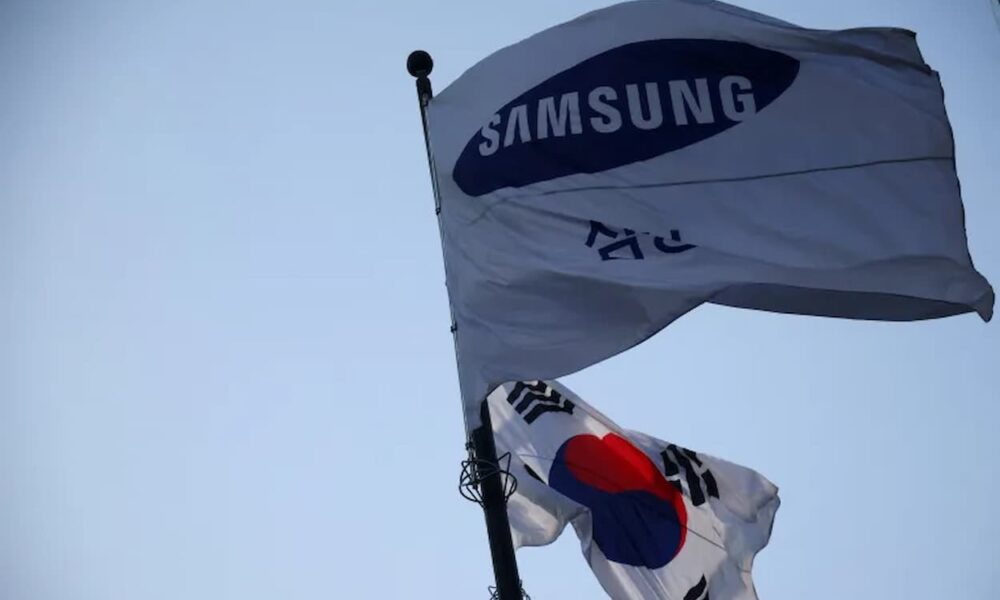
South Korean Prime Minister Kim Min-seok said on Sunday that his country would examine all options, including emergency arbitration, in order to avoid a strike by Samsung Electronics employees and to limit potential damages if the move were to occur.
Samsung is South Korea’s largest company by number of employees and the world’s leading memory chip manufacturer, according to Reuters.
The repercussions of this information will not be limited to South Korea. Any disruption to semiconductor production lines could put pressure on global supply chains and, in turn, affect the availability of certain devices or the cost of their components. In other words, the consequences of a potential strike could end up affecting your mobile phone or tablet, and not only Samsung’s factories.
The company and the union representing its workers in South Korea are set to resume wage negotiations on Monday in the presence of a government mediator, just three days before the planned strike. This move could help ease concerns about a potentially disruptive social movement within the tech giant, which accounts for nearly a quarter of the country’s exports.
Following an emergency meeting with ministers on Sunday, the Prime Minister said: “A single day of stoppage at Samsung Electronics’ semiconductor plant should entail direct losses of up to 1 trillion won, or about 667.68 million dollars.”
He added: “What is even more concerning is that a temporary halt of semiconductor production lines could lead to several months of business disruption,” underscoring fears that economic losses could reach 100 trillion won, or about 67 billion dollars, if the company were forced to dispose of materials because of the strike.
Kim noted that Samsung :
accounts for 22.8% of South Korea’s exports;
weighs 26% of the country’s stock market;
employs more than 120,000 people and works with 1,700 suppliers.
The emergency arbitration order, which the Labor Minister can invoke if the state believes a conflict could harm the economy or daily life, immediately bans any union action for 30 days. During this period, the National Labor Relations Commission conducts mediation and arbitration.
The use of this measure remains rare and constitutes an exceptional decision for a government that pursues a pro-union policy. Since the emergency arbitration system was established in 1963, the government has invoked it only four times.
If this measure were officially activated this time, it would be its first use in 21 years. The last one dates back to December 2005, during the Korean Air strike, when the government sought to avoid serious disruptions to transport services and public inconvenience, according to Yonhap News Agency.
The union said on Sunday that it would not yield to arbitration-related pressure and would not accept a wage agreement if the company’s offer was deemed insufficient. It added that it would negotiate in good faith to reach an agreement with management.
The union plans to launch an 18-day strike starting May 21.
According to Yonhap News Agency, the union and the company remain deeply divided over performance bonuses linked to the profits of Samsung’s semiconductor business in the artificial intelligence field.