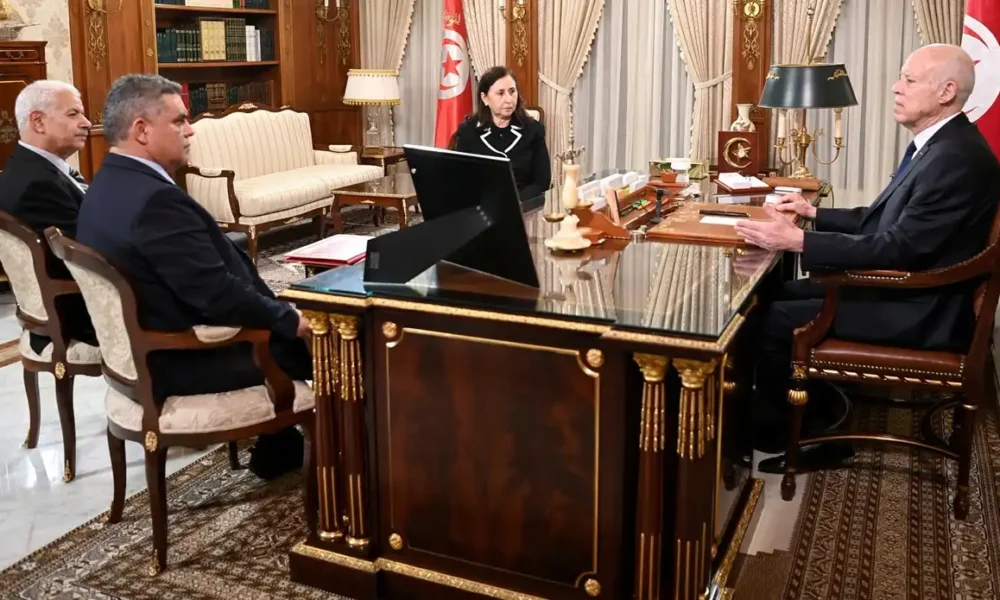
On the eve of the opening of COP31, from November 9 to 20, 2026 in Antalya, Tunisia comes with a priority: turning its climate commitments into fundable projects.
The Tunisian delegation will participate in international discussions on adaptation, emission reductions and financing mechanisms, in a region particularly exposed to water scarcity and extreme climate events.
In brief. COP31 takes place from 9 to 20 November in Turkey. The Leaders’ Summit is scheduled for 11 and 12 November.
Tunisia’s CDN 3.0 aims for a reduction of 62% in the carbon intensity of the economy by 2035, compared with 2010: this is not a promise to reduce the absolute volume of emissions.
A Tunisian delegation in several negotiating groups
The delegation includes experts, delegates, representatives of national bodies and young negotiators. Tunisia participates notably within the African Group, the Arab Group, as well as the Group of 77 and China.
The negotiations are organized under the United Nations Framework Convention on Climate Change. The 2026 edition is hosted by Turkey; Turkish Minister Murat Kurum chairs the conference and Australian Chris Bowen chairs the negotiations, according to the UNFCCC.
From CDN 3.0 to investments: the heart of the matter
Tunisia’s third nationally determined contribution, or CDN 3.0, sets a trajectory of reducing carbon intensity by 46.4% in 2030 and by 62% in 2035 relative to the 2010 reference year, according to the objectives presented in May 2026. The updated CDN was submitted in September 2025 to the convention secretariat.
Carbon intensity measures emissions relative to economic activity: it is different from the total volume of greenhouse gas emissions. The scope of the objective thus depends on both energy policies and the evolution of the economy.
For Tunisia, the outcome of the discussions will not be reduced to the formulation of a final communique. The challenge is to identify projects that are sufficiently advanced, suitable sources of financing, and implementation conditions compatible with the country’s needs. Amounts announced, if any, will have to be distinguished from financing actually granted and disbursed.
Water and agriculture: adaptation as a priority
The vulnerability of water resources constitutes a major economic issue. The national guidelines published by the Ministry of Environment notably mention the transfer and reuse of treated wastewater, as well as securing the water supply for major urban centers, including Greater Tunis, Cap Bon, the Sahel, and Sfax.
In agriculture, adaptation programs focus on the Central region’s irrigated crops, farming systems combining livestock and crops, early warning systems against climate hazards, and the adaptation of the agricultural map. Their relevance will depend on funding, institutional coordination, and on-the-ground implementation.
Coastline and tourism: protecting an economic capital
Coastal erosion and rising sea levels threaten infrastructure, tourist zones and economic spaces. Among the responses envisaged are coastal rehabilitation, protection of existing infrastructure, and more efficient water management in tourist establishments.
The issue is not solely environmental. Prevention investments can also limit risks of equipment degradation, business disruption, and public repair expenditures. However, their profitability must be assessed on a project-by-project basis.
Energy: financing the transition without losing sight of national needs
The production of renewable electricity, demand management and storage systems are also subject to financing needs. These projects must be evaluated in terms of their contribution to supply, the cost of energy and their connection conditions, without conflating the announcement of an investment with its actual commissioning.
The involvement of public and private actors can foster technical exchanges and the preparation of partnerships. No new funding benefiting Tunisia can, however, be regarded as obtained solely by virtue of its participation in COP31.
What results to monitor after Antalya?
The most telling indicators will be the number of Tunisian projects actually selected by funders, their amounts, the nature of funding (grants, loans or investments), disbursement schedules, and verifiable achievements. It is under these conditions that climate commitments can translate into equipment, services and population protection.