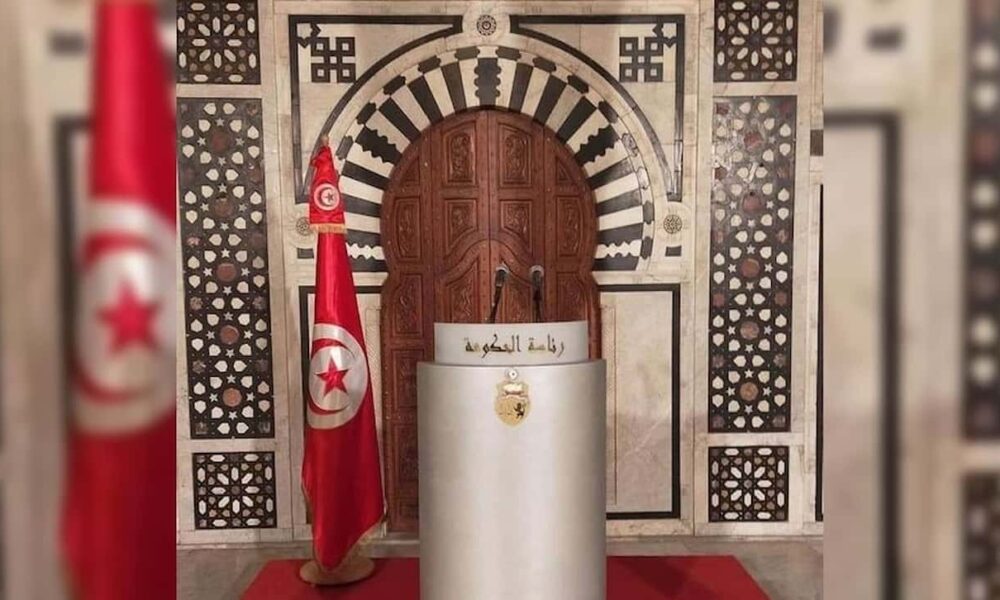
The head of government, Sarra Zaâfrani Zenzri, presided, on Friday, October 23, 2026, at the Government Palace in the Kasbah, a restricted ministerial council devoted to monitoring the implementation of measures intended to ensure the smooth running of the olive campaign 2026-2027.
The meeting allowed for a review of the preparations for the new campaign and of the measures already taken, notably regarding maintenance and rehabilitation of the storage capacities of the National Olive Oil Office (ONH). These had reached 100,000 tonnes, compared with 90,000 tonnes during the previous campaign.
In addition to these capacities are those of the oil mills and olive oil exporting companies, whose storage volume exceeds 400,000 tonnes.
Participants also reviewed the training programs intended for technicians, farmers and mill owners, as well as the modern techniques applied to the olive sector and the valorisation of margins in agricultural lands.
In a press release published on Friday evening, the Presidency of the Government announced a series of decisions notably concerning financing, storage, export, promotion of domestic consumption and support for small farmers.
Financing and Support for Farmers
The announced measures include notably:
- The State’s support to the National Olive Oil Office for the purchase of olive oil produced domestically, through funding of 150 million dinars mobilized from public and private banks. This envelope should enable the ONH to play its role as market regulator and to support farmers and producers.
- Granting loans on favorable terms to small farmers, through the Tunisian Solidarity Bank (BTS), for an amount of 20 million dinars.
- Giving priority to small farmers in the allocation of subsidies intended for the purchase of mechanized harvesting equipment.
The 2027 Finance Bill also provides for the creation of a financing line of 100 million dinars for the 2027-2030 period. This line will be aimed at granting seasonal and investment credits at preferential interest rates, through the National Bank of Agriculture (BNA), for the benefit of small farmers and operators in the olive sector.
Strengthening Storage Capacities
The National Olive Oil Office will be responsible, if necessary, for implementing a storage program covering a maximum volume of 60,000 tonnes of olive oil, with the various sector operators, for a period of three months.
This scheme provides for a storage premium as well as an additional premium for farmers, for a total envelope capped at 20 million dinars.
The 2027 Finance Bill also provides for the establishment of a permanent financing mechanism for storage operations, through the creation of a special Treasury account named the “Olive Oil Sector Account.” This will be used in particular to finance storage subsidies as well as the maintenance of warehouses and ONH’s tanks.
Exports: Strengthening the Competitiveness of Tunisian Olive Oil
In terms of exports, the government has decided to maintain in 2027 the increase of transport premiums by sea and air granted to olive oil exporters by the Export Promotion Fund.
To increase the value added in exports, the maritime transport premium for packaged olive oil will be raised from 50% to 60%.
A specific program will also be established to support and accompany young packaged olive oil exporting companies. It aims to develop their technical and commercial capacities and to help them devise market access strategies abroad.
The government furthermore plans:
- The development of a national plan for communication and promotion of Tunisian olive oil to facilitate its access to new promising markets, by intensifying trade negotiations and engaging available African and international cooperation frameworks.
- The establishment of a specific program aimed at increasing exports of packaged and organic olive oil, with the objective of doubling current volumes.
- The encouragement of packaged olive oil exports according to targeted markets.
- The improvement of agreements with economic partners.
Promotion on the Domestic Market and Consumer Protection
To support farmers and encourage local consumption, the National Olive Oil Office will be responsible for marketing quantities of packaged olive oil at prices that reflect production costs and citizens’ purchasing power.
Hotels and restaurants will also be encouraged to use packaged Tunisian olive oil marketed under a brand.
Regulatory texts will be revised to maintain the premium aimed at encouraging the export of packaged olive oil, incorporating packaging capacities greater than three litres and up to five litres.
Authorities also plan to intensify training programs and technical support in the areas of quality, pruning of olive trees, disease control and mechanization.
The Central Bank of Tunisia will be tasked with engaging with banking institutions to facilitate financing for small farmers and the rescheduling of their debts.
Public and private banks will, for their part, be urged to support small farmers and provide the necessary financing throughout the 2026-2027 campaign, from olive harvest to processing, storage, marketing and export.
Finally, the government plans to develop a strategic study on the prospects for the olive sector’s development, as well as a restructuring plan for the National Olive Oil Office.
The Olive Sector, a Challenge of Food Sovereignty
At the start of the proceedings, the head of government stressed that the agricultural sector constitutes a key pillar of economic growth and a national priority to guarantee food sovereignty, considered a component of national security.
She emphasized the need to develop agricultural value chains, improve their productivity and reinforce their competitiveness.
Sarra Zaâfrani Zenzri also called for implementing all the measures necessary for the success of the 2026-2027 olive campaign, at every stage, from harvest to processing, storage and marketing.
She notably stressed the importance of preserving the quality of olive oil, expanding and diversifying export markets, increasing the volumes of packaged exports and boosting their added value as well as competitiveness on international markets.
According to her, these orientations fit within the President of the Republic Kaïs Saïed’s directives. The head of government also stressed the need to support small farmers at all stages of the campaign, by facilitating their access to credit on favorable terms and ensuring ongoing support.
A 2025-2026 Campaign Marked by Record Results
During this council, the Minister of Agriculture, Water Resources and Fisheries, Ezzeddine Ben Cheikh, and the Chairman and Chief Executive Officer of the National Olive Oil Office, Moez Ben Amor, presented the main indicators of the olive sector for the 2021-2025 period, as well as the results of the 2025-2026 campaign.
This latter campaign recorded several records compared with previous campaigns. National production of olive oil reached 500,000 tonnes, versus an average of 303,000 tonnes in the last five campaigns (2021-2025), i.e., a 65% increase.
Total exports rose by 89% to reach 399,000 tonnes by the end of September 2026. They are expected to reach 415,000 tonnes over the entire campaign.
Exports of packaged olive oil reached 60,000 tonnes, a 100% increase, while exports of organic olive oil stood at 58,000 tonnes, up 12%.
Domestic consumption reached 50,000 tonnes, compared with an average of 35,000 tonnes over the 2021-2025 period.
The Minister of Agriculture also indicated that, according to the data presented at the meeting, total exports by the end of September 2026 had risen by 49% compared with the previous campaign. Exports of packaged olive oil, for their part, increased by 47%.