The decision to ban the use of mobile phones for taking photographs in the plenary hall of the People’s Representatives Assembly has sparked intense controversy among several deputies.
The debate erupted after a statement by the president of the Assembly, delivered during the plenary session on Wednesday, July 29, 2026, stating that anyone using their phone to photograph inside the hemicycle would be directly referred to the public prosecutor.
Reactions were divided between those who view this measure as necessary to ensure the proper conduct of sessions and to protect the rights of deputies, and those who believe that the threat of criminal charges goes beyond a mere internal organizational measure.
Some deputies reject the threat of criminal charges
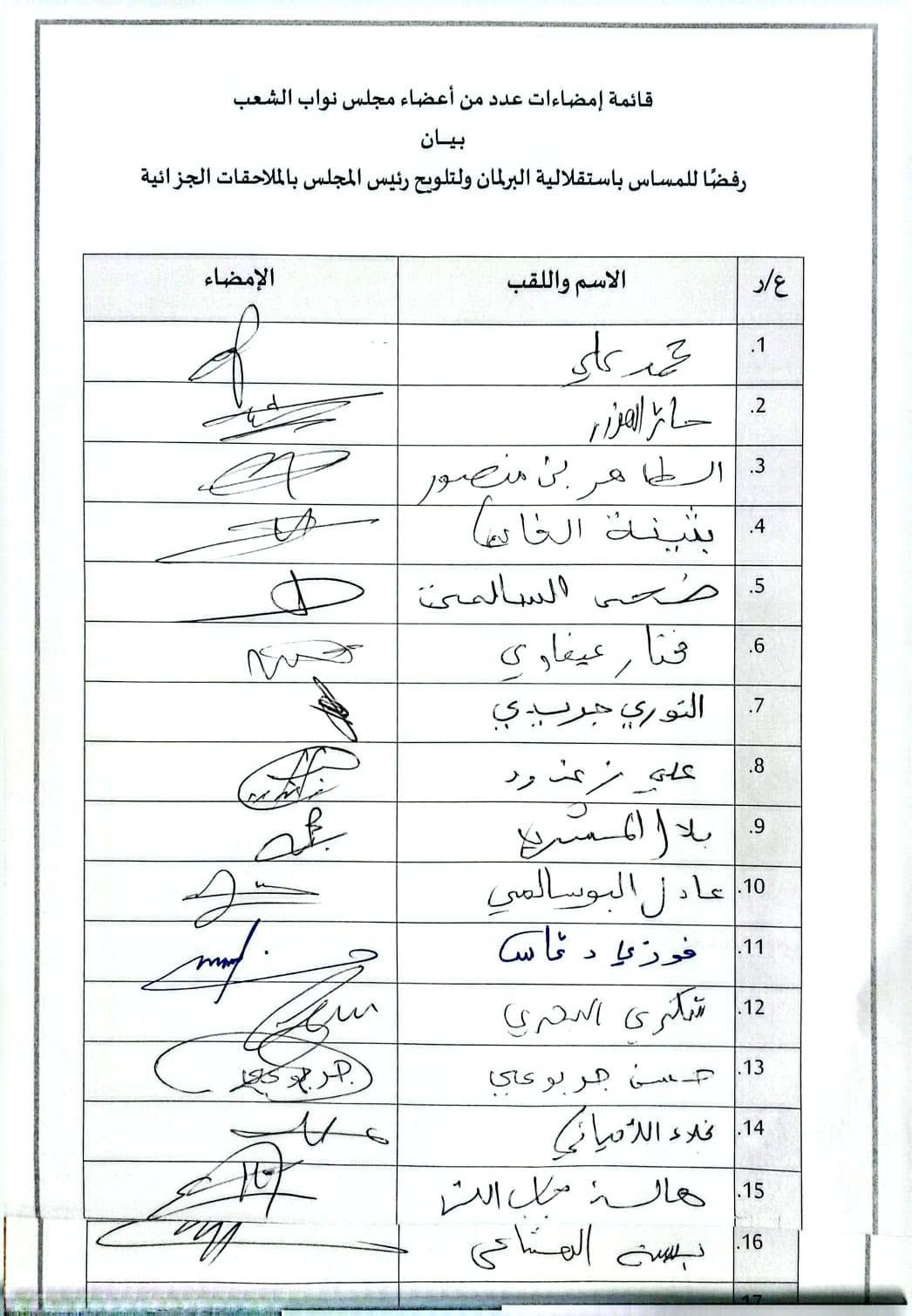
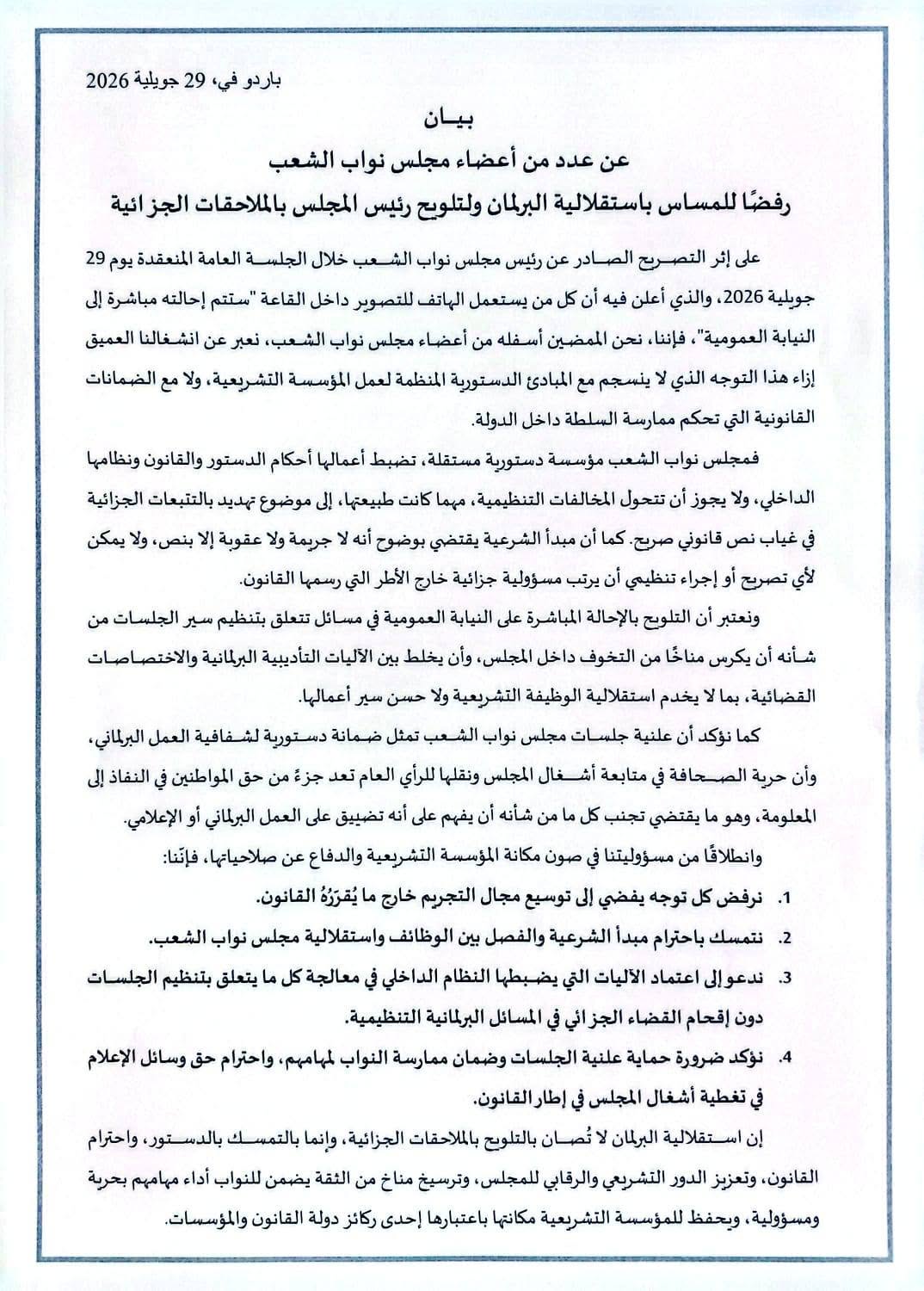
In response to the president’s remarks, several deputies issued a joint statement denouncing what they regard as an encroachment on the Parliament’s independence and a threat of criminal proceedings in a matter primarily related to the organization of sessions.
The signatories recalled that the Assembly of the People’s Representatives is an independent constitutional institution, whose functioning is governed by the Constitution, the law and its internal rules.
They argued that organizational offenses cannot give rise to criminal charges in the absence of an explicit legal provision.
The principle “no crime or punishment without text”
The signatories insisted on the principle of legality, according to which no criminal liability can be engaged without a clear legal basis.
They thus recalled the rule that there can be neither offense nor punishment without a text.
According to them, a declaration or a regulatory measure taken within the Assembly cannot widen the scope of criminalization nor create criminal liability outside the provisions laid down by law.
A risk of confusion between parliamentary discipline and justice
In their statement, the deputies warned that the threat of a direct referral to the public prosecutor for acts related to the organization of sessions could create a climate of fear within the Assembly.
They also argued that such an approach could blur the parliamentary disciplinary mechanisms, provided by the internal rules, with the powers falling under criminal justice.
According to them, this confusion could affect the independence of the legislative function and the smooth running of parliamentary work.
Call to apply the internal rules’ mechanisms
The signatories asked that questions related to the conduct of sessions and the use of phones in the hemicycle be handled through the procedures provided by the internal rules.
They also urged not to involve criminal justice in matters essentially organizational, while insisting on respect for the principle of legality, the separation of powers and the independence of the Assembly.
Publicity of sessions and the media’s right to information
The statement also notes that the publicity of parliamentary sessions is an essential guarantee of transparency.
The deputies stressed that covering the Assembly’s work by journalists and disseminating it to the public fall under citizens’ right to access information.
They thus asked that elected representatives be able to perform their duties under normal conditions and that the media be allowed to cover the sessions in accordance with the applicable legal and organizational rules.
Four main demands
The statement centers on four main demands: rejection of broadening criminalization beyond what the law provides, respect for the principle of legality and the Parliament’s independence, use of internal rules mechanisms to address organizational offenses, and protection of the public nature of sessions as well as the media’s right to cover the Assembly’s proceedings.
The signatories concluded that the independence of the legislative institution is not safeguarded by the threat of criminal charges, but by respect for the Constitution, the law, and by strengthening Parliament’s legislative and oversight roles.
Two deputies specify the scope of the ban
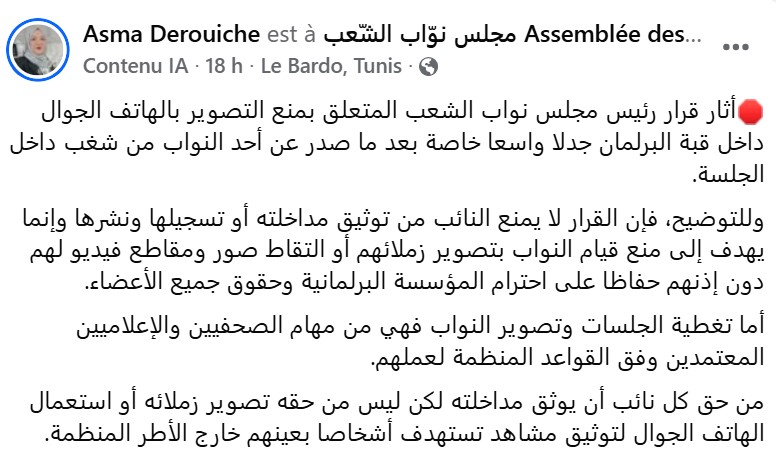
For their part, deputies Syrine Mrabet and Asma Darwich published clarifications on their personal Facebook pages.
According to their explanations, the decision does not deprive a deputy of the right to record, document, or publish their own intervention.
It would instead aim to prevent elected officials from photographing or filming their colleagues without their authorization, in order to protect their rights and preserve the respect due to the parliamentary institution.
The two deputies also indicated that coverage of sessions and the taking of images of elected officials fall under journalists and accredited media, in accordance with the rules governing their work within the Assembly.
What Article 35 of the Rules of Procedure provides
The Title II of the Assembly’s Rules of Procedure, dedicated to the Parliament’s presidency, specifies in its Article 35 that the President of the Assembly is its legal representative, the head of its administration, and the budget’s authorizing officer.
He also ensures the application of the internal rules and the execution of the decisions of the plenary session and the Assembly’s Bureau.
The same article provides that the president supervises the proper functioning of all Parliament services and may take the necessary measures to maintain order and security inside and around the Assembly.
This text thus grants him organizational and order-maintaining prerogatives. The debate, however, centers on whether these powers could extend to announcing a direct referral to the public prosecutor in case of using a phone to take photographs.
No official statement to settle the debate
The controversy continues between supporters of stricter control over phone usage, in the name of protecting deputies and ensuring the proper conduct of votes, and those who consider that referring matters to the public prosecutor goes beyond the administrative and organizational nature of the issue.
As of now, neither the Office of the People’s Representatives Assembly nor the Parliament’s official page has issued a statement detailing the exact scope of the decision, its implementation modalities, or its legal basis.