The digital platforms set up by banks to receive requests from people wishing to benefit from interest-free honor loans will come into service starting October 1, 2026. The platform allows recording the date and time of the submission of the request and issuing the client a receipt to that effect, thus ensuring the ranking of requests according to their order of submission.
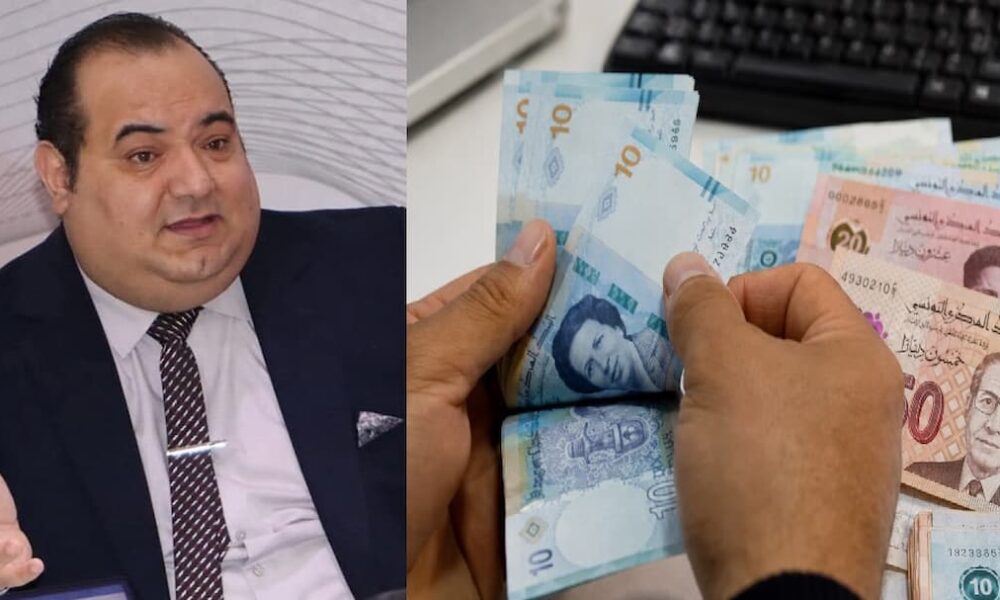
The university professor of banking law, Mohamed Nkhili, explained, in a statement to Tunisia Numérique, that access to honor loans, granted in the form of interest-free advances by the banks concerned, is subject to a set of conditions and criteria determining the beneficiaries, as well as the capacity of each bank to grant these loans.
Mohamed Nkhili specified that the first condition concerns the funding envelope that each bank allocates to honor loans. This has been fixed at 8% of the profits realized by the bank during the 2025 financial year, given that not all banks have the same capacity to grant these loans.
The banks concerned by the honor loans are all commercial banks that recorded profits in 2025. Conversely, banks that did not record profits are excluded from creating a dedicated financing line for honor loans.
Submitting an application does not guarantee the loan
According to Mohamed Nakhli, and in accordance with the Central Bank of Tunisia Circular No. 08 of 2026 and Decree No. 148 of 2026 dated July 23, 2026, relating to setting the conditions and criteria for granting honor microfinancing, the client who submits their application on the platform from October 1, 2026 benefits from priority in the review of their file.
However, according to the banking law professor, this priority does not necessarily mean that the applicant will be prioritized for obtaining the loan. They must, in a first instance, satisfy all required conditions; their file must then be examined within 10 days.
Repayment capacity, an essential condition
Mohamed Nkhili stressed that one of the main conditions for benefiting from an honor loan is to have sufficient repayment capacity, in addition to the requirement for the applicant to be a client of the bank.
It is also required that the amount of the monthly payment corresponding to all loans repaid by the client, including the honor loan, does not exceed 60% of their monthly income.
Regarding cash withdrawals from a bank account in the absence of available balance, within a limit previously agreed with the bank, a practice known in Tunisia as “rouj,” Mohamed Nkhili noted that this does not constitute an obstacle to obtaining an honor loan, as long as the client has sufficient capacity to repay the loan.
Concerns about the rise of doubtful debts
In this context, the university professor of banking law indicated that the overall doubtful and unpaid debts, secured, amounted to 15.5%, while the cap set by the standards is 7%. He added that the proportion of doubtful and unpaid debts could still rise with the implementation of the honor loan mechanism.
Honor loans and Islamic finance
Regarding compatibility with the principles of Islamic finance, Mohamed Nkhili stated that honor loans are not incompatible with the standards of Islamic finance, noting that the honor loan falls under the “Hassan loan” (interest-free loan).